What is aENJ?
aENJ (Aave ENJ) is an interest-bearing token generated within the Aave decentralized lending protocol. When users deposit Enjin Coin (ENJ) into the Aave protocol, the system mints an equivalent amount of aENJ tokens for them.These aENJ tokens are pegged 1:1 to the value of the underlying ENJ assets deposited into the Aave protocol. The theoretical advantage of holding aENJ lies in its interest-bearing nature; that is, while users hold aENJ in their wallets, they can earn interest in real time because the underlying ENJ assets are lent to borrowers.
The Value Basis and Market Conditions of aENJ
The value of aENJ depends directly on the performance of its underlying asset, Enjin Coin (ENJ).Enjin Coin (ENJ) is an Ethereum-based cryptocurrency primarily used to support the value of blockchain assets created on the Enjin platform, particularly non-fungible tokens (NFTs) and in-game assets. However, despite aENJ’s theoretical peg to ENJ and its interest-bearing capability, its market performance paints a starkly different picture.
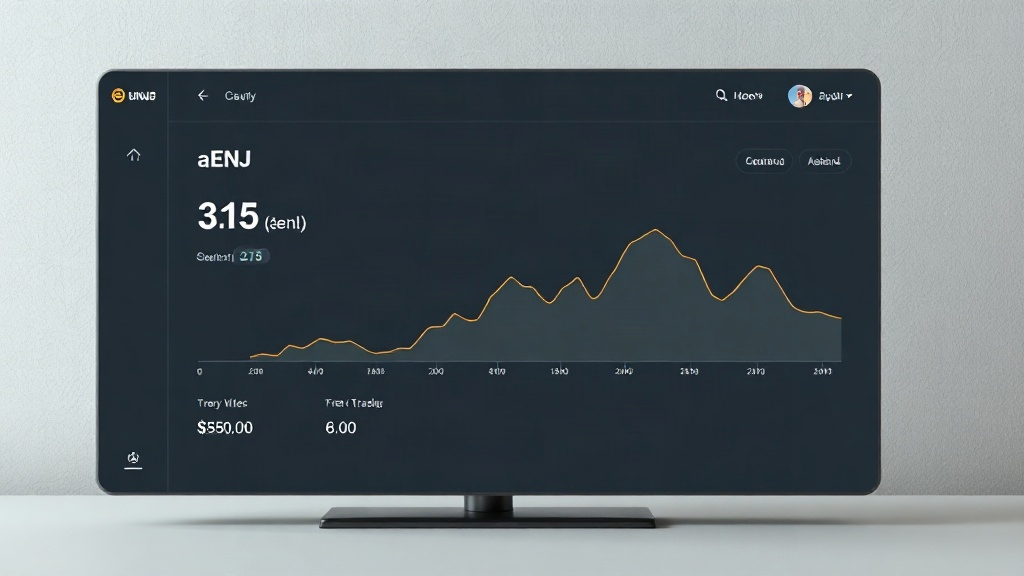
According to recent data, trading activity for the aENJ token is extremely low. Multiple major data platforms show its 24-hour trading volume as zero or near zero. For example, CoinMarketCap and CoinGecko both report a 24-hour trading volume of $0, and Bybit also shows $0.This extremely low liquidity has led to significant discrepancies in aENJ’s price data across different platforms. For instance, between November 2 and 3, 2026, its price ranged from $0.02528 to $0.4239933, indicating a lack of an effective price discovery mechanism in the market.
Furthermore, CoinGecko even notes that the aENJ token has been suspended from trading, further confirming the severe lack of market activity. In the absence of an active trading market, aENJ struggles to realize its value, even if its underlying asset, ENJ, is valuable.
Is aENJ Worth Investing in for the Long Term?
Given the current market conditions of the aENJ token, its long-term investment value faces significant challenges. Here are several key considerations:
- Lack of Liquidity: Zero or near-zero trading volume means investors can hardly buy or sell aENJ. Even if holding aENJ theoretically allows investors to earn interest, the practical significance of such interest income is greatly diminished if they cannot redeem it for other assets.
- Failure of Price Discovery: Significant inconsistencies in price data across multiple platforms indicate a lack of consensus pricing in the market, making it difficult for investors to assess the token’s true value.
- Dependence on the Underlying Asset: The value of aENJ is entirely dependent on Enjin Coin (ENJ). If the price of ENJ fluctuates or its ecosystem fails to develop as expected, the value of aENJ will be directly affected. However, even if ENJ performs well, aENJ’s inherent liquidity issues remain a major obstacle to its viability as an investment asset.
In summary, although aENJ serves a specific functional role within the Aave protocol, its current market status indicates that the token no longer has an active trading market and lacks effective trading volume. For investors seeking liquidity and tradability, aENJ does not currently constitute a viable long-term investment option.Any user considering participation should be fully aware of its extremely high liquidity risk.