

Faster global financial news!
stablecoin
-
With $7.1 trillion in assets under management, Fidelity urges the U.S. Senate to pass the CLARITY Act
Svmuu News: Fidelity Public Policy, a division of Fidelity Investments—a financial services firm with $7.1 trillion in assets under management—posted on X on July 24, calling on the U.S. Senate to pas
-
What Is MXNT? An Analysis of the Mexican Peso Stablecoin Issued by Tether
MXNT is a Mexican peso stablecoin launched by the well-known stablecoin issuer Tether, designed to be pegged 1:1 to the Mexican peso (MXN).As a digital stable asset, MXNT primarily operates on the Ethereum and TRON blockchains, providing a digital cash channel for individuals and institutions in Mexico and the surrounding regions, thereby facilitating robust, decentralized value exchange. Its issuer, Tether, has extensive experience in the stablecoin sector, and the launch of MXNT further expands its presence in the Latin American market.Investors and users can trade the token on cryptocurrency exchanges that support it, but should be mindful of its characteristics as a stablecoin and market liquidity.
-
Wise plans to resubmit its application for a U.S. National Trust Bank license under the GENIUS Act
Svmuu News: According to a research report by William Blair, cross-border payment company Wise plans to resubmit its application for a national trust bank license under the U.S. “GENIUS Act” stablecoi
-
xDAI: The Stablecoin on the Gnosis Chain and Its Future Prospects
xDAI is a stablecoin pegged 1:1 to the U.S. dollar. As the native token of the Gnosis Chain (formerly xDai Chain), it is primarily used to pay transaction fees.It is known for its extremely low transaction costs and fast transaction confirmation speeds, and is compatible with the Ethereum Virtual Machine (EVM), facilitating the development of applications such as DeFi, NFTs, and DAOs.As Gnosis Chain works to enhance decentralization and scalability and integrates real-world applications such as Gnosis Pay, xDAI’s utility and strategic position within the Web3 ecosystem are expected to continue growing.
-
Gas-Free Stablecoin Transfer Feature Launched; Sui Users Pay No Gas Fees or Gas Tokens
Svmuu News: Sui announced in a post on Platform X that it has launched a feature for gas-free stablecoin transfers, which requires no gas fees or gas tokens and is built directly into the protocol.
-
After Securing a $150 Million Investment from Ripple, LMAX Explores a Sale, SPAC Merger, or IPO
Svmuu News: The institutional trading platform LMAX is working with advisors Morgan Stanley and KBW, an investment banking arm of Stifel, to evaluate strategic alternatives. Sources familiar with the
-
Now available to users in Brazil: Coinbase launches the USDC-BRL trading pair
Svmuu News Coinbase Today, support for the USDC-BRL trading pair has been added, available to users in Brazil. This trading pair will first be launched on the Coinbase Exchange and will subsequently b
-
The EU's 21st round of sanctions against Russia has been expanded to include 14 crypto-related platforms
Svmuu News: The European Union (EU) has expanded the scope of its sanctions against Russia, targeting the A7 cross-border payment network and its newly established African affiliates, as well as the A
-
Samsung Will Support Native Stablecoins in Samsung Wallet
Svmuu News: At the 2026 Galaxy Unpacked event, Samsung announced that Samsung Wallet will support stablecoins and expand from cash and savings to include new forms of digital value, such as stablecoin
-
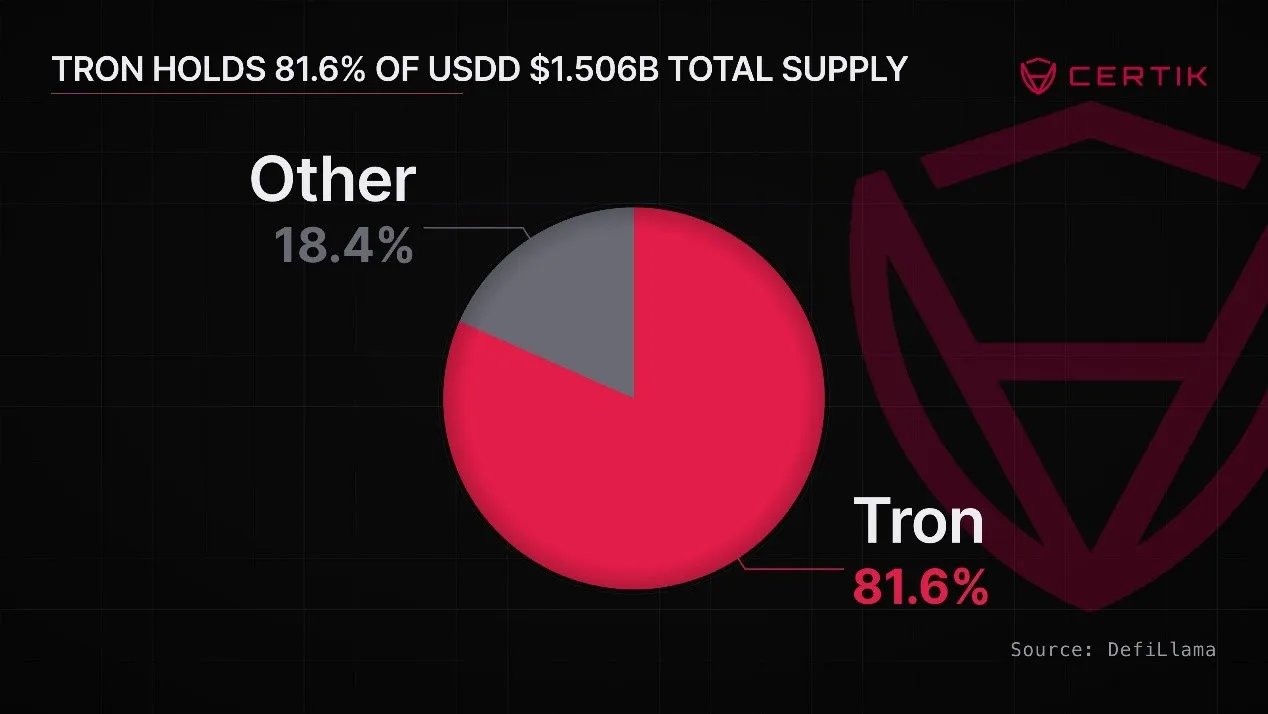
TRON The supply of USDD on TRON increased by $145 million in a single week, with the total supply surpassing $1.23 billion.
Svmuu News: According to data from CertiK Skynet, over the past week, the supply of USDD on the TRONTRON network has surged by approximately $145 million, bringing the total supply to over $1.23 billi
-
The Ripple Mint platform is now live, enabling institutions to mint and manage RLUSD via the UI or API
Svmuu News: Ripple has launched the Ripple Mint platform, which allows institutions to mint, redeem, and manage the RLUSD stablecoin via a user interface or API.
-
An In-Depth Analysis of MakerDAO (MKR)’s Transformation and Future Prospects
MakerDAO, a well-known decentralized autonomous organization on the Ethereum, is undergoing a major transformation known as “Project Endgame.”The initiative aims to enhance the protocol’s efficiency, resilience, and scalability through a rebranding to “Sky,” the introduction of the new USDS and SKY tokens, the establishment of sub-DAOs, and ultimately a migration to the custom blockchain NewChain.However, controversies surrounding the centralization of USDS, questions about the transparency of governance processes, and the ongoing legal investigation triggered by the recent WBTC liquidation proposal have also raised challenges and sparked debate regarding MakerDAO’s future development. This article will delve into MakerDAO’s latest developments, its token economics, and the key issues it faces.
-
Abraxas Capital has transferred more than $223 million in crypto assets to exchanges over the past 7 hours
Svmuu News: According to Onchain Lens, investment firm Abraxas Capital has transferred approximately $223.53 million worth of crypto assets to several cryptocurrency exchanges over the past 7 hours, i
-
Goldman Sachs CEO: Supports Advancing the CLARITY Act; the Bill Is Not Perfect
Svmuu News: David Solomon, CEO of Goldman Sachs, expressed support for advancing the CLARITY Act, while acknowledging that the legislation “is not perfect.” His remarks contrast with criticism from JP
-
Goldman Sachs Expressed support for the CLARITY Act, stating that it will establish a fair regulatory framework for the crypto market
Svmuu News Goldman Sachs Group CEO David Solomon stated that although the CLARITY Act is not perfect, he supports its passage, believing it will establish a clearer and fairer regulatory framework for
-
LayerZero Partners with Keeta to Support Cross-Chain Transfer of Tokenized Bank Deposits
Svmuu News: LayerZero has announced a partnership with Keeta to enable the transfer of tokenized commercial bank deposits across public blockchains such as the Keeta Network, Ethereum, Solana, and Bas
-
Flow Traders is piloting the Lombard Bitcoin credit lending program to facilitate stablecoin financing backed by BTC.
Svmuu News Bitcoin Financial products platform Lombard Finance has announced the launch of the Bitcoin On-chain Credit Strategy (Bitcoin), with global trading firm Flow Traders serving as its first pi
-
Ripple Makes a Strategic Investment in Notabene to Advance the Rollout of Institutional-Grade RLUSD Stablecoin Payments
Svmuu News: Notabene, a provider of compliant on-chain transaction services, announced that it has secured a strategic investment from Ripple. The investment amount has not yet been disclosed, and the
-
Stablecoin issuer Mandela Digital raises $5 million in funding; Datavault AI participates in the round
Svmuu News: Stablecoin issuer Mandela Digital announced the completion of a $5 million funding round, with Datavault AI participating as an investor. The new funds will be used for stablecoin infrastr
-
An Analysis of the Multiple Meanings of CARBON: Carbon Emissions Token, Stablecoin, Trading Protocol, and Trading Channels
“CARBON” is a term with multiple meanings; it may refer to the carbon emissions trading token based on the Ethereum, the stablecoin “Carbon” on Hedera Hashgraph, the decentralized trading protocol “Carbon” created by Bancor, or the CRBN token associated with SocialFi/GameFi.This article will analyze the characteristics and use cases of each of these projects one by one, provide information on potential trading and purchasing channels for each, and remind investors to be aware of market risks.
-
Restrictions Are Expected to Be Lifted; South Korea Plans to Allow Financial Institutions to Hold Equity in Crypto Companies
Svmuu News: Kim Seong-jin, Director of the Virtual Assets Division at South Korea’s Financial Services Commission, stated during a National Assembly session that the government is simultaneously advan
-
USDT Hedging Strategies: Risk Management and Applications in Cryptocurrency Investing
USDT (USDT), a stablecoin pegged 1:1 to the U.S. dollar, plays a key role as a hedging tool in the highly volatile cryptocurrency market. Hedging is a risk management strategy aimed at reducing potential losses caused by price fluctuations by establishing offsetting positions, rather than pursuing high profits.This article will delve into the importance of USDT in cryptocurrency hedging, introduce common strategies such as converting volatile assets into USDT and using futures/perpetual contracts for short hedging, and analyze recent market dynamics, compliance considerations, and potential risks at USDT to help investors better manage the risks associated with their crypto assets.
-
Analysis of the Investment Value and Prospects of the Curve DAO Token (CRV)
The Curve DAO Token (CRV) is the native governance token of the decentralized exchange Curve, a platform known for its AMM mechanism optimized for stablecoin trading and its low slippage. The CRV token grants holders governance rights and serves as a reward for liquidity providers. With the launch of the crvUSD stablecoin, Curve’s potential for innovation has been further highlighted. This article will delve into the investment considerations, market position, and potential risks associated with CRV.
-
Samsung Electronics to Introduce Stablecoin Support in Samsung Wallet
Svmuu News: At the Galaxy Unpacked 2026 event, Samsung Electronics announced that Samsung Wallet plans to introduce support for stablecoins, integrating payments, rewards, and digital assets into a un





-
Blockchain Association backs Treasury’s proposed GENIUS Act rules for stablecoin issuers, advocating for client ID limits
The association supports restricting client identification requirements to direct issuer-customer transactions in the primary market, while also calling for clearer definitions within the rules.
-
Trump's Family Wins Preliminary Approval to Start National Bank, Aims to Expand USD1 Stablecoin Use
Donald Trump's family has secured preliminary approval to establish a national bank, aiming to leverage deregulation under the Trump administration. World Liberty Financial, the entity behind the move
-
USDC on-chain issuance increased by 98 million, approximately 98 million USD.
USDC on-chain issuance increased by 98 million, approximately 98 million USD.
-
USDC on-chain burn: 62.93 million (approximately $62.93 million)
USDC on-chain burn: 62.93 million (approximately $62.93 million)
-
Standard Chartered becomes first bank to distribute Anchorpoint's HKDAP Hong Kong dollar stablecoin
Standard Chartered becomes first bank to distribute Anchorpoint's HKDAP Hong Kong dollar stablecoin
-
Bernstein maintains Outperform rating on Circle (CRCL) with $140 price target, implying 59% upside
Bernstein analysts believe Circle's growth cycle can continue even if the Clarity Act does not pass. They noted that USDC supply has rebounded by about $1.7 billion over the past week, and adjusted st
-
The Wall Street Journal: Donald Trump's Crypto Push Linked to Treasury Secretary Scott Bessent's T-Bond Strategy, stablecoins May Boost Short-Term T-Bond Demand
The article points out that U.S. Treasury Secretary Scott Bessent has previously mentioned the importance of stablecoins as a potential new source of demand for Treasury bills. In the context of the T
-
Stablecoin neobank Fasset lands $1 billion valuation as SBI backs its payments push
Stablecoin neobank Fasset landed a $1 billion valuation after raising $68 million. The firm's revenue has grown six-fold as stablecoin payments and settlement expand, CEO Mohammad Raafi Hossain told C
-
USDG (Global Dollar) saw a trading volume of $19.57 million in the past hour (60.9 times the 7-day average for the same period), currently trading at $1.000.
USDG (Global Dollar) saw a trading volume of $19.57 million in the past hour (60.9 times the 7-day average for the same period), currently trading at $1.000.
-
Coinbase CEO Brian Armstrong says crypto, especially stablecoins, offers a way for people in high-inflation countries to hold stronger global fiat currencies like USD.
Coinbase CEO Brian Armstrong says crypto, especially stablecoins, offers a way for people in high-inflation countries to hold stronger global fiat currencies like USD.
-
Circle stock (CRCL) is down over 70% from its all-time high of $299, now trading at $85, as stablecoin investment thesis faces doubts and new competitor Open USD launches.
Circle Internet Group, which debuted in June 2025, saw its shares reach $299 last summer. However, the company's Q2 2026 earnings beat estimates but missed on revenue, leading to a sell-off. Investors
-
Crypto card spending surpasses $1 billion, more than tripling annually, with USDC and USDT accounting for over 70% of everyday purchases
Tracked card volume has seen a significant increase, as users are increasingly utilizing stablecoins like USDC and USDT to pay for daily expenses such as groceries, rides, and subscriptions.
-
USDG (Global Dollar) saw a trading volume of $12.43 million in the past hour (24.9 times the 7-day average for the same period), currently priced at $1.000
USDG (Global Dollar) saw a trading volume of $12.43 million in the past hour (24.9 times the 7-day average for the same period), currently priced at $1.000
-
50.4 million USDC, worth approximately $50.4 million, were burned on-chain.
50.4 million USDC, worth approximately $50.4 million, were burned on-chain.
-
120 million USDC minted on-chain, worth approximately $120 million.
On-chain data shows a single issuance of the USDC contract, with transaction hash 0xf5ed3035c9b74050235fee4575b5373f458278df9b2885fbfb91cecfebcac89a.
-
100 million USDC minted on-chain, worth approximately $100 million.
100 million USDC minted on-chain, worth approximately $100 million.
-
USDC on-chain burn of 82.03 million (approximately $82.03 million)
USDC on-chain burn of 82.03 million (approximately $82.03 million)
-
Lookonchain Monitoring: Circle and Tether Minted $3 Billion in stablecoins in the Past Two Days
Lookonchain Monitoring: Circle and Tether Minted $3 Billion in stablecoins in the Past Two Days
-
On-chain data shows a single issuance of 50.05 million USDC from the USDC contract, valued at approximately $50.05 million.
On-chain data shows a single issuance of 50.05 million USDC from the USDC contract, valued at approximately $50.05 million.
-
50 million USDC has been minted on-chain, valued at approximately $50 million.
50 million USDC has been minted on-chain, valued at approximately $50 million.
-
On-chain data shows a single transaction burning 88.5675 million USDC from the USDC contract, valued at approximately $88.57 million.
On-chain data shows a single transaction burning 88.5675 million USDC from the USDC contract, valued at approximately $88.57 million.
-
USDG (Global Dollar) saw a trading volume of $4.4 million in the past hour (19 times the 7-day average for the same period), currently trading at $1.001.
USDG (Global Dollar) saw a trading volume of $4.4 million in the past hour (19 times the 7-day average for the same period), currently trading at $1.001.
-
MiCA crackdown leads to USDT disappearing from regulated European platforms, but global demand for Tether remains strong.
MiCA crackdown leads to USDT disappearing from regulated European platforms, but global demand for Tether remains strong.
-
USDG (Global Dollar) saw a trading volume of $26.49 million in the past hour (57.1 times the 7-day average for the same period), currently trading at $1.001.
USDG (Global Dollar) saw a trading volume of $26.49 million in the past hour (57.1 times the 7-day average for the same period), currently trading at $1.001.
-
USDC Price Stability: Real-time Trends, Market Position, and New Developments with Circle Arc Blockchain
USDC, a stablecoin pegged 1:1 to the US dollar, maintained its price near $1.00 on August 24, 2026, demonstrating exceptional stability. Currently, USDC's market capitalization exceeds $73 billion, ranking it sixth among cryptocurrencies by market cap. Recently, its issuer, Circle, has been actively promoting its Arc blockchain, designed specifically for stablecoin payments and RWA, with the mainnet launch scheduled for September 16, 2026. Concurrently, the amount of USDC minted on the Solana chain continues to increase, solidifying its central role in the digital economy.
-
The Deep Integration Trend of TRON with FinTech
TRON is increasingly becoming a significant force in the global fintech sector, especially dominating stablecoin settlements, with its USDT circulation on the network surpassing Ethereum. TRON empowers financial inclusion in emerging markets through its low-cost, high-efficiency transaction features and actively integrates with mainstream fintech platforms like MoonPay and Revolut. Concurrently, TRON continues to make strides in its DeFi ecosystem, AI infrastructure development, and anti-financial crime efforts, having received initial institutional recognition, which foreshadows its pivotal role in the future development of digital finance.
-
USDTUSDT Working Principle Analysis: Pegging Mechanism, Multi-Chain Deployment, and Exchange Platform Overview
USDT, as the largest stablecoin by market capitalization, aims to maintain a 1:1 value peg with the US dollar. Its working principle involves issuance and management by Tether Limited, backed by reserve assets (primarily US Treasury bills), and utilizing a minting and burn mechanism to regulate supply. USDT is deployed on multiple blockchain networks such as Ethereum and TRON, and is widely used in cryptocurrency trading, value storage, and the DeFi ecosystem. Many mainstream CEXs globally support USDT trading and exchange, but users need to be aware of compatibility issues between different network versions.
-
USDT and Bitcoin Trading Platform Analysis: Global Mainstream Choices and Market Dynamics
USDT (USDT), as the largest USD stablecoin, and Bitcoin (BTC) are the most liquid assets in the crypto market. This article will delve into the mainstream centralized trading platforms that support USDT and BTC transactions, analyze their features and services, and focus on recent Bitcoin price dynamics and the impact of Europe's MiCA regulation on USDT trading, helping readers understand how to trade on compliant and secure platforms.
-
USDT and Digital Currency Exchange Selection Guide: Global Compliance and Reliability Considerations
In the context of an increasingly mature global cryptocurrency market and tightening regulations, choosing a reliable trading platform for USDT and other digital currencies is crucial. This article will delve into the current market status of USDT, global regulatory trends, and provide core indicators for evaluating the reliability of trading platforms, including security, compliance qualifications, user asset protection mechanisms, and liquidity, aiming to help readers make informed choices.
-
USDT (USDT) vs. Bitcoin (BTC): A Deep Dive into Their Differences and Relationship
USDT (USDT) and Bitcoin (BTC) are two core but fundamentally different digital assets in the cryptocurrency market. USDT, as a stablecoin pegged to the US dollar, aims to provide price stability and is primarily used for trading and hedging; while Bitcoin, as decentralized digital gold, possesses high volatility and value storage attributes. The two differ significantly in terms of centralization, supply, and technological foundation, yet they are closely linked through trading pairs, market liquidity, hedging functions, and Tether's investment strategies, together forming a crucial cornerstone of the crypto market.
-
Stablecoins: The Stable Cornerstone and Core Application Analysis of the Crypto World
Stablecoins aim to solve the problem of high price volatility in traditional cryptocurrencies by pegging their value to fiat currencies or other assets, thereby providing price stability. They serve as a crucial bridge connecting traditional finance with the crypto world and are widely used in various scenarios such as crypto trading, cross-border payments, DeFi, and fund management. With rapid market growth and active institutional participation, stablecoins have become an indispensable part of the digital economy, but the transparency of their reserves and regulatory compliance remain global points of concern.
-
USDT Purchase Guide: Understanding Major Trading Platforms and Convenient Payment Methods
Tether (USDT), as one of the largest stablecoins by market capitalization, is an important component of the cryptocurrency market. This article will detail the various convenient ways to buy USDT currently available, including debit/credit cards, bank transfers, P2P trading, and direct purchases via Web3 wallets. At the same time, we will review the characteristics and advantages of mainstream trading platforms such as Binance, OKX, Kraken, and Coinbase, to help global readers choose the most suitable way to acquire USDT. The article will also mention recent changes in the stablecoin regulatory environment for user reference.
-
UAHg stablecoin: Issuance and Circulation Status of the Ukrainian Hryvnia-Pegged Token
UAHg is the first stablecoin pegged 1:1 to the Ukrainian Hryvnia (UAH), designed to simplify cryptocurrency use in Ukraine and provide a stable method for fund transfers. Launched in 2023, the token operates on the Ethereum, BNB Smart Chain, and TRON networks. As a stablecoin, its supply is uncapped and issued based on market demand. However, there are inconsistencies regarding its circulating supply and market cap data; some data platforms show a very low or unavailable market cap, while historical trading volumes remain significant, reflecting discrepancies in market data.
-
USDT Wallet Address Query and Management: Multi-Chain USDT Analysis and Official Wallet Guide
USDT (USDT), as a stablecoin pegged 1:1 to the US dollar, is widely used in cryptocurrency transactions. This article will delve into the differences in USDT address formats across various blockchain networks, guide users on how to query USDT wallet addresses and transaction records via blockchain explorers, and introduce the functions and download channels of the official Tether wallet, helping users manage their USDT assets securely and efficiently.
-
What is aBUSD? Analyzing its Current Status and Market Liquidity
aBUSD is an interest-bearing token in the Aave decentralized lending protocol, pegged 1:1 to BUSD, designed to allow users to earn interest by holding it. However, as of August 2026, aBUSD has extremely low market activity, with zero 24-hour trading volume, and its circulating supply and market cap data are unverified. This is closely related to the fact that the underlying asset, BUSD, has ceased issuance and support, and investors need to be wary of its lack of liquidity risk.
-
What is AUSDT? An Analysis of Alloy Tether and Aave USDT
The symbol AUSDT may refer to two distinct crypto assets: first, Alloy Tether (AUSDT), a stablecoin launched by Tether designed to be pegged to the US dollar, but currently its market price is severely decoupled from its target value, and its trading volume is extremely low; second, Aave USDT (aUSDT) in the Aave protocol, which represents USDT deposited by users in Aave, earning interest in real-time and maintaining a 1:1 peg with USDT. This article will analyze the nature, mechanism, and current market status of these two types of AUSDT separately.
-
2023 Global Cryptocurrency Regulatory Dynamics: Multiple Countries Explore Compliance Frameworks, Mainland China Maintains Ban
In 2023, the global cryptocurrency regulatory landscape showed a diversified trend. Most major jurisdictions did not completely ban virtual currencies but actively built compliance frameworks such as licensing and classified regulation to standardize the market and protect investors. Among them, the EU's MiCA regulation was released, Hong Kong implemented a licensing system, and Singapore and Japan launched stablecoin regulatory frameworks. At the same time, mainland China continued to strengthen its comprehensive ban on virtual currencies, severely cracking down on related illegal financial activities.
-
AEUR Stablecoin and Crypto Leveraged Trading Analysis: Exploring the Digital Assets Space
This article provides an in-depth analysis of the mechanisms, regulatory compliance, and market status of the euro-pegged stablecoin AEUR, as well as the principles, risks, and key participants in USD-denominated (UDS) leveraged trading within the cryptocurrency space. AEUR aims to provide a euro digital equivalent supported by MiCA regulations, but its active trading market has nearly dried up. Concurrently, the article elaborates on how leveraged trading amplifies potential gains and losses through borrowed funds, emphasizing its high-risk nature and the necessity of risk management strategies.
-
CEUR Coin Historical Price Review: Analysis of Highest and Lowest Points
cEUR (Celo Euro) is a stablecoin designed to peg its value to the Euro. Its historical price data shows that despite the design goal of maintaining a 1:1 peg with the Euro, the market has experienced significant fluctuations. Records indicate that cEUR's highest price reached approximately 20.22 Euros (or equivalent USD), while its lowest dropped to about 0.2158 Euros. These extreme prices typically reflect market anomalies or liquidity events. As of publication, cEUR's price is stable in the $1.17-$1.35 range, with a market capitalization of approximately $1.7 million to $2 million.
-
STATIK Coin Analysis: A Dual-Asset-Backed Stablecoin and Its Market Status
STATIK is a stablecoin designed to be backed by a dual-asset model, consisting of 80% USDC.e and 20% of the platform's utility token, THO. It aims to achieve partial algorithmic stability through its treasury and platform fees. It operates on the Avalanche C-Chain and Moonbeam networks. However, as of now, multiple data sources indicate that STATIK's market capitalization, circulating supply, and 24-hour trading volume are all "insufficient data" or close to zero, suggesting extremely low market activity and depleted liquidity.
-
USDC experienced de-pegging panic in 2023, and Binance recently adjusted USDC trading pairs and strengthened USDT's dominance.
In March 2023, USDC briefly depegged due to the collapse of its reserve bank, triggering market panic. This incident prompted Binance to adjust its stablecoin strategy, gradually phasing out BUSD and enhancing support for USDT and TUSD. Recently, Binance announced the delisting of some USDC leveraged trading pairs in August 2026 and suspended BEP20 USDC deposits and withdrawals, further reflecting the dynamic adjustments in its stablecoin strategy. USDT solidified its market dominance during this period, while TUSD's market capitalization had seen significant growth but recently declined.
-
What is FXS Coin? Frax Protocol Governance Token Analysis and Trading Channels
FXS (Frax Share) is the governance token of the Frax decentralized stablecoin protocol, granting holders voting rights over protocol parameters. The Frax protocol is known for its fractional algorithmic stablecoin, FRAX, which aims to provide highly scalable decentralized money. As of August 2026, the circulating supply of FXS is approximately 93.61 million tokens, with a market capitalization of about $28.72 million. Recently, the Frax ecosystem underwent an upgrade, and FXS has transitioned into the native token of the Fraxtal L2 chain.
-
USDTUSDT Purchase Platform Analysis: OKX App Download and Regulatory Status in Mainland China
This article details various platforms for purchasing USDT, including mainstream CEXs and self-custody wallet integrated features. At the same time, it clarifies the download availability of the OKX (OKX) trading platform and its regulatory status in mainland China, emphasizing the legal risks of digital currency trading in mainland China, and provides an overview of USDT's market data.
-
XCHF Coin: Current Status and Investment Considerations for the Swiss Franc Stablecoin
XCHF (CryptoFranc) was an Ethereum-based Swiss franc stablecoin issued by Swiss Crypto Tokens AG, designed to be pegged 1:1 to CHF. However, as of August 19, 2026, the token's market activity is extremely low, with multiple data platforms showing its 24-hour trading volume and market capitalization close to zero. The project was delisted from Bitfinex in 2022, and current price data is highly inconsistent, indicating a significant decline in its value as an active trading or long-term investment asset.
-
TUSD Stablecoin Analysis: Features, Mechanism, and Acquisition Methods
TrueUSD (TUSD) is a stablecoin pegged 1:1 to the US dollar, designed to provide price stability to the crypto market. It is backed by real USD reserves held in independent escrow accounts and integrates Chainlink's Proof of Reserve technology for real-time on-chain audits, ensuring high transparency. TUSD operates on multiple mainstream blockchains, including Ethereum and TRON, and obtained legal digital currency status in the Commonwealth of Dominica in 2022. Users can acquire TUSD through cryptocurrency exchanges or official minting platforms to meet their trading, payment, and hedging needs.
-
CKUSD Stablecoin Project Status Analysis: Market Activity and Investment Risks
CKUSD is a stablecoin project launched in 2017 by CK Fintech Corp., a subsidiary of Canada's Cascadia Blockchain Group. It was designed to serve as a clearing tool between financial institutions within the CK system. However, as of August 2026, the token exhibits extremely low market activity, with multiple data platforms showing its market capitalization, 24-hour trading volume, and circulating supply as zero or negligible. Despite being positioned as a stablecoin, its historical price has experienced minor fluctuations. Given the current lack of an active market and transparent data, the investment value of CKUSD is highly uncertain.
-
What is BITUSD? An Analysis of Its History, Current Status, and Market Challenges
BITUSD, launched in 2014, was one of the first stablecoins, designed to maintain a 1:1 peg with the US dollar and built on the BitShares blockchain. It was previously used to collateralize other stablecoins and facilitate tokenized foreign exchange transactions. However, as of August 2026, BITUSD's market activity is extremely low, with most platforms showing inaccurate or missing trading data, and its 24-hour trading volume is only a few hundred US dollars, posing severe liquidity challenges.
-
Stablecoin Mining Risk Analysis: Challenges Hidden Behind Returns
Stablecoin farming, which involves providing stablecoin liquidity to DeFi protocols to earn returns, has become a highly discussed strategy in the crypto market. Although it aims to provide relatively stable returns, it is not without risks. This article will delve into various risks that stablecoin farming may face, including de-pegging risk, impermanent loss, smart contract vulnerabilities, centralized issuer risk, platform security issues, and increasing global regulatory pressure. Investors should fully understand these potential challenges before participating to make informed decisions.


















stablecoin

24H Trending
-
1
Crypto Adoption Reaches 25% in Europe's Four Largest Economies: Banks Accelerate Layout Under MiCA Push

-
2
Retired Lineman Made Costly Error by Accepting $310,000 Pension Buyout Check Personally, Triggering 20% Federal Withholding and Potential Tax Penalties
-
3
The Deep Integration Trend of TRON with FinTech

-
4
What is CFX Coin? An Analysis of Conflux Network Token's Value and Prospects

-
5
Analysis of REF Coin's Current Status and Development Prospects After Integration with Rhea Finance

-
6
Bessent states no bonds have been purchased yet, with the next operation scheduled for September 9.
-
7
ELEC Coin Analysis: Electrify.Asia Project Status and Market Performance

-
8
OKX App Official Website and OKX Exchange Compliance Analysis

-
9
2026 Global Crypto Exchange Liquidity and Risk Control: In-depth Analysis of Matching Engines, Slippage, and T+N Withdrawal Mechanisms

-
10
JasmyCoin (JASMY) Trading Guide: How to Buy and Sell, and a List of Exchanges

Markets Today



Recommended Reading

Hot Topics

Svmuu focuses on blockchain industry trends and cutting-edge cryptocurrency news, while also covering real-time market data and in-depth analysis of the Hong Kong, U.S., and foreign exchange markets. Here, you can not only access professional 24/7 news updates and accurate market data, but also utilize practical investment tools to help you capitalize on opportunities in both digital assets and traditional financial markets. Whether you are a blockchain enthusiast or an investor in Hong Kong, U.S., or foreign exchange markets, we provide efficient and timely information services to empower your investment decisions.
- User Agreement
- Privacy Policy
- Contact Us
- Business Partnerships
- Disclaimer
- Content Statement
- About Us
- Sitemap
 Coming Soon!
