

Faster global financial news!
Smart Contracts
-
Aztec Labs: The affected product was discontinued four years ago, and the company has no control over it.
Svmuu News: According to monitoring by Aztec Labs, the team is investigating a potential vulnerability that may affect the Aztec payment product—which was discontinued in 2021—where approximately $2 m
-
Ethereum: An Analysis of Core Concepts, Technical Features, and the Ecosystem
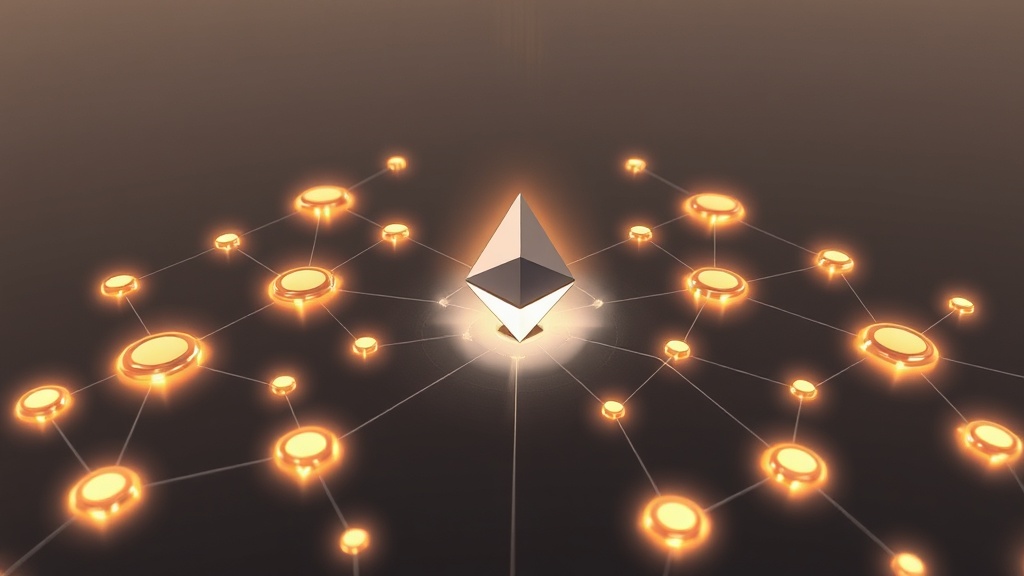
Ethereum (Ethereum) is an open-source, blockchain-based decentralized platform known for its smart contract capabilities. This article will delve into the core concepts of Ethereum, including Ether (ETH),smart contracts, and decentralized applications (DApps). It will also analyze its technical features—such as the Proof-of-Stake (PoS) consensus mechanism and scalability solutions—as well as the vast ecosystem it has built in the fields of decentralized finance (DeFi), non-fungible tokens (NFTs), and Web3.
-
Developers help recover 1,003 ETH locked in a 2016 ICO contract
Developer Florent has helped recover approximately 1,003 ETH, valued at around $2 million, that had been locked for nine years in HongCoin's 2016 ICO contract. Due to a vulnerability in the contract,

-
In Q2 2026, Web3 security incidents resulted in $764 million in losses, with 88.3% of those losses stemming from compromised keys and infrastructure.
Svmuu News: Hacken’s quarterly security and compliance report reveals that 67 security incidents in the Web3 sector during the second quarter of 2026 resulted in $763.9 million in stolen funds, markin
-
Axelar Responds to Security Incident: Axelar and IBC Remain Unaffected; Vulnerability Stemmed from “Infinite Minting” Issue in Third-Party Token Contract
Svmuu News: The cross-chain protocol Axelar Network issued a statement regarding the recent security incident involving Secret Network, stating that there are misunderstandings within the community. N
-
PancakeSwap Responds to the OLPC/LABUBU Pool Incident: Preliminary Findings Indicate No Smart Contract Vulnerability; Investigation Is Still Underway
Svmuu News: PancakeSwap has issued an announcement regarding anomalies in the OLPC/LABUBU liquidity pool on the BNB Chain, stating that the team has taken note of community reports and has launched a
-
Zodiac Releases Security Incident Review: An ERC-1271 Validation Flaw Previously Allowed Attackers to Bypass Module Authentication
Svmuu News: The Zodiac team has released an analysis report on a security incident affecting the Zodiac Roles Modifier, revealing that the root cause of the vulnerability lies in a flaw in the ERC-127
-
Litecoin Lite Strategy, a venture capital firm, led a $1 million strategic investment in LitVM
Svmuu News Nasdaq: Lite Strategy, the financial services firm behind Litecoin, has announced that it is leading a $1 million strategic investment in LitVM, while also securing governance participation
-
Aztec Labs: The affected product was discontinued four years ago, and the company has no control over it.
Svmuu News: According to monitoring by Aztec Labs, the team is investigating a potential vulnerability that may affect the Aztec payment product—which was discontinued in 2021—where approximately $2 m
-
Developers help recover 1,003 ETH locked in a 2016 ICO contract
Developer Florent has helped recover approximately 1,003 ETH, valued at around $2 million, that had been locked for nine years in HongCoin's 2016 ICO contract. Due to a vulnerability in the contract,
-
An In-Depth Analysis of Decentralized Exchanges (DEX): How They Work, Advantages, and Challenges
Decentralized exchanges (DEXs) are a core component of the cryptocurrency space, enabling peer-to-peer trading through smart contracts, where users retain control of their asset private keys at all times and do not require custody by a centralized institution. This article will delve into the operational mechanisms of DEXs, their main types (such as AMMs and order books), and analyze their significant advantages in areas such as asset sovereignty and transparency. At the same time, it will objectively present the challenges DEXs face, including liquidity, user experience, smart contract risks, and growing regulatory pressure. As of July 2026, spot trading volume on DEXs accounted for approximately 24% of the total cryptocurrency market, demonstrating their growing importance.
-
Ethereum How Wallets Manage Diverse Tokens: An Analysis of Core Mechanisms
Ethereum Wallets do not store tokens directly; instead, they control users’ addresses on the blockchain by managing private keys. Tokens themselves are smart contracts deployed on Ethereum that adhere to standardized protocols such as ERC-20 and ERC-721. Wallets use these standard interfaces to interact with smart contracts, thereby enabling the effective management and trading of various types of tokens.
-
WASM: An In-Depth Look at WebAssembly Technology and a Guide to Trading Related Tokens ZKWASM and WASM AI
WebAssembly (WASM) is not a cryptocurrency, but rather a high-performance binary instruction format widely used in blockchain smart contract and dApp development. However, there are cryptocurrency projects on the market named after WASM; among them, ZKWASM aims to combine zero-knowledge proofs with WASM, while WASM AI is a standalone token. This article will delve into the role of WASM technology in Web3 and provide information on where to trade the ZKWASM and WASM AI tokens.
-
MODEX Token Analysis: Enterprise-Grade Blockchain Solutions, Market Performance, and Future Outlook
The MODEX token is at the core of the Modex enterprise-grade blockchain solution ecosystem, designed to help businesses securely and efficiently store and share data through the Modex Network, its smart contract marketplace, and Web3 capabilities. The token was issued during an ICO in 2018 and is currently regulated in Gibraltar, UK. Although the project has an ambitious vision focused on deepening enterprise applications and expanding the ecosystem, as of July 2026, the MODEX token’s market performance has shown extremely low trading volume and insufficient market capitalization. It is viewed by market analysts as a high-risk asset, and investors should carefully evaluate its potential value and uncertainties.
-
Ethereum What Is It? An In-Depth Analysis of How It Works, Its Ecosystem Development, and Market Outlook
Ethereum It is a decentralized, open-source smart contract blockchain platform, hailed as the “World Computer,” launched by Vitalik Buterin in 2015. Its native cryptocurrency, ETH, is used to pay network transaction fees. Unlike Bitcoin, Ethereum focuses on running decentralized applications (DApps).Since the 2022 “Merge” upgrade to the Proof-of-Stake (PoS) consensus mechanism, Ethereum has seen significant improvements in energy consumption and sustainability.At the core of the platform are the EVM and smart contracts, with continuous scaling enabled by Layer 2 solutions. As of July 2026, the Ethereum ecosystem continues to grow in the DeFi and NFT sectors and has gained widespread acceptance from mainstream financial institutions, including the approval of spot ETFs.
-
Ethereum What is it? How do smart contracts power decentralized applications?
Ethereum Ethereum is a decentralized, open-source public blockchain platform proposed by Vitalik Buterin in 2013. Built around the Ethereum Virtual Machine (EVM), it enables developers to build and run various decentralized applications (DApps). Its native cryptocurrency, Ether (ETH), is used to pay transaction fees.In September 2022, Ethereum successfully completed The Merge upgrade, transitioning its consensus mechanism to Proof of Stake (PoS) and significantly reducing energy consumption. Smart contracts are self-executing programs on Ethereum that follow “if-then” logic; once deployed, they cannot be altered and serve as the cornerstone for innovations such as decentralized finance (DeFi).
-
An Analysis of the Multiple Meanings of ODA: Different Project Backgrounds and Investment Risk Assessments
“ODA Coin” refers to several different cryptocurrency projects, including Odasea, ONDA Token, and Eiichiro Oda Inu, as well as non-cryptocurrency contexts. These cryptocurrency projects generally suffer from extremely low market capitalization, poor liquidity, smart contract risks, or highly speculative nature. This article will analyze these projects one by one and assess their long-term investment value, reminding investors to conduct thorough research and fully understand the high risks involved before considering any such project.
-
Ethereum An In-Depth Analysis of the Ethereum Virtual Machine (EVM) Data Storage Mechanism
Ethereum The Ethereum Virtual Machine (EVM) is at the heart of smart contract execution, and its data storage mechanisms are critical to the efficiency and cost of contracts.This article will provide a detailed analysis of the EVM’s five main data storage areas: Storage (persistent storage), Memory (temporary memory), Calldata (call data), Stack (execution stack), and Transient Storage (introduced by EIP-1153).We will explore their characteristics, uses, differences in gas costs, and how smart contract developers can reduce transaction fees and improve contract performance by optimizing storage layout.
-
Ether Potential and Applications in Global Payment Systems
Ethereum Ethereum and its native token, Ether (ETH), are increasingly becoming an integral part of the global payment system. With its decentralized nature, smart contract capabilities, and Proof-of-Stake (PoS) consensus mechanism, offers efficient solutions for cross-border payments, tokenized assets, and stablecoin transactions.Institutional participation continues to grow, as evidenced by the launch of Ethereum Institutional in July 2026, which aims to facilitate the integration of traditional finance with the Ethereum ecosystem. Ethereum 's vast stablecoin ecosystem—which held approximately $180 billion in stablecoins as of July 2026—has significantly enhanced its utility in the global payments sector, although transaction fees during periods of network congestion remain one of the challenges it faces.
-
An In-Depth Analysis of Energi (NRG): Current Status, Technical Features, and Future Outlook
Energi (NRG) is a cryptocurrency project that combines Proof-of-Stake (PoS), smart contracts, decentralized governance, and a self-funding treasury. It aims to provide scalability and is compatible with the Ethereum Virtual Machine (EVM).As of July 16, 2026, NRG had a market capitalization of approximately $930,000 and a price of about $0.0089, ranking near the bottom of the cryptocurrency market. Its ecosystem includes Energi Bridge, MyEnergiWallet, and others.The project planned a major upgrade in 2019 and partnered with KuCoin, but its current market performance indicates it faces challenges; future development will depend on its technological advancements and ecosystem development.
-
What Is the Value of FTM? An Analysis of the Fantom (FTM) Project and Its Long-Term Growth Potential
Fantom (FTM) is a high-performance Layer-1 blockchain platform designed to solve the blockchain trilemma through its unique Lachesis consensus mechanism. This article will delve into Fantom’s core technology, the various uses of the FTM token, its thriving DeFi ecosystem, and plans for the upcoming upgrade to Sonic. We will objectively analyze Fantom’s technical strengths and market positioning to help readers understand its value within the cryptocurrency space and explore factors that may influence its long-term development.
-
Ethereum: A Dual Role in the Global Computing and Financial Infrastructure
Ethereum Since its launch in 2015, Ethereum—hailed as the “World Computer” for its smart contract capabilities—has provided a platform for the development of decentralized applications (DApps). At the same time, with the rapid growth of the decentralized finance (DeFi) ecosystem, has increasingly become a key component of the global financial infrastructure.This article will delve into the developments and challenges surrounding Ethereum in these two core areas, as well as its future direction.
-
NEAR Protocol: A Layer 1 blockchain powering decentralized applications and the AI economy
NEAR Protocol is a Layer 1 blockchain platform designed to provide scalable, user-friendly, and secure underlying infrastructure for decentralized applications (dApps) and the future AI economy. It was founded by Illia Polosukhin and Alexander Skidanov in 2018, and its mainnet launched in April 2020. Through its unique sharding technology (Nightshade) and Threshold Proof-of-Stake (TPoS) consensus mechanism, NEAR addresses the challenges traditional blockchains face in terms of scalability, transaction speed, and cost. The platform is also committed to enhancing the user and developer experience through features such as “chain abstraction” and “human-readable account names,” and is actively pursuing the integration of AI and blockchain.
-
Ethereum 7 Reasons It's No Longer an Altcoin
Since its launch in 2015, Ethereum (ETH) has evolved from a project initially viewed as an “altcoin” into the world’s second-largest cryptocurrency, playing a pivotal role as the “World Computer” in the blockchain space.This article will delve into the seven core reasons why Ethereum can no longer be simply categorized as an altcoin, covering its technological innovations, ecosystem, market position, use cases, consensus mechanism, institutional recognition, and future growth potential, with the aim of comprehensively explaining the unique value and industry influence of Ethereum.
-
Ethereum How Its Creation Ushered in the Blockchain 2.0 Era
Ethereum It officially launched on July 30, 2015, marking the dawn of the Blockchain 2.0 era.Unlike Blockchain 1.0, which focused on cryptocurrency trading, Ethereum introduced the concepts of smart contracts and decentralized applications (DApps), greatly expanding the scope of blockchain technology. This article will explore in depth how Ethereum is leading blockchain technology into a new phase of broader application and greater programmability through these innovations.
-
What is QTUM? Where can I buy and sell it?
QTUM is the native cryptocurrency of the Qtum blockchain, designed to combine the security of Bitcoin with the smart contract capabilities of Ethereum. Qtum was founded by Patrick Dai and others in 2016 and launched its mainnet in 2017; its tokens are primarily used for trading, paying network fees, staking, and governance.Qtum’s technical features include the UTXO model, an account abstraction layer, and the MPoS consensus mechanism. Users can buy and sell QTUM on major centralized exchanges such as Binance, OKX, Gate.io, and Kraken.
-
Analysis of EOSC Token Value and Long-Term Investment Potential
EOSC is the native token of the EOS Force project, a decentralized, high-performance smart contract platform. This article will delve into the current value, technical features, use cases, and long-term investment potential of EOSC, helping readers gain a comprehensive understanding of the token. It is important to note that the cryptocurrency market is highly volatile, and all investments carry risks.
-
$REACT Coin Potential Analysis: Is It Worth Holding for the Long Term?
Reactive Network (REACT) is an innovative blockchain infrastructure launched by PARSIQ. At its core is the “Reactive Smart Contract” (RSC), designed to enable autonomous execution based on on-chain events. As the native utility token of its ecosystem, the REACT token plays a key role in transaction fees, validator staking, and event log processing. This article will delve into REACT’s technical advantages, token economic model, use cases, and market forecasts to assess its long-term holding potential.
-
Ethereum An Analysis of Key Factors in Value Growth
Ethereum As the world’s leading smart contract platform, the sustained growth of its intrinsic value is no coincidence.This article will delve into the three core factors driving the development and value appreciation of the Ethereum ecosystem: its vast and ever-expanding application ecosystem, ongoing technological upgrades and innovation, and strong network effects coupled with active community support. These foundational elements collectively underpin the long-term potential of Ethereum as a decentralized infrastructure.
-
Ethereum: An Analysis of Core Concepts, Technical Features, and the Ecosystem
Ethereum (Ethereum) is an open-source, blockchain-based decentralized platform known for its smart contract capabilities. This article will delve into the core concepts of Ethereum, including Ether (ETH),smart contracts, and decentralized applications (DApps). It will also analyze its technical features—such as the Proof-of-Stake (PoS) consensus mechanism and scalability solutions—as well as the vast ecosystem it has built in the fields of decentralized finance (DeFi), non-fungible tokens (NFTs), and Web3.
















Smart Contracts

24H Trending
-
1
Iran-linked exchange Shelbit allegedly sent $676 million to Binance in sanctions-evasion operation, Reuters reports
-
2
Analysis Compares Healthcare ETFs: Invesco Nasdaq Biotech ETF (IBBQ) Saw 45.5% One-Year Return, Outperforming State Street Healthcare Select Sector SPDR ETF (XLV)
-
3
What Is POLA? Background and Investment Risk Analysis of the Pola On Base Project

-
4
What Is DuckChain (DUCK)? An Analysis of Its Future Prospects

-
5
Claiming Social Security benefits at age 62 instead of 67 can reduce monthly payments by 30%, potentially costing average retirees $150,000 over 20 years.
-
6
Analysis: Roundhill N-100 0DTE Covered Call ETF (QDTE) Payouts May Include Return of Capital, Trailing Nasdaq-100 Performance
-
7
The Future of Wrapped Bitcoin (WBTC): Bitcoin’s Role as a Bridge and the Challenges It Faces in the Ethereum DeFi Ecosystem

-
8
Analysis: Robinhood (HOOD) Stock Down 43% From High, Q2 Revenue Up 32% YoY Driven by Prediction Markets and Equities Trading
-
9
BNB (BNB) is increasingly becoming a key component of cryptocurrency index funds and ETFs.

-
10
EPAM Systems' stock price rose 17.5% last week following the announcement that it had joined the OpenAI Partner Network
Markets Today



Recommended Reading

Hot Topics

Svmuu focuses on blockchain industry trends and cutting-edge cryptocurrency news, while also covering real-time market data and in-depth analysis of the Hong Kong, U.S., and foreign exchange markets. Here, you can not only access professional 24/7 news updates and accurate market data, but also utilize practical investment tools to help you capitalize on opportunities in both digital assets and traditional financial markets. Whether you are a blockchain enthusiast or an investor in Hong Kong, U.S., or foreign exchange markets, we provide efficient and timely information services to empower your investment decisions.
- User Agreement
- Privacy Policy
- Contact Us
- Business Partnerships
- Disclaimer
- Content Statement
- About Us
- Sitemap
 Coming Soon!
