

Faster global financial news!
CEX
-
How to Buy and Sell XRP (XRP)? A Roundup of Major Exchanges That Support XRP
XRP (XRP), the native digital asset of the Ripple network, is designed to provide fast, low-cost cross-border payment solutions. Investors and users can buy and sell XRP in a variety of ways, including purchasing it directly with fiat currency, exchanging it for other cryptocurrencies, or participating in derivatives trading.XRP is listed on numerous major centralized cryptocurrency exchanges worldwide, such as Kraken, Coinbase, and Gate.com. Users must register an account and complete identity verification on these platforms before they can trade. Be sure to understand market volatility and related risks before trading.
-
TREAT Token Buying and Trading Guide: Which Exchanges Support It and How to Store It
The TREAT token is an integral part of the Shiba Inu ecosystem, designed to provide liquidity for the SHI stablecoin and serve as a reward token on ShibSwap.This article will provide a detailed overview of the various channels for buying, selling, and trading TREAT, including decentralized exchanges (DEXs) and centralized exchanges (CEXs), and outline common methods for storing the token.As of this writing, TREAT has a market capitalization of approximately $160,000 to $180,000 and is primarily traded on the DEX at Ethereum and on select CEXs.
-
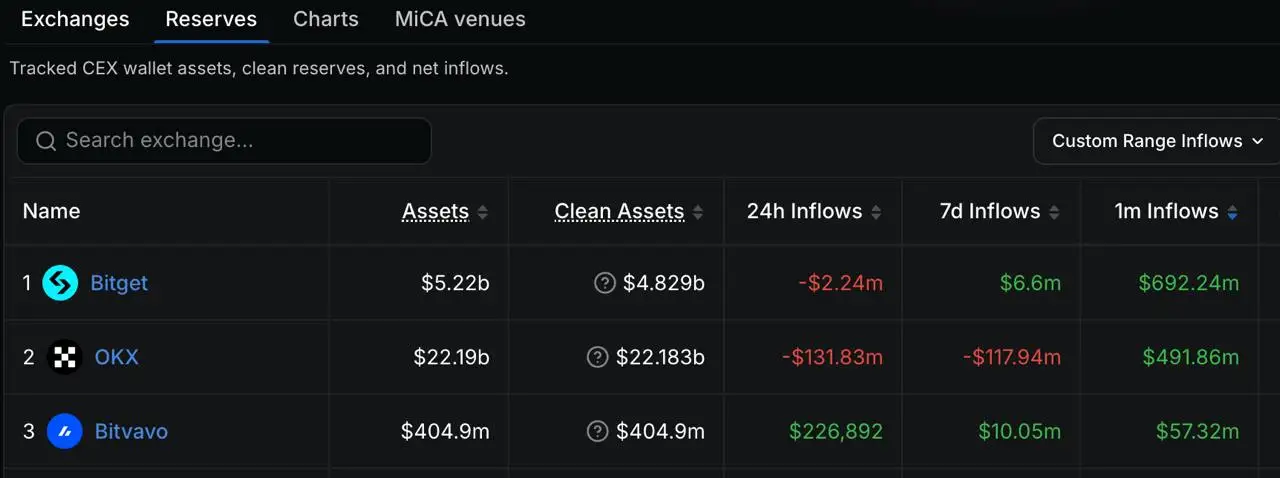
Possibly influenced by the U.S. earnings season, Bitget has ranked first in net capital inflows over the past 30 days
Svmuu News: With the recent start of the U.S. earnings season, trading activity for U.S. stock-linked tokens has picked up. According to DeFiLlama data, possibly influenced by this trend, Bitget has s
-
What Are Some Legitimate and Reliable Cryptocurrency Exchanges? An In-Depth Analysis of the World’s Leading Platforms
As the cryptocurrency market continues to evolve, choosing a secure, compliant, and feature-rich trading platform is crucial.This article will delve into the key factors for evaluating cryptocurrency trading platforms, including security, compliance, liquidity, supported asset types, and user experience. We will also introduce the features and advantages of leading global trading platforms such as Binance, Coinbase, OKX, and Bitget, to help readers make informed choices in a global context.
-
Overview and Rankings of Global Digital Currency Trading Platforms: An Analysis of Centralized and Decentralized Exchanges
Digital currency trading platforms serve as the central hubs for the circulation of crypto assets and are primarily divided into centralized exchanges (CEX) and decentralized exchanges (DEX). CEXs dominate the market due to their high liquidity and convenience, while DEXs emphasize user control over their assets.As of this writing, leading CEXs such as Binance, OKX, Bybit, and Coinbase account for a significant share of global trading volume. This article will delve into the characteristics of various trading platforms, the market landscape, and the key factors users should consider when selecting a platform, helping readers better understand and participate in the cryptocurrency market.
-
Guide to Buying and Selling ZTC Tokens: Which Exchanges List ZenChain Tokens?
ZTC is the native token of the ZenChain project and is primarily issued on the BNB Smart Chain (BSC). As of July 2026, ZTC tokens can be traded on several centralized cryptocurrency exchanges, including Bitget, MEXC, Gate.io, KuCoin, and others. This article will provide a detailed overview of how to trade ZTC, the major platforms where it is listed, and storage options, helping readers understand how to buy, sell, and manage ZTC.
-
What Are Some USDT Trading Platforms? A Roundup of Major Centralized and Decentralized Platforms
As one of the stablecoins with the largest market capitalization, USDT plays a key role in the cryptocurrency market. This article will take an in-depth look at the major trading platforms for USDT, including globally renowned centralized exchanges (CEXs) such as Binance, OKX, and Coinbase, as well as decentralized exchanges (DEXs).We will analyze the characteristics and advantages of each type of platform and provide key factors to consider when selecting a trading platform, helping readers better manage and trade USDT.
-
An Overview of Major Global Cryptocurrency Exchanges and an Analysis of Third-Party Tools
This article provides an in-depth exploration of the world’s leading centralized and decentralized cryptocurrency trading platforms, including Binance, Coinbase, and Uniswap, and analyzes their market positions, features, and compliance.At the same time, the article provides a detailed overview of common third-party auxiliary software used in cryptocurrency trading, such as trading bots and copy-trading tools, and comprehensively analyzes the security, regulatory, and market manipulation risks associated with using these tools, offering investors a comprehensive reference.
-
A Roundup of the World’s Leading Cryptocurrency Exchanges: A Guide to Trading Bitcoin, and Other Digital Assets
The cryptocurrency market is vibrant, with numerous trading platforms offering users trading services for Bitcoin and various other digital assets.This article will review the world’s major centralized exchanges, including Binance, Coinbase, OKX, and others, and delve into the key factors to consider when selecting a trading platform, such as security, compliance, trading fees, liquidity, and the diversity of supported cryptocurrencies. Understanding these platforms and their features will help investors make informed decisions.
-
How do I trade BCUBE tokens? On which cryptocurrency exchanges is BCUBE listed?
BCUBE is the native utility token of the B-cube.ai platform, which provides AI-driven cryptocurrency trading tools. The BCUBE token is primarily traded on decentralized exchanges (DEXs) such as Uniswap V2, though it is also listed on some centralized exchanges (CEXs). This article will provide a detailed overview of how to buy and sell BCUBE, as well as its main trading platforms and use cases.
-
Besides Binance, what other major platforms support USDT cryptocurrency trading?
In the global cryptocurrency market, USDT, as a major stablecoin, sees enormous trading demand. In addition to Binance, numerous mainstream centralized and decentralized platforms also offer USDT trading services.This article will review well-known exchanges such as Kraken, Coinbase, KuCoin, and OKX, examining their features in terms of trading fees, compliance, user experience, and asset coverage, while also introducing decentralized trading options to help users worldwide choose the USDT trading platform that best suits their needs.
-
How to Buy and Sell DGNX? DegenX Token Exchange Listings and Trading Guide
DGNX is the governance and utility token of the DegenX ecosystem. It runs on the Avalanche platform and supports multi-chain distribution. It is backed by an asset pool and operates under a DAO governance model. As of July 2026, DGNX can be traded on centralized exchanges such as KuCoin, or bought and sold via decentralized exchanges connected through Web3 wallets. This article provides a detailed overview of how to trade DGNX and related market information.
-
AVAX Buying Guide: Where to Buy AVAX and How to Trade It
AVAX is the native token of Avalanche, a high-performance blockchain platform, and is used to pay transaction fees, participate in network governance, and stake. This article provides a detailed guide on how to buy AVAX, including how to choose major centralized exchanges such as Binance, OKX, and Coinbase, as well as complete step-by-step instructions for trading using fiat or cryptocurrency deposits.Additionally, the article highlights key considerations when trading AVAX, such as chain compatibility (X-Chain, C-Chain, P-Chain), account security settings, and the fees and liquidity of different exchanges, aiming to provide global readers with a clear and practical guide to trading AVAX.
-
Cryptocurrency Trading Platforms and the "Bitcoin" Buying Guide: Selection, Security, and Regulatory Considerations
Cryptocurrency trading platforms serve as the central hubs for buying and selling digital assets, and are primarily divided into centralized exchanges (CEX) and decentralized exchanges (DEX). When selecting a platform, it is essential to comprehensively evaluate compliance, security, liquidity, fee structures, and user experience.The global regulatory landscape is becoming increasingly clear; for example, the EU’s MiCA regulation took effect in July 2024, while mainland China has imposed a comprehensive ban on virtual currency trading services. This article will delve into the characteristics of various platforms and provide practical guidance on purchasing at Bitcoin to help you participate in the digital asset market safely and efficiently.
-
How do I buy and sell TFTC? Which platforms is it listed on?
TFTC is considered a high-risk cryptocurrency, and its market value and trading liquidity are currently low. Investors interested in trading TFTC may want to explore centralized exchanges such as Bitget that support this token. The TFTC token is built on an EVM-compatible blockchain and can therefore be managed using Web3 wallets such as MetaMask. Be sure to fully understand the potential risks before making any trades.
-
Guide to Buying and Selling DGB: Learn About DigiByte and Its Major Trading Platforms
DGB is the native cryptocurrency of the DigiByte blockchain, known for its fast transactions, high security, and multi-algorithm mining mechanism. This article will provide a detailed overview of the process for buying and selling DGB, and list the major centralized exchanges and instant exchange platforms that support DGB trading. Understanding DGB’s unique technical features—including its 15-second block time, high transaction throughput, and features such as DigiAssets and Digi-ID—will help you better understand and participate in the DGB trading ecosystem.
-
FCH (Freecash) Trading Guide and Listings on Exchanges
FCH, also known as Freecash, is a cryptocurrency based on the X13 algorithm that combines Proof-of-Stake (PoS) and Proof-of-Work (PoW) mechanisms. It is characterized by low transaction fees and fast transaction speeds, and is set to become the official payment currency of Fanáticos Criptos. Currently, FCH is primarily traded via spot trading on centralized exchanges (such as CoinEx) or exchanged through decentralized exchanges (DEXs) connected via Web3 wallets. Given that its market capitalization and circulating supply data may appear extremely low or may not be tracked, potential traders should be aware of liquidity risks.
-
How do I buy and sell DBNB? On which exchanges is DecentraBNB listed?
DecentraBNB (DBNB) is a travel app token based on the Ethereum, designed for booking accommodations.Currently, trading options for DBNB are relatively limited. It can primarily be purchased through certain centralized exchanges (such as Bitget) or exchanged via decentralized exchanges (DEXs), for example, by connecting a Web3 wallet to a DEX. Major exchanges such as Binance, KuCoin, and Coinbase do not currently offer direct spot trading for DBNB.
-
YFE Money (YFE) and Lyfe (LYFE) Trading Guide and Listed Exchanges
In the cryptocurrency market, there are two tokens with similar names—YFE Money (YFE) and Lyfe (LYFE)—which are easily confused. YFE Money (YFE) currently has extremely low trading activity, with a circulating supply shown as zero; only a very small number of transactions take place primarily through decentralized platforms such as Uniswap V2. In contrast, Lyfe (LYFE) can be traded on centralized exchanges such as Indodax as well as decentralized exchanges, and has relatively higher liquidity. This article will separately introduce the current trading status and listed platforms for these two tokens.
-
Cryptocurrency Trading Platforms: Types of Software and an Overview of Major Platforms
Cryptocurrency trading platforms are primarily divided into centralized exchanges (CEX) and decentralized exchanges (DEX). CEXs are operated by institutions and provide asset custody, while DEXs are based on smart contracts and allow users to hold their own private keys. Mainstream platforms typically offer multiple software formats, including web versions, mobile apps, and desktop clients.This article will provide a detailed overview of these two types of platforms, their software features, and major trading platforms such as Binance, OKX, and Coinbase.
-
How do I buy and sell OTK tokens? Which cryptocurrency exchanges list them?
OTK (Octokn) is a token issued by the Octo Gaming platform, a Solana-based mobile gaming platform designed to connect Web2 and Web3 players. OTK tokens can be traded on centralized exchanges (CEXs) such as KuCoin and MEXC, as well as decentralized exchanges (DEXs) such as Raydium and Orca. Users typically need to first register and complete identity verification on a CEX, then deposit stablecoins, and finally trade OTK on the spot market.
-
Guide to Buying and Selling PROP Tokens: A List of Exchanges Where Props Token and Propbase Are Listed
The term “PROP token” may refer to either the Props Token or Propbase. This article will provide an overview of the background and primary uses of each of these tokens, as well as how to buy and sell them on centralized exchanges such as Gate.io and MEXC. It will also list the supported trading pairs and wallets for storing them, to help readers understand how to trade them.
-
How do I buy and sell ROGin AI (ROG) tokens? Which cryptocurrency exchanges list them?
ROGin AI (ROG) is a cryptocurrency project that combines artificial intelligence and blockchain technology, designed to help traders manage risk through metaverse sandbox training and quantitative strategies. Its ecosystem consists of two major services—ROGap and Roger—both powered by the native ROG token. Users can trade ROG spot on centralized exchanges (such as BingX, MEXC Global, and Bitget) or buy and sell it on decentralized exchanges or peer-to-peer (P2P) markets. As of this writing, ROG’s market capitalization is approximately $18 million.
-
QI Coin Trading Guide: How to Buy and Sell QI on Major Exchanges?
“QI Coin” may refer to several cryptocurrency projects, the most common of which is BENQI (QI). This article will provide a detailed guide on how to buy and sell BENQI (QI) on major cryptocurrency exchanges, as well as list the trading platforms for other tokens with the same name, to help you understand the options for trading QI Coin.



















-
DEXs Capture Record 24% of Spot Crypto Trading as CEX Volumes Sink to 12-Month Low of $670 Million
According to The Block, spot exchange volume is on track to set a new 12-month low at $670 million, a significant decrease from its annual high of $2.23 trillion, indicating a shift towards decentrali
-
Report: Crypto “Traditional Finance” Market Grows to $6.6 Billion; Centralized Exchanges Are Expanding Their Stock and Commodity Tokenization Businesses
A study by CoinGecko shows that demand for tokenized stocks and commodities on centralized exchanges is growing, driving the crypto “traditional finance” (TradFi) market to a size of $6.6 billion—a fi
-
Possibly influenced by the U.S. earnings season, Bitget has ranked first in net capital inflows over the past 30 days
Svmuu News: With the recent start of the U.S. earnings season, trading activity for U.S. stock-linked tokens has picked up. According to DeFiLlama data, possibly influenced by this trend, Bitget has s
-
How to Choose a Cryptocurrency Exchange Platform? Mainstream Software and Security Considerations
This article aims to provide a comprehensive guide to cryptocurrency trading software for a global audience, covering the operational models of both centralized and decentralized exchanges. We will explore the characteristics of mainstream trading platforms and delve into key factors for selecting secure and reliable platforms (so-called "guaranteed trading platforms"), including reputation, security, liquidity, fees, and compliance, to help you make informed trading decisions.
-
Bitcoin Trading Platforms and Mobile Apps Guide: Selection and Considerations
Bitcoin trading platforms are primarily divided into Centralized Exchanges (CEX) and Decentralized Exchanges (DEX). CEXs offer convenient fiat on/off-ramps and various trading services but involve asset custody; DEXs, on the other hand, are based on blockchain smart contracts, where users maintain control over their own funds. When choosing a platform, key factors to consider include security, compliance, liquidity, and fee structure. Mainstream CEXs typically provide feature-rich mobile apps, allowing users to trade and manage assets anytime, anywhere. This article will introduce platforms that currently support Bitcoin trading and their main characteristics.
-
Global Digital Asset Trading Platform Landscape: How to Choose a Reliable Cryptocurrency Exchange?
Numerous centralized and decentralized digital asset trading platforms operate globally, offering cryptocurrency trading services to users. When selecting a reliable platform, it is essential to consider its compliance, security, liquidity, and user experience. This article will outline the current market landscape, introduce major platforms, and analyze regulatory developments in different jurisdictions to help readers understand how to evaluate and choose suitable trading channels.
-
Global Bitcoin and Cryptocurrency Trading Platforms Overview and Latest Regulatory Developments
As the global cryptocurrency market continues to evolve, the trading platforms for Bitcoin and various virtual currencies are becoming increasingly diverse. This article will delve into the current mainstream centralized exchanges, analyzing their market position and characteristics globally. Concurrently, we will focus on the constantly evolving regulatory landscape worldwide, including the latest policy developments in major jurisdictions such as the United States, the European Union, and Hong Kong, as well as the strict restrictions in mainland China. Furthermore, the article will outline the latest trends in the crypto industry concerning technology, asset tokenization, and mergers and acquisitions, helping readers gain a comprehensive understanding of the current crypto trading ecosystem.
-
CONK Coin Trading Guide: Understanding Its Listed Exchanges and How to Buy
CONK is a Web3 token built on the Solana blockchain, characterized by its high-speed and low-cost transactions. The token is primarily traded on decentralized exchanges (DEXs) like Raydium, with some centralized exchanges (CEXs) such as Coinbase also supporting its purchase. CONK has relatively low trading volume and market capitalization, and its price is highly volatile. Investors should fully understand the associated risks before engaging in trading.
-
Core Elements of Blockchain Platform Development and an Overview of Major Global Cryptocurrency Exchanges
This article delves into the key technologies and services for building blockchain platforms, from Web3 development trends to enterprise-grade BaaS platforms, covering core components such as distributed ledgers, consensus mechanisms, and smart contracts. Concurrently, the article provides an overview of leading global virtual currency trading platforms, analyzing market growth, trading volume data, and security considerations, to help readers understand the current landscape and technological foundations of the cryptocurrency market.
-
BABYSWEEP Trading Guide: How to Buy and Sell BABYSWEEP on Major Platforms
BABYSWEEP coin, as a digital asset in the crypto market, is currently listed on multiple trading platforms, providing users with channels for buying, selling, and trading. This article will detail the trading platforms for BABYSWEEP coin and provide basic steps for trading on CEXs and DEXs, helping readers understand how to safely and effectively acquire or sell BABYSWEEP coin.
-
2026 Perspective: A Review of the 2025 Global Cryptocurrency Exchange Landscape and Industry Trends
Looking back from the perspective of 2026, the cryptocurrency exchange market in 2025 demonstrated significant maturity and transformation. This year, the market shifted from pure trading speculation towards institutional-grade infrastructure and utility functions, with regulatory frameworks becoming increasingly clear and institutional adoption accelerating. A hybrid model of CEX and DEX emerged, Layer-2 and cross-chain solutions were integrated, and stablecoins became further mainstream. Concurrently, the convergence of traditional finance and blockchain, as well as the integration of AI and cryptocurrencies, also became important trends. This article will delve into the market data, key exchange performance, and critical factors influencing industry development in 2025.
-
Global Mainstream Cryptocurrency Exchange Rankings and Feature Analysis
The cryptocurrency market continues to grow, with Centralized Exchange (CEX) platforms showing significant trading volume increases in 2024. This article will delve into the world's leading digital asset trading platforms, including Binance, OKX, Coinbase, and others, analyzing their performance in terms of market share, trading volume, product features, and compliance. Concurrently, the article will briefly introduce the current state of Decentralized Exchanges (DEXs) and elaborate on key metrics for evaluating the security and liquidity of trading platforms, providing readers with a comprehensive market overview.
-
Decentralized vs. Centralized Exchanges: How to Choose the Best Cryptocurrency Exchange
In the realm of cryptocurrency trading, Decentralized Exchanges (DEXs) and Centralized Exchanges (CEXs) are the two major types of platforms. DEXs emphasize user self-custody of assets and privacy protection, facilitating peer-to-peer transactions through smart contracts, with representative platforms including Uniswap and PancakeSwap. CEXs, on the other hand, offer higher liquidity, more user-friendly interfaces, and a wider range of products, but users must entrust their assets to the platform, such as Binance and Coinbase. When choosing a platform, one needs to consider security, liquidity, fees, user experience, and personal trading habits.
-
ICSA Token Trading Guide: How to Buy and Sell ICSA on Decentralized and Centralized Platforms
ICSA tokens exist on both the PulseChain and Ethereum networks, primarily traded via decentralized exchanges (DEXs) such as PulseX V2 and Uniswap V3. Some centralized exchanges (CEXs) like Bitget and BitMart also offer trading services for ICSA. However, ICSA's 24-hour trading volume is relatively low, and its smart contract carries a risk of modification by the creator, so investors should be wary of high volatility and potential risks. This article will detail ICSA's trading channels and precautions.
-
GTON Coin Purchase and Trading Guide: Which Exchanges Is It Listed On?
GTON coin, the token of the GTONCapital and Gatto Gamebot ecosystem, is tradable on both centralized and decentralized platforms. Currently, centralized exchanges such as LBank and Bitget offer the GTON/USDT trading pair. On the decentralized front, STON.fi within the TON ecosystem is the primary trading venue, while Quickswap on Ethereum also previously supported GTONCapital tokens. Investors can connect their Web3 wallets to DEXs for exchange, but should be mindful of market volatility and potential risks.
-
Access Protocol (ACS) Token Trading Guide: How to Buy, Sell, and Exchange Listings Explained
Access Protocol (ACS) aims to revolutionize online content monetization by enabling access to premium content through token staking. This article details how to buy and sell ACS tokens, including processes for both centralized and decentralized exchanges, and lists major platforms supporting ACS trading. As of September 1, 2026, the ACS price is approximately $0.0001473, with a market capitalization of about $8.66 million and a 24-hour trading volume of nearly $200,000.
-
Ethereum (ETH) Trading Platform Selection Guide: Centralized vs. Decentralized Exchange Recommendations
When choosing a platform to trade Ethereum (ETH), investors must weigh the convenience and liquidity of Centralized Exchanges (CEXs) against the non-custodial nature and privacy of Decentralized Exchanges (DEXs). This article will delve into the pros and cons of both types of platforms, their fee structures, and recommend a range of platforms suitable for different needs, including mainstream CEXs like Binance and Coinbase, as well as DEXs like Uniswap and SushiSwap, to help you make an informed decision.
-
BTC China (BTCC) Is Not a Decentralized Platform: A Look Back at Its History and the Impact of Chinese Regulation
BTC China (later renamed BTCC) was once China's first and a globally leading centralized Bitcoin exchange platform, not a decentralized digital asset exchange (DEX). Established in 2011, the platform played a significant role in the early development of China's cryptocurrency market. However, due to increasingly strict regulatory policies from the Chinese government, it ceased its trading operations within mainland China in 2017. Subsequently, China's comprehensive ban on cryptocurrencies prompted some traders to shift towards decentralized peer-to-peer trading.
-
P2PS Coin Trading Guide: Understanding Its Use and Available Trading Platforms
P2PS Coin is an ERC20 token issued by the P2P Solutions Foundation, aiming to build a secure digital asset and file exchange system. The token operates on the Ethereum network and has recently shown active trading volume and price growth. This article will detail the uses of P2PS Coin, its market overview, and the CEXs that currently support its trading, helping readers understand how to acquire and manage P2PS Coin.
-
Global Mainstream Cryptocurrency Exchange Websites and Apps Analysis: Centralized vs. Decentralized Choices
The cryptocurrency market boasts numerous trading platforms, primarily categorized into Centralized Exchanges (CEXs) and Decentralized Exchanges (DEXs). CEXs are operated by institutions, offering high liquidity, a wide range of trading pairs, and fiat on/off-ramp services, but users do not control their private keys. DEXs, on the other hand, are based on smart contracts, giving users full control over their assets, but typically have lower liquidity. When choosing a platform, key considerations should include security, compliance, liquidity, trading fees, and user experience. This article will introduce the major global centralized trading platforms as of publication and discuss the characteristics and selection considerations for both types of platforms.
-
USDT Trading Platforms & Apps: Top Centralized and Decentralized Options
As one of the largest stablecoins globally, the choice of trading platforms and mobile applications for USDT is crucial. This article will introduce the mainstream Centralized Exchanges (CEXs) and Decentralized Exchanges (DEXs) currently on the market, analyzing their characteristics in terms of security, liquidity, transaction fees, user experience, and compliance, to help you choose the most suitable USDT trading tool based on your needs.
-
SHIBShiba Inu Mainstream Trading Platform Analysis: How Global Users Choose
Shiba Inu (SHIB) has evolved from a memecoin into a mature ecosystem with the Shibarium Layer 2 network and the DEX ShibaSwap. Its widespread acceptance makes it tradable on major centralized and decentralized exchanges globally. This article will analyze the primary trading platforms for SHIB, helping users worldwide understand how to choose the most suitable SHIB trading channel based on factors such as security, liquidity, fees, and user experience.
-
Virtual Currency Exchange Platforms and Software: Mainstream Choices and Feature Analysis
Cryptocurrency spot trading platforms are the core venues for digital assets trading, primarily divided into Centralized Exchanges (CEXs) and Decentralized Exchanges (DEXs). This article will delve into mainstream global CEXs such as Binance, Coinbase, and OKX, as well as the representative DEX, Uniswap. It will also introduce various auxiliary trading software and tools to help investors understand the characteristics and functions of different platforms, enabling them to make informed choices.
-
PROPS (Propbase) Buying and Trading Guide: Exchange Listings and Market Status Analysis
PROPS coin is the native token of the Propbase real estate tokenization platform, designed to simplify real estate investment through blockchain technology. This article will detail various ways to buy and sell PROPS coins, including processes on centralized and decentralized exchanges, and list the main platforms currently supporting PROPS trading. In addition, it will provide the latest market data and project development overview for PROPS coin, helping readers gain a comprehensive understanding of its ecosystem and market performance.
-
Cryptocurrency Trading Platforms: Types, Market Landscape, and Global Regulatory Challenges
Cryptocurrency trading platforms are core hubs of the digital assets market, primarily divided into Centralized Exchanges (CEXs) and Decentralized Exchanges (DEXs). CEXs offer high liquidity and convenient fiat gateways, while DEXs emphasize asset self-custody and privacy. As of August 2026, the total global cryptocurrency market capitalization is close to $2.74 trillion, with intense market competition and a significant "winner-take-all" effect, where platforms like Binance, Bybit, and MEXC hold dominant positions. As the market continues to evolve, global regulatory bodies are continuously strengthening their scrutiny of crypto assets to address potential risks and protect investors, while exchange security measures have also become paramount.
-
What are the Pi Coin (PI) trading platform apps? An analysis of its trading status and risks.
Since its mainnet launch in February 2025, Pi Coin (PI) has been listed on some CEXs, but users need to complete KYC and migrate their tokens to trade. As of August 2026, its price has fluctuated in the range of $0.088-$0.09, with a market capitalization exceeding $1 billion. Although major exchanges have not yet supported it, platforms like OKX and MEXC have provided trading pairs. This article will delve into the current trading status of PI coin, available platforms, and potential risks.
-
JasmyCoin (JASMY) Trading Guide: How to Buy and Sell, and a List of Exchanges
JasmyCoin (JASMY) is the native token launched by the Japanese platform Jasmy, aiming to empower user data sovereignty through the integration of IoT and blockchain technologies. As an ERC-20 token, JASMY has been listed on multiple mainstream centralized and decentralized exchanges, providing convenient trading channels for users worldwide. This article will detail the methods for buying and selling JASMY and list the main platforms currently supporting JASMY trading, helping readers understand its acquisition and circulation channels.




















CEX

24H Trending
-
1
THALES Token: The Governance Token of Thales Protocol and Its Market Status

-
2
Ethereum (ETH) Buying Guide: Mainstream Exchanges and Acquisition Methods Explained

-
3
US DOJ charges two Robinhood engineers with front-running crypto listings on Hyperliquid, allegedly profiting over $50,000 each
-
4
DANA Coin: Ardana Project Token with Halted Development, Current Status and Investment Value Analysis

-
5
SK hynix in talks with Intel over potential US memory production agreement
-
6
CRI (Crypto International) Project Analysis and Market Status

-
7
CINEMA Token Analysis: An Overview of Absolute Cinema and CinemaKoin Projects and Investment Considerations

-
8
Bybit to adjust risk limits and leverage for selected perpetual contracts including 1000XECUSDT and BLASTUSDT, effective Sep 18, 2026
-
9
Anthropic, after calling for an AI slowdown, has signed its first data center lease in Australia, planning a total capacity of 2.16 GW.
-
10
Global Ranking of Major Cryptocurrency Exchanges and Overview of Bitcoin Trading Channels

Markets Today





Recommended Reading

Hot Topics

Svmuu focuses on blockchain industry trends and cutting-edge cryptocurrency news, while also covering real-time market data and in-depth analysis of the Hong Kong, U.S., and foreign exchange markets. Here, you can not only access professional 24/7 news updates and accurate market data, but also utilize practical investment tools to help you capitalize on opportunities in both digital assets and traditional financial markets. Whether you are a blockchain enthusiast or an investor in Hong Kong, U.S., or foreign exchange markets, we provide efficient and timely information services to empower your investment decisions.
- User Agreement
- Privacy Policy
- Contact Us
- Business Partnerships
- Disclaimer
- Content Statement
- About Us
- Sitemap
 Coming Soon!
