

Faster global financial news!
DeFi
-
What Is ZRX? An In-Depth Analysis of the 0x Protocol and the Value and Risks of Its Token
ZRX is the native token of the 0x Protocol, an open-source, decentralized infrastructure designed to facilitate peer-to-peer trading of digital assets on Ethereum and other EVM-compatible chains.ZRX tokens enable governance and staking and can be used to pay protocol fees. Their value potential is driven by factors such as the expansion of the DeFi ecosystem and technological innovation, but they also face market volatility, intense competition, and security risks. As of July 2026, the price of ZRX is well below its all-time high, and short-term forecasts remain uncertain.
-
FIS Token (StaFi Protocol): Analysis of Prospects and Future Outlook
FIS is the native token of the StaFi Protocol, which aims to address the liquidity issues of PoS assets by issuing rTokens. Recently, StaFi underwent a 2.0 transformation, repositioning itself as a Layer-1 platform for liquid staking derivatives (LSD) and introducing the “Liquid Staking as a Service” (LSaaS) model and SubDAO architecture to enhance the ecosystem’s scalability and cross-chain capabilities. Despite recent market volatility, its technological innovations and ecosystem strategy remain the focus of attention.
-
What Is SPO? An Analysis of the Spores Network Token’s Use Cases and Trading Platforms
SPO is the native token of Spores Network, a platform dedicated to building a cross-chain NFT and DeFi ecosystem that supports creative industries such as digital art and collectibles. The SPO token is used for governance, DeFi interactions, paying platform fees, and subscribing to services. As of July 29, 2026, SPO had a market capitalization of approximately $102,000 and is tradable on centralized exchanges such as Gate.io, as well as decentralized exchanges like Uniswap V2 and PancakeSwap (v2).
-
What Is DUSD? An Analysis of DaMei Coin and StandX DUSD: Positioning and Trading
The term “DUSD” refers to several projects, primarily including “Decentralized USD” (or “Digital USD”) issued by Digital USD, LLC, which is designed to function as a stablecoin pegged 1:1 to the U.S. dollar, regulated under U.S. law, and audited by PwC. In addition, there is also “StandX DUSD” on the market, an interest-bearing stablecoin built on the BNB Smart Chain and Solana, designed to automatically distribute yields to holders. This article will introduce the characteristics, uses, and acquisition methods of these DUSD tokens separately.
-
In-Depth Analysis: Leverage and Contract Opportunities in the TRIAS and NAVI Protocols
This article provides an in-depth exploration of TRIAS, a decentralized cloud computing infrastructure, and its token, TRIAS, as well as NAVI Protocol, a DeFi protocol built on the Sui blockchain, and its token, NAVX. TRIAS provides a trusted computing environment through its Layer-1 network concept and has listed perpetual futures contracts on major exchanges, offering traders opportunities for leveraged trading. NAVI Protocol, meanwhile, focuses on lending, liquid staking, and leveraged yield strategies within the Sui ecosystem, aiming to enhance capital efficiency and user security. The article analyzes the technical features, market performance, recent developments, and potential risks of both projects, presenting readers with innovations and opportunities in the crypto space.
-
What Is COW? An Analysis of the CoW Protocol’s Native Token Features and Trading Channels
COW is the native governance token of the CoW Protocol, an intent-based decentralized exchange (DEX) aggregation protocol designed to provide users with an efficient, MEV-resistant trading experience through batch auctions and a solver mechanism. COW token holders can participate in protocol governance and enjoy trading fee discounts. This article will provide a detailed overview of COW’s features, the project’s background, and its primary trading platforms.
-
Uniswap founder rejects claims v4 fees will reduce LP earnings
Uniswap founder Hayden Adams has rejected claims that the newly approved Uniswap v4 protocol fees would reduce liquidity providers' (LPs) earnings. Adams stated that critics misunderstood the changes.
-
FALQOM Token Analysis: A Closer Look at the Falcon Finance (FF) Project and Its Future Prospects
Regarding inquiries about “FALQOM Coin,” publicly available information indicates that there is limited data on a cryptocurrency by that name. This article will primarily focus on a related project with more comprehensive information—Falcon Finance (FF). Falcon Finance aims to bridge the gap between traditional finance and decentralized finance by building a universal collateral infrastructure that allows users to deposit liquid assets to issue overcollateralized synthetic dollars (USDf) and stake USDf to generate interest-bearing tokens (sUSDf). This article will analyze its core mechanisms and the market performance of its native token, FF, while briefly mentioning another project called FalconsInu (FALCON) to explore Falcon Finance’s future growth potential.
-
Coinbase Canada CEO Calls for Clearer, Permanent Rules to Expand Into Derivatives, Tokenized Assets, and DeFi
Coinbase Canada's new CEO, Eric Richmond, stated that the company aims to expand its offerings in Canada to include derivatives, tokenized assets, and decentralized finance services. Richmond emphasiz
-
Who is the founder of FLR? Where to Buy FLR, the Flare Network Token, and an Analysis of the Project
FLR is the native token of the Flare Network, which was co-founded by Hugo Philion, who also serves as its CEO. Flare is a Layer 1 blockchain designed to enable cross-chain interoperability, dedicated to bringing DeFi capabilities to assets such as Bitcoin and XRP that do not natively support smart contracts.FLR tokens are used to pay fees, provide collateral, and participate in governance. As of this writing, FLR is available for purchase on major exchanges such as BitMart, Coinbase Exchange, Bybit, OKX, KuCoin, and Gate.
-
What Is HDAO? An Analysis of the Project’s Background and How to Obtain It
HDAO is a decentralized digital asset associated with the HKD.com ecosystem and the HyperDAO project. It was originally based on Ethereum and was designed to build an open finance and decentralized autonomous organization (DAO) ecosystem. However, as of this writing, HDAO’s market data shows significant discrepancies, and trading activity is extremely low.This article will delve into HDAO’s project vision and technical foundation, explain the theoretical methods for acquiring it, and highlight potential risks.
-
DeFi Projects That Survived 2022 Crash Are Shutting Down Now, Analysts Say It's Not Consolidation
DeFi projects that managed to survive the 2022 market downturn, including the collapses of Terra and FTX, are now shutting down in 2026. Analysts suggest this trend is not a sign of industry consolida
-
PP Coin Analysis: The Current Status and Future Prospects of PeePee (PP) and Project Plutus (PPCOIN)
The term “PP Coin” is ambiguous in the cryptocurrency market and primarily refers to two projects: PeePee (PP) and Project Plutus (PPCOIN). PeePee (PP) is a token built on the BNB Smart Chain. It currently has extremely low trading volume and price, lacks transparency regarding project information, and has an uncertain future outlook. Project Plutus (PPCOIN), on the other hand, is dedicated to revolutionizing DeFi within the Solana ecosystem using AI technology to simplify trading and portfolio management. Although its technical direction is clear, current market attention and trading volume remain low; its success will depend on the successful implementation of its technology and its ability to attract users.
-
WSOHM Value Analysis: Is Wrapped Staked Olympus (WSOHM) Worth a Long-Term Investment?
WSOHM (Wrapped Staked Olympus) is a token within the OlympusDAO ecosystem that represents staked OHM and is designed to support its vision of a decentralized reserve currency. OlympusDAO was once a pioneer of DeFi 2.0, introducing innovative concepts such as “protocol-owned liquidity.” However, both WSOHM and OHM tokens experienced sharp price declines in early 2022, resulting in a significant contraction in their market valuations. As of July 2026, real-time trading data and market capitalization information for WSOHM are generally scarce or even reported as zero, and its long-term investment potential faces significant uncertainty and high risk.
-
Open Campus (EDU) and ICHI Partnership: New Explorations in Crypto Education and DeFi Liquidity
Open Campus (EDU) is committed to revolutionizing education through blockchain technology and building a decentralized learning ecosystem; its EDU token is central to the platform’s governance and incentive mechanisms. The ICHI Protocol, meanwhile, focuses on providing community-driven liquidity solutions for DeFi projects, optimizing returns through its Vaults and Branded Dollars mechanisms. This article will provide an in-depth analysis of these two projects’ features, development history, market performance, and potential risks, while exploring the opportunities and challenges they present in their respective fields.
-
Lattice Exchange: A Decentralized Finance Solution Based on the Constellation Hypergraph
Lattice Exchange is a decentralized finance (DeFi) application designed to address the liquidity, transaction cost, and scalability challenges faced by existing DeFi platforms by combining the Ethereum with Constellation’s Hypergraph Transfer Protocol (HGTP).The platform is committed to providing institutional-grade automated market maker (AMM) algorithms and cross-chain interoperability to enable efficient, low-cost trading of crypto assets. Its Lattice Gateway (v2) version further expands this vision by building a more comprehensive DeFi ecosystem through data exchange tokenization and community governance (with participation from veLTX holders).Lattice leverages the high-speed, zero-
-
SHIKOKU (SHIK) Coin Analysis: Project Positioning, Market Performance, and Future Outlook
SHIKOKU (SHIK) is a decentralized meme coin experiment launched in 2021, aimed at promoting DeFi solutions and crypto education. The token primarily operates on the ERC-20 standard Ethereum and plans to build the Shikoku Inu Decentralized Ecosystem (SIDE).As of July 27, 2026, SHIK had a market capitalization of approximately $450,000, with low 24-hour trading volume and a history of significant price volatility. The project emphasizes community-driven initiatives and self-directed education, but the market remains cautious about its future performance, viewing it as a high-risk investment.
-
What Is WAN/Wanchain? Analysis of the WAN Token Issuance, Total Supply, and Recent Developments
Wanchain is an ecosystem focused on decentralized cross-chain communication, designed to connect different blockchain networks and enable the secure transfer of assets. Its native token, WAN, is used for network security, fee payments, and staking rewards. WAN was issued during an ICO in 2017, with a maximum supply of 210 million tokens.As of July 2026, its market capitalization was approximately $10.59 million. Wanchain has recently made progress in technical upgrades and ecosystem integration; however, it suffered a cross-chain bridge vulnerability attack in July 2026 and was delisted from Binance in April 2026, which had a negative impact on its reputation and market confidence.
-
An Analysis of the EFB (ETHFan Burn) Project: Mechanism, Market Performance, and Future Outlook
EFB (ETHFan Burn) is a BEP-20 token launched in 2022, designed to provide ETH rewards to holders through token burning and an “infinite compound interest cycle” mechanism. The project is built on the Binance smart chain and has a total supply of 1 trillion tokens.As of July 27, 2026, EFB is primarily traded on PancakeSwap at a price of approximately $0.0000036330. However, its trading volume remains relatively low, and it has not yet been listed on any centralized exchanges, which poses challenges for its accessibility and liquidity.
-
Oil Plunges 7% as U.S. and Iran Pause Strait of Hormuz Strikes, Boosting Risk Assets and Steadying Crypto
Brent crude plunged 7% after the U.S. and Iran paused Strait of Hormuz strikes. This development lifted equities and DeFi tokens, while Bitcoin held near $65,000. The market movements occurred ahead o
-
FIDA Token Analysis: The Bonfida Project, Its Role in the Solana Ecosystem, and Market Overview
FIDA is the native token of the Bonfida project, which is built on the Solana blockchain. Bonfida provides a user interface, API services, and DeFi tools for the Serum DEX. FIDA was formerly the governance token for the Solana Name Service (SNS), but the SNS began operating independently in May 2025. Currently, FIDA is primarily used for trading fee discounts, token burns, and access to advanced tools. Its price has fallen significantly from its all-time high, and there are differing views on its future value. This article will take an in-depth look at FIDA’s current status, functions, and trading channels.
-
OSMO: The native token of Osmosis, a decentralized exchange in the Cosmos ecosystem, and its founder
OSMO is the native token of Osmosis, a leading decentralized exchange (DEX) in the Cosmos ecosystem. Launched in June 2021 and co-founded by Sunny Aggarwal, Dev Ojha, Josh Lee, and Tony Yun, Osmosis DEX aims to empower the community to create custom liquidity pools through an automated market maker (AMM) model. As of July 22, 2026, the price of OSMO was approximately $0.033200, with a market capitalization of approximately $23.94 million, playing a significant role in the Cosmos DeFi space.
-
An Overview of Key Projects and Partners in the Solana Ecosystem
Solana has attracted a diverse range of projects and partners with its high throughput, low transaction fees, and fast processing capabilities, building a vibrant Web3 ecosystem. This article takes an in-depth look at representative Solana projects in areas such as decentralized finance (DeFi), non-fungible tokens (NFTs), decentralized physical infrastructure networks (DePIN), and gaming (GameFi), and introduces its core infrastructure, wallets, and key investment and development partners. Through these key components, Solana continues to drive innovation and adoption in blockchain technology.
-
Binance Labs (now YZi Labs) Portfolio Review: A Quick Look at Eight Projects
Binance Labs, Binance’s venture capital and incubation arm, has been dedicated to driving innovation in Web3 and blockchain technology since its establishment in 2018. The entity was spun off in early 2024 and rebranded as YZi Labs in early 2025. This article will review eight key projects in which it invested prior to March 2024, covering multiple sectors such as DeFi, cross-chain infrastructure, and edtech, to illustrate its strategic approach to the development of the blockchain ecosystem.

















-
Uniswap launches 'Earn' with Morpho, allowing users to earn yield on idle crypto assets via Gauntlet-curated vaults
Uniswap launches 'Earn' with Morpho, allowing users to earn yield on idle crypto assets via Gauntlet-curated vaults
-
RedStone Report: Tokenized Gold Passes DeFi Stress Test, but Collateral Utilization Rate Remains Below 2%
A report released by RedStone shows that tokenized gold withstood the DeFi stress test during the recent sharp sell-off in gold prices. However, the report notes that despite market growth and a surge
-
Uniswap founder rejects claims v4 fees will reduce LP earnings
Uniswap founder Hayden Adams has rejected claims that the newly approved Uniswap v4 protocol fees would reduce liquidity providers' (LPs) earnings. Adams stated that critics misunderstood the changes.
-
Coinbase Canada CEO Calls for Clearer, Permanent Rules to Expand Into Derivatives, Tokenized Assets, and DeFi
Coinbase Canada's new CEO, Eric Richmond, stated that the company aims to expand its offerings in Canada to include derivatives, tokenized assets, and decentralized finance services. Richmond emphasiz
-
DeFi Projects That Survived 2022 Crash Are Shutting Down Now, Analysts Say It's Not Consolidation
DeFi projects that managed to survive the 2022 market downturn, including the collapses of Terra and FTX, are now shutting down in 2026. Analysts suggest this trend is not a sign of industry consolida
-
Oil Plunges 7% as U.S. and Iran Pause Strait of Hormuz Strikes, Boosting Risk Assets and Steadying Crypto
Brent crude plunged 7% after the U.S. and Iran paused Strait of Hormuz strikes. This development lifted equities and DeFi tokens, while Bitcoin held near $65,000. The market movements occurred ahead o
-
Aave Founder: The CLARITY Act Enters Its Final, Critical Stage; DeFi Is Set to Reach a Regulatory Milestone
Svmuu News: Aave founder Stani Kulechov posted on X, stating that now more than ever, all stakeholders in the industry need to reach a consensus and make every effort to ensure the smooth passage of t
-
DeFi aggregator Odos will cease all services on July 30; it has routed $104 billion in transactions.
Svmuu News: The team behind the decentralized exchange aggregator Odos has announced that the company operating the platform is gradually winding down its operations, and all services will cease on Ju
-
With daily network fees of $350,000, Robinhood Chain ranks fourth among all blockchains
Svmuu News: Robinhood Chain has generated $350,000 in network fees over the past 24 hours, ranking fourth among all blockchains, behind only Canton, Tron, and Solana. This EVM chain launched on July 1
-
Dango announced it is ceasing operations; trading will be suspended on July 29, and the L1 network will shut down on August 13.
Svmuu News: DeFi platform Dango has announced it will cease operations. The team stated that, due to a variety of factors, it was unable to identify a viable path to long-term commercial success. Dang
-
Uniswap Founder: Please Use the 5% Yield Users Can Earn as a New Reason to Oppose Clear Regulation
Svmuu News: Uniswap founder Hayden posted on X, stating, “But if cryptocurrency is allowed to exist, there is a risk that users might choose to use it and earn a 5% yield instead of 0.000005%.” He the
-
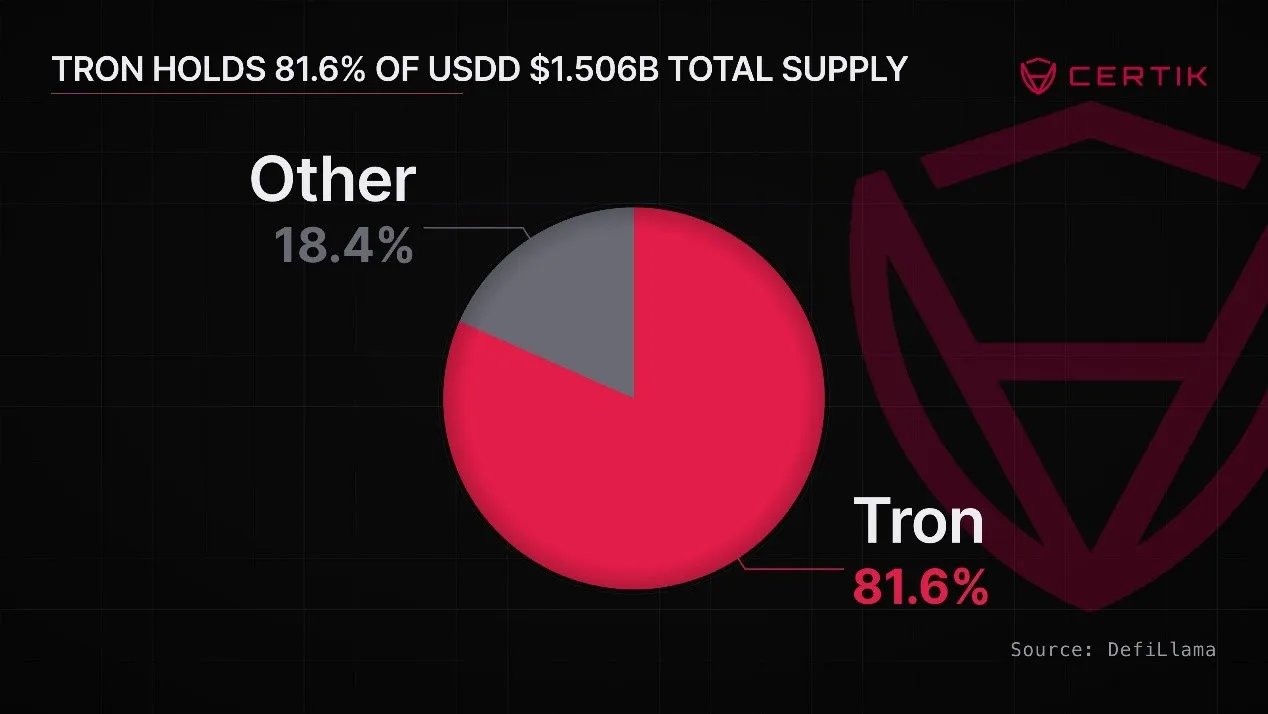
TRON The supply of USDD on TRON increased by $145 million in a single week, with the total supply surpassing $1.23 billion.
Svmuu News: According to data from CertiK Skynet, over the past week, the supply of USDD on the TRONTRON network has surged by approximately $145 million, bringing the total supply to over $1.23 billi
-
Lien Finance Suffers Approximately $542,000 in Losses from an Attack; Attackers Exploited a Vulnerability to Steal USDC
Svmuu News: According to monitoring by SlowMist, the decentralized finance protocol Lien Finance was attacked. The attacker exploited a smart contract vulnerability to mint uncollateralized BondTokens
-
Aster has launched the Vault Beta feature, allowing users to participate in profit- and risk-sharing through custodial policies.
Svmuu News: The decentralized trading platform Aster has announced the launch of Aster Vault Beta, which allows users to participate in trading strategies driven by actively managed strategies without
-
Hyperliquid's weekly RWA trading volume surpasses that of crypto trading, with HIP-3 RWA trading volume reaching $26 billion
Svmuu News: Lorenzo Valente, Head of Research at ARK Invest, posted on X that DeFi is entering a new era, with Hyperliquid seeing RWA trading volume surpass crypto trading for the first time in a sing
-
Uniswap Launches a Permissioned Pools Framework for Tokenized Regulated Assets
Svmuu News: The decentralized trading protocol Uniswap has launched the Permissioned Pools framework, designed for tokenized funds, stocks, and other regulated assets. This feature allows issuers of t
-
Trading Volume Doubles; Total Trading Volume for LONG Robinhood Stock Tokens Reaches $32 Million
Svmuu News: LONG, a DeFi application in the Robinhood Chain ecosystem, posted on X stating that the cumulative trading volume of its tokenized Robinhood stocks has surpassed $32 million, more than dou
-
FATF: DeFi Platforms with Identifiable Controlling Persons Should Be Regulated as Virtual Asset Service Providers
Svmuu News: In a report released on Tuesday, the Financial Action Task Force (FATF) stated that if identifiable individuals retain “control or sufficient influence” over a DeFi arrangement, its rules
-
SEC Commissioner Hester Peirce Warns That Crypto Vaults and Lending Strategies May Be Subject to Securities Law Regulation
Svmuu News: SEC Commissioner Hester Peirce issued a statement saying that the fact that crypto assets are “on-chain” does not automatically exclude related activities from the scope of federal securit
-
Transfer volume grew more than 170-fold, with monthly transfers of tokenized stocks reaching $9.22 billion in June
Svmuu News: a16z crypto reported that the monthly transfer volume of tokenized stocks reached $9.22 billion in June of this year, an increase of more than 170 times compared to the $53 million recorde
-
The team will cover the $98,000 loss, and the FlashTrade feature has been restored
Svmuu News: FlashTrade, a sustainable protocol in the Solana ecosystem, suspended trading, deposits, and withdrawals after disclosing an unauthorized withdrawal of $98,000. Trading has now resumed, wh
-
The crypto market continues to rise, with BTC approaching $67,000; only the DeFi sector is down
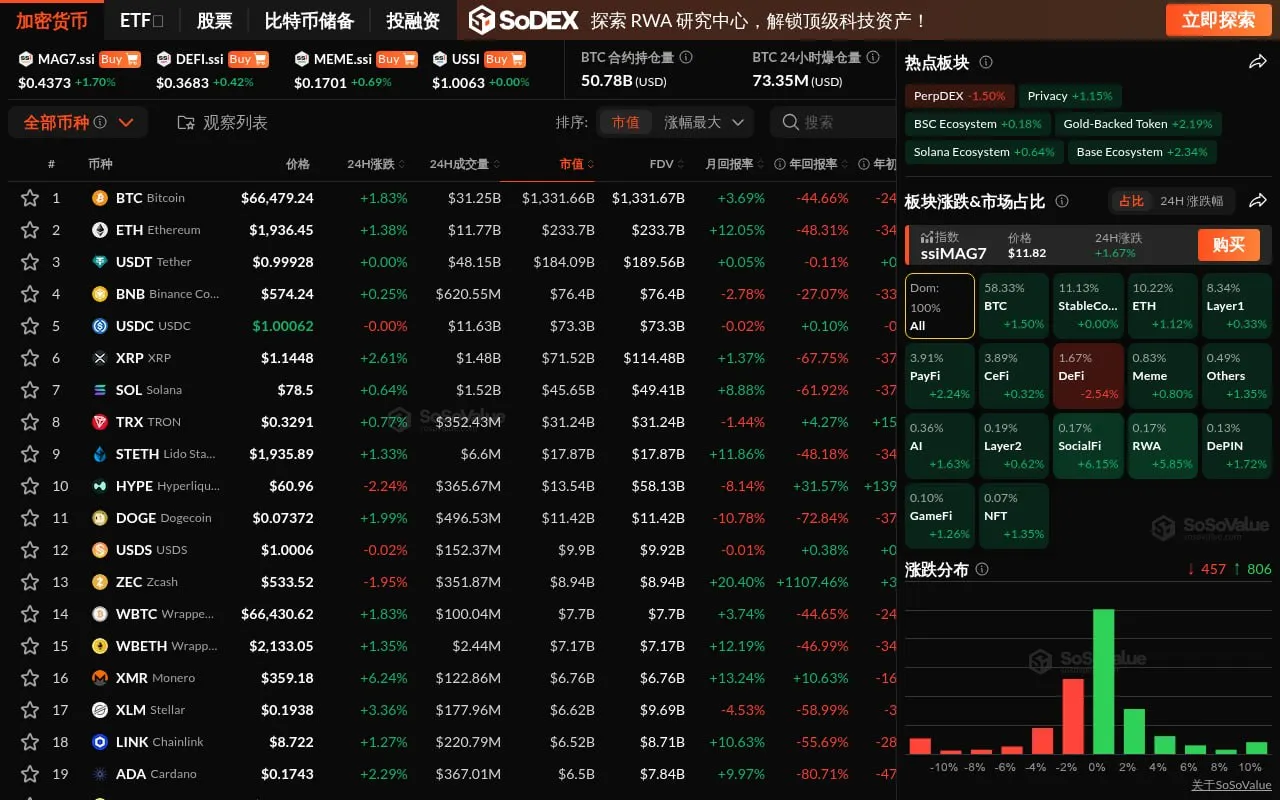
Svmuu News, July 22: According to data from SoSoValue, the crypto market continued its upward trend, with Bitcoin (BTC) rising 1.83% and briefly approaching $67,000; Ethereum (ETH) rose 1.38%, breakin
-
Falcon Finance Launches the USDf Card, Available in Over 90 Jurisdictions
Svmuu News: DeFi company Falcon Finance has launched the USDf Card, available to verified users in over 90 jurisdictions. The card allows users to make payments with USDf online, at physical stores, a
-
The U.S. Congress is holding bipartisan discussions on ethics issues related to cryptocurrency, and provisions regarding DeFi are also under negotiation.
Svmuu News: A Fox Business crypto reporter posted on X, stating that, according to their sources, the U.S. Congress is holding bipartisan discussions on ethics issues today. Negotiators are also discu
-
How do I buy and sell URQA tokens? Which decentralized exchanges are they listed on?
URQA is an ERC-20 token based on the Ethereum standard, primarily used for trading, portfolio rebalancing, staking, and governance in decentralized finance (DeFi). As of July 29, 2026, URQA trading primarily takes place through decentralized exchange (DEX) aggregators such as 1inch.Users can connect a Web3 wallet to exchange URQA on the Ethereum network, with funds remaining in user custody. Currently, major centralized exchanges have not explicitly listed URQA. As of June 24, 2026, URQA’s market capitalization was approximately $27,000, with a 24-hour trading volume of nearly $20,000.
-
Analysis of the MER Token’s Value: The Current State and Long-Term Investment Potential of Mercurial Finance (Meteora)
The MER token was formerly the governance token of Mercurial Finance, a DeFi protocol in the Solana ecosystem; the project was renamed Meteora in 2022. Meteora is committed to providing efficient stablecoin liquidity solutions and has introduced dynamic treasuries and fee mechanisms. However, as of the end of July 2026, the price of the MER token was extremely low, with both its market capitalization and trading volume at low levels, having fallen significantly from their all-time highs. This article will delve into the technical features of the MER token, its market performance, and the potential opportunities and challenges it presents as a high-risk investment.
-
What Is the YAXIS Token? An Analysis of the yAxis Project Token’s Features and How to Buy It
YAXIS is the native token of the decentralized finance (DeFi) project yAxis, which aims to optimize digital asset yield portfolios by aggregating other yield platforms. The YAXIS token is primarily used for staking and governance within the network; holders can participate in guiding yield strategies and share in the treasury’s returns.The token operates on the Ethereum platform. As of this writing, YAXIS has a market capitalization of approximately $181,700, with a relatively low 24-hour trading volume. Users can trade it on select centralized exchanges and decentralized exchanges such as Uniswap.
-
What Are the DeFi Concept Coins? A Roundup of the Core Tokens in Decentralized Finance for 2026
The decentralized finance (DeFi) ecosystem continues to evolve, aiming to provide permissionless, transparent, and intermediary-free financial services through blockchain smart contracts. This article will delve into the core concepts of DeFi, examine key market trends for 2026, and take stock of representative concept tokens and their associated projects in the current DeFi landscape, covering multiple key sectors such as decentralized exchanges, lending platforms, liquid staking, and oracles. Understanding these tokens will help you grasp the dynamics of the DeFi market.
-
Analysis of the XWIN Finance (XWIN) Token’s Value: Project Positioning, Ecosystem Applications, and Market Performance
XWIN Finance is a decentralized fund management platform built on the BNB Smart Chain, designed to connect fund managers with investors. Its native token, XWIN, is used within the ecosystem for commission discounts, voting governance, staking rewards, and loss insurance, among other purposes. In December 2023, the project updated its token economic model, planning to burn a portion of its tokens to strengthen its financial attributes. As of July 2026, the price of XWIN has fluctuated between $0.015 and $0.02, with a market capitalization of approximately $250,000 to $320,000, though it has fallen significantly from its 2021 all-time high. Market opinions on its long-term potential vary, and investors should be aware of the high volatility risks associated with cryptocurrencies.
-
In-Depth Analysis: The Potential and Risks of the NFTX and GMX Protocols
The NFTX protocol aims to enhance NFT liquidity and enable leveraged trading by wrapping NFTs as fungible tokens, but it faces risks such as smart contract vulnerabilities and impermanent loss. GMX, as a decentralized perpetual futures platform, offers high-leverage trading and deep liquidity, but also carries risks associated with high leverage, smart contracts, and counterparty risk. This article will delve into the core mechanisms, latest developments, potential opportunities, and inherent risks of these two protocols.
-
What Is BIFI? An In-Depth Analysis of the Two Tokens with the Same Name: Beefy Finance and BiFi
There are two distinct projects in the cryptocurrency market that both use “BIFI” as their token symbol: Beefy Finance and BiFi (Bifrost Finance). Beefy Finance is a multi-chain yield optimizer that helps users maximize their DeFi returns through automated compounding strategies; its BIFI token is used for governance and yield sharing. BiFi, on the other hand, is a decentralized finance platform built on Bifrost’s cross-chain technology, focusing on cross-chain lending and yield. This article will provide a detailed overview of the characteristics, use cases, market performance, and trading platforms for both BIFI tokens to help readers distinguish between them.
-
What Is QUANTIC? Learn About Its DeFi Positioning, Technology, and the Current State of High-Risk Trading
QUANTIC (Quantic Protocol) is a BEP-20 utility token designed to enhance the decentralized finance (DeFi) ecosystem. It operates on the BNB Smart Chain and emphasizes the integration of AI technology. Launched in 2021, the project is dedicated to providing innovative financial tools and services, such as staking and automated yield strategies. However, as of July 31, 2026, QUANTIC exhibits high-risk characteristics, including extremely low on-chain activity, zero circulating supply, zero trading volume, and a lack of audits and liquidity, and its market capitalization is negligible. Currently, its trading channels are limited, and actual trading activity has virtually come to a standstill.
-
URUS Token: An Analysis of the Aurox Platform’s Native Token, Its Current Market Status, and Risks
URUS is the native token of Aurox, a decentralized lending platform and all-in-one cryptocurrency trading terminal. The platform aims to simplify cryptocurrency trading through proprietary tools and offers lending and trading protocols. URUS token holders are eligible for trading discounts, enhanced lending rates, and staking rewards. However, as of July 2026, URUS’s market performance indicates an extremely low market capitalization and trading volume, accompanied by high volatility and widespread bearish sentiment; investors should be aware of potential risks.
-
TRON SUN Token Mining Guide: A Detailed Explanation of Staking and Liquidity Mining
SUN is the core DeFi platform token within the TRON ecosystem (TRON), positioned as the “Bitcoin” on TRON. Its “mining” is not traditional Proof-of-Work (PoW); instead, users stake SUN tokens to earn veSUN, which allows them to participate in governance and share in the platform’s profits, or earn rewards by providing liquidity (LP mining).This article will provide a detailed overview of SUN’s mining mechanism and veSUN staking, as well as the specific steps for participating in staking and liquidity mining, while also highlighting associated risks.
-
A Detailed Explanation of the AAVE Token Supply, Issuance Price, and Issuance Timeline
The AAVE token is the native governance token of the decentralized lending protocol Aave. The project was originally launched in 2017 as ETHLend, and was later renamed Aave in early 2020 when a new protocol was released. In July 2020, ETHLend’s LEND tokens were swapped for AAVE at a ratio of 100:1, with the total supply set at 16 million. The actual issuance date of the AAVE token can be traced back to October 3, 2020, and there are varying records of its issuance price in the early period following the token swap, ranging from approximately $1.70 to $40.
-
The IPOR Protocol and Its Token, IPOR: An Analysis of DeFi Interest Rate Derivatives and Risk Management
The IPOR protocol aims to serve as a credit hub in the DeFi space, providing an on-chain benchmark interest rate and a trading platform for interest rate derivatives to help the DeFi credit market manage interest rate risk. The protocol was developed by IPOR Labs AG and raised $5.55 million in funding in 2022. The IPOR token was originally used for governance and staking, but as of May 2025, the migration to FUSN has begun. Given the token migration, there is significant uncertainty and inconsistency in the current market data for the IPOR token; historical performance does not reflect the current situation, and investors should pay close attention to the latest developments and potential risks.
-
Ryze (RYZE) Token Analysis: Project Positioning, Market Performance, and Future Prospects
Ryze (RYZE) is a collateral-agnostic stablecoin layer designed to provide cross-chain unified liquidity and yield sharing, enabling asset tokenization through E-Assets.As of July 30, 2026, the price of RYZE was approximately $0.085, with a market capitalization of approximately $22.5 million. It is deployed on multiple EVM-compatible chains, including Ethereum, Polygon, and Arbitrum.RYZE has recently seen a significant increase in on-chain trading volume and has demonstrated potential in the decentralized prediction markets space. However, the project carries centralization risks, as the contract owner has the ability to modify the token’s code—including disabling sales and changing fees—and users should fully understand and carefully evaluate these risks.
-
LSETH: Ethereum—Mechanisms, Progress, and Future Outlook for Liquid Staking Tokens
LSETH (Liquid Staked ETH) is an ERC-20-compliant liquid staking token issued by the Liquid Collective protocol, designed to address the liquidity issues associated with traditional ETH staking. It employs a cToken model, with its value increasing as staking rewards accumulate, and prioritizes institutional-grade security and compliance.LSETH allows holders to participate in DeFi activities while earning staking rewards, thereby improving capital efficiency.As of late July 2026, the price of LSETH was approximately $2,104.49, with a market capitalization of approximately $608 million. Its future development is closely tied to the Ethereum ecosystem, the growth of the liquid staking market, and DeFi integration; however, risks such as market volatility, smart contract vulnerabilities, and regulatory changes must be closely monitored.
-
What Is RBIZ? Learn About Its Current Status and Trading Risks
RBIZ is a decentralized finance (DeFi) application token running on the Tron blockchain, originally designed for in-game transactions. However, as of July 2026, RBIZ has been flagged as “inactive” on several major data platforms, with both its market capitalization and 24-hour trading volume showing zero or extremely low figures. This indicates that the token currently lacks active market trading, and potential investors should be aware of its high-risk status.
-
What Is KNC? An Analysis of the Functions and Trading Platform of KNC, the Core Token of Kyber Network
KNC (Kyber Network Crystal) is the native utility and governance token of Kyber Network, a decentralized liquidity protocol. Kyber Network aims to aggregate cross-chain liquidity and enable instant, seamless exchanges of digital assets through its flagship DEX, KyberSwap. KNC holders can participate in KyberDAO governance through staking, influencing the protocol’s development and earning transaction fee rewards. This article will provide an in-depth look at the core functions and technological developments of KNC, and list its major trading platforms.
-
SUN, the Core Governance Token of the TRON Ecosystem: An Analysis of the White Paper’s Vision and Latest Developments
The SUN token is the governance token of the Sun.io decentralized exchange on the TRON blockchain, designed to build an integrated DeFi ecosystem. Its white paper outlines the vision of providing efficient and secure DeFi services on TRON. In 2021, the SUN token underwent a 1:1,000 renaming and upgrade, lowering the barrier to entry for holders. The token supports trading fee rewards, liquidity mining, and governance voting, and achieves deflation through an ongoing buyback and burn mechanism. The project is actively advancing technical upgrades, including optimizations to the Universal Router contract and the launch of SunSwap V4, and plans to implement cross-chain swaps in the future to expand its liquidity and user base.
-
When Will the Uniswap Decentralized Exchange Launch? An Analysis of Its Origins and Core Mechanisms
Uniswap, the leading decentralized exchange (DEX) on the Ethereum, officially launched its first version (v0) on November 2, 2018. Founded by Hayden Adams, Uniswap Labs is headquartered in New York City, USA.It employs an automated market maker (AMM) model to facilitate automated cryptocurrency trading through liquidity pools, rather than traditional order books. Uniswap has undergone multiple version updates and has processed over $3 trillion in cumulative trading volume, making it a critical piece of infrastructure in the decentralized finance (DeFi) sector.
-
HPL Coin Analysis: An Overview and Future Prospects of the HyperLend, HappyLand, and HPL Games Projects
The HPL token is associated with multiple crypto projects, primarily including the decentralized lending protocol HyperLend, the blockchain-based metaverse HappyLand, and the Web3 mobile gaming ecosystem HPL Games. As a core infrastructure component of the Hyperliquid ecosystem, HyperLend has completed a funding round and plans to launch staking functionality. HappyLand is a play-to-earn (P2E) game on the BNB Chain dedicated to expanding the metaverse. HPL Games, meanwhile, aims to bridge Web2 and Web3 mobile gaming; its token can be used for in-game purchases and exchanged for U.S. dollars. This article will provide an overview of the key details and future outlook for each of these three projects.
-
What Is SAKE? An Analysis of the SakeToken Project Details and Token Economic Model
The term “SAKE coin” primarily refers to SakeToken, the native token of the decentralized finance (DeFi) protocol SakeSwap. As a fork of Uniswap and Sushiswap, SakeSwap aims to optimize the automated market maker (AMM) mechanism. The SAKE token grants holders governance rights and is used to pay protocol fees; its tokenomics model includes deflationary mechanisms such as the buyback and burning of transaction fees and the minting of “irreversible NFTs.” This article will also distinguish SAKE from other projects with the same name and provide key metrics for the SAKE token.
-
What Is SFRXETH? An Analysis of Liquid Staking Derivatives in the Frax Finance Ecosystem and a Trading Guide
SFRXETH is a liquid staking derivative (LSD) within the Frax Finance ecosystem, designed to provide automatically compounded yields to Ethereum stakers.As an ERC-4626-compliant vault token, SFRXETH accumulates staking yields by depositing frxETH into its contract, and its exchange rate increases over time. This mechanism makes it an effective tool for those seeking ETH staking yields in the DeFi space.Users can trade it on decentralized exchanges (DEXs) such as Curve and Fraxswap, as well as on certain centralized exchanges.
-
Where Can I Buy ACA Tokens? Acala Token Trading Platforms and Buying Guide
ACA is the native token of the Acala Network, the DeFi hub within the Polkadot ecosystem. It is used to pay transaction fees, facilitate governance, and incentivize network participants. Acala aims to provide a liquidity layer for Web3 finance, with features including liquid staking and a decentralized exchange. Investors looking to purchase ACA can currently trade it on several major cryptocurrency exchanges.This article will list the major centralized exchanges that support ACA trading and briefly introduce the token’s use cases.
-
What Is ZRX? An In-Depth Analysis of the 0x Protocol and the Value and Risks of Its Token
ZRX is the native token of the 0x Protocol, an open-source, decentralized infrastructure designed to facilitate peer-to-peer trading of digital assets on Ethereum and other EVM-compatible chains.ZRX tokens enable governance and staking and can be used to pay protocol fees. Their value potential is driven by factors such as the expansion of the DeFi ecosystem and technological innovation, but they also face market volatility, intense competition, and security risks. As of July 2026, the price of ZRX is well below its all-time high, and short-term forecasts remain uncertain.
-
FIS Token (StaFi Protocol): Analysis of Prospects and Future Outlook
FIS is the native token of the StaFi Protocol, which aims to address the liquidity issues of PoS assets by issuing rTokens. Recently, StaFi underwent a 2.0 transformation, repositioning itself as a Layer-1 platform for liquid staking derivatives (LSD) and introducing the “Liquid Staking as a Service” (LSaaS) model and SubDAO architecture to enhance the ecosystem’s scalability and cross-chain capabilities. Despite recent market volatility, its technological innovations and ecosystem strategy remain the focus of attention.



















DeFi

24H Trending
-
1
Analysis of HNS Token Value and Investment Potential: An In-Depth Look at Handshake, the Decentralized Domain Name Protocol

-
2
DRAC Coin Analysis: Current Status and Outlook for the Ethereum public blockchain DRAC Network and the Bitcoin BRC-20 Drac (Ordinals)

-
3
How do I buy and sell ICX? On which major cryptocurrency exchanges is it listed?

-
4
An Overview of the World’s Leading Cryptocurrency Exchanges: Binance, OKX, Coinbase, and Bybit

-
5
Google: Thanks to AI tools, the number of Chrome vulnerabilities patched in June exceeded the total for the past two years combined
-
6
USDG: Trading Volume Surges
-
7
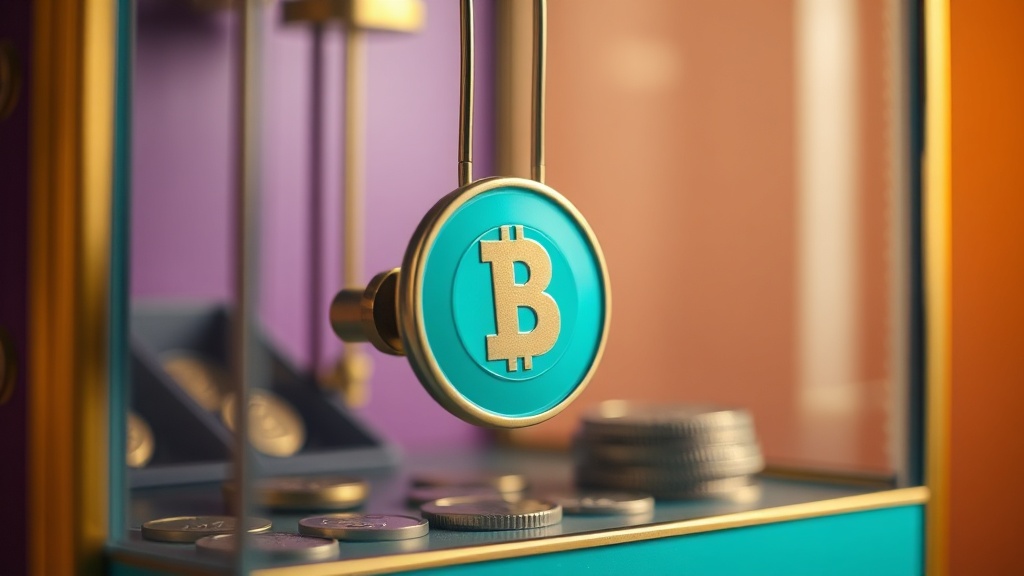
KABY Token Trading Guide: Learn About the Kaby Arena Project and Trading Platform
-
8
Evercore recommends Microsoft, ServiceNow, Salesforce, and Samsara stocks
-
9
Apple defies smartphone downturn with strong iPhone sales
-
10
Oracle Announces Expansion of Its Partnership with Google Gemini AI; Stock Price Rises More Than 8%
Markets Today



Recommended Reading

Hot Topics

Svmuu focuses on blockchain industry trends and cutting-edge cryptocurrency news, while also covering real-time market data and in-depth analysis of the Hong Kong, U.S., and foreign exchange markets. Here, you can not only access professional 24/7 news updates and accurate market data, but also utilize practical investment tools to help you capitalize on opportunities in both digital assets and traditional financial markets. Whether you are a blockchain enthusiast or an investor in Hong Kong, U.S., or foreign exchange markets, we provide efficient and timely information services to empower your investment decisions.
- User Agreement
- Privacy Policy
- Contact Us
- Business Partnerships
- Disclaimer
- Content Statement
- About Us
- Sitemap
 Coming Soon!
