

Faster global financial news!
Layer 2
-
NRK Coin (Nordek) Project Analysis: Positioning, Technology, and Market Status
NRK is the native token of the Nordek project, which aims to build an Ethereum-based Layer 2 blockchain focused on revolutionizing the GameFi and Web3 payment sectors. Nordek utilizes a Delegated Proof-of-Stake (DPoS) mechanism and promises zero gas fee transactions, with its core product being the crypto banking solution Norpay. Despite the project's ambitious vision, as of August 14, 2026, the public trading price of the NRK token is close to $0. This article will delve into Nordek's technical features, ecosystem applications, and current market performance.
-
DGMT Coin: DigiMax DGMT Project Overview, Technical Features, and Market Status
DGMT (DigiMax DGMT) is a decentralized cryptocurrency launched in June 2020, based on the Ethereum network. It aims to provide a non-custodial Layer-2 scaling solution to enhance the efficiency of value transfer on Ethereum. The project emphasizes open-source and community-oriented principles and had plans to support applications such as cryptocurrency trading and payments. However, as of now, DGMT's market activity is extremely low, with 24-hour trading volumes often showing as zero or unavailable, and its market capitalization is also very low or unverified, indicating a current lack of an active trading market and widespread market recognition. Investors should be fully aware of its high volatility and current market conditions.
-
What is MAT Coin? Matchain Project Analysis and Trading Channels
MAT is the native token of the Matchain project, a decentralized AI-driven Layer-2 blockchain platform built on zk-rollup technology, aiming to solve data sovereignty and identity verification issues. MAT tokens are used for gas fees, staking, governance voting, and accessing advanced tools like MatchID. As of August 12, 2026, its 24-hour trading volume is approximately $94,000, and it can be traded on CEXs such as KuCoin, Gate.io, and MEXC, as well as DEXs like PancakeSwap.
-
MATIC Coin In-depth Analysis: The Core Token of the Polygon Network and Its Latest Developments
MATIC is the native token of the Polygon network, which, as Ethereum's leading Layer-2 scaling solution, aims to solve Ethereum's problems of high gas fees and slow transaction speeds. The MATIC token is used to pay transaction fees, for staking, and to participate in governance. Recently, Polygon has been migrating to the POL token and plans to enhance network stability through the Ithaca hard fork. The company is strategically transforming into blockchain payments and actively integrating AI technology, while PayPal USD (PYUSD) has also natively launched on Polygon, further solidifying its important position in the Web3 payment sector.
-
Mantle (MNT) Token Analysis: Technical Advantages, Ecosystem Development, and Market Outlook
Mantle (MNT) is a modular Ethereum Layer-2 blockchain ecosystem designed to connect traditional finance with DeFi through scalable, low-cost infrastructure. Its native token, MNT, is used for fee payments, staking, and governance. Recently, Mantle launched Super Portal on Solana, plans to introduce banking services, surpassed $1 billion in TVL, and expanded into real-world asset (RWA) tokenization. This article will delve into MNT's technical features, ecosystem developments, market data, and potential factors influencing its future performance.
-
OKB: An Analysis of Transaction Fee Discounts in the OKX Ecosystem and X Layer Fuel Token Economic Benefits
As the core utility and governance token of the OKX ecosystem, OKB offers multiple practical benefits to its holders. Its most significant economic benefit is reflected in trading fee discounts, which can be as high as 40% and are linked to VIP levels. Furthermore, OKB has expanded to become the native Gas token for X Layer, OKX's proprietary Ethereum Layer 2 blockchain, used to pay on-chain transaction fees, greatly broadening its application scenarios. OKB adopts a deflationary model, with its total supply permanently fixed at 21 million, making scarcity one of its value supports. As of August 2026, OKB has shown stable market momentum, with a market capitalization of approximately $1.97 billion.
-
JASMY Coin Long-Term Outlook Analysis: Opportunities and Challenges for an IoT Data Sovereignty Token
JASMY Coin is a Japanese project focused on the Internet of Things (IoT) and data sovereignty, aiming to democratize personal data. The project has completed its migration to the JasmyChain Layer-2 network, based on Arbitrum Orbit, and is renowned for its compliance within Japan's strict regulatory environment. This article will explore the ecosystem role of the JASMY token, recent developments, and the potential opportunities and challenges it faces in the data economy, providing readers with a comprehensive perspective on its long-term value.
-
IMX Fundamental Analysis: ImmutableX's Financial Health and Business Strategy Outlook
ImmutableX (IMX), as an Ethereum Layer-2 scaling solution, focuses on Web3 gaming and NFTs, utilizing ZK-rollup technology to provide zero Gas fees and high scalability. Recently, Immutable X merged with Immutable zkEVM to form "Immutable Chain" and launched Polygon Hub to unify liquidity. The company's business focus is shifting from internal game development to the AI marketing platform Immutable Audience. Financially, ImmutableX incurred a loss of $50 million in 2023, with revenues exceeding $110 million in 2024, and is not expected to be profitable until 2026, though co-founders state it is well-funded. The IMX tokenomics revolve around protocol fees, staking, and governance.
-
OWL Token Value Analysis: Is Owlto Finance's Cross-Chain Bridge Token Worth Long-Term Attention?
OWL is the utility and governance token for Owlto Finance's decentralized omnichain interoperability protocol, which focuses on Layer 2 cross-rollup bridges, offering low-cost, fast asset transfer solutions. The OWL token launched in January 2026, showing active initial performance, with holders enjoying protocol revenue sharing, fee discounts, and airdrops. As of August 2026, its market capitalization is approximately $300,000, with a 24-hour trading volume of about $170,000. This article will explore its technical features, tokenomics model, and market performance, as well as analyze its potential value and inherent risks.
-
A Deep Dive into Immutable X's Data Privacy Protection and Security Strategies
Immutable X, as an NFT-specific Layer 2 solution on Ethereum, inherits the security of the Ethereum mainnet through zero-knowledge proofs (ZK-STARKs) and is evolving towards Immutable zkEVM to enhance compatibility. Its data availability model has been progressively optimized from Validium (off-chain DAC). Concurrently, Immutable's privacy policy strictly adheres to regulations from multiple countries and employs data retention strategies to maintain ecosystem security and prevent fraud. Immutable Passport provides users with a seamless and secure Web3 gaming experience, and the IMX token also contributes to platform security through its governance mechanism.
-
What Is OAX? An In-Depth Analysis of Its Technology, Ecosystem, and Current Market Status
OAX (OpenANX) is a cryptocurrency designed to address challenges in the decentralized finance (DeFi) space, launched by the OAX Foundation in 2017. It enhances trading efficiency and interoperability through a Layer 2 solution (the L2X protocol) and integration with OpenSwap. Although the project remains active in terms of technical development and community building, its market price and trading volume data show significant inconsistencies and signs of low liquidity; investors should evaluate these factors carefully.
-
What Is DuckChain (DUCK)? An Analysis of Its Future Prospects
DuckChain (DUCK) is a Telegram-based AI blockchain project aimed at driving the mass adoption of cryptocurrency through AI, EVM-compatible technology, and cross-chain interoperability. As TON’s first Layer 2 solution, it is dedicated to simplifying the Web3 experience for Telegram users. The DUCK token plays a role in governance, transaction fees, and staking. The project recently completed a $5 million funding round and conducted a network upgrade in July 2026.
-
What Is Cryptocurrency? An In-Depth Analysis of the Five Major Types of Cryptocurrencies in 2026
Cryptocurrency, as a decentralized digital asset, is becoming increasingly integrated into the global economy. This article delves into the core concepts of cryptocurrency and provides an overview of thethe five major types of cryptocurrencies on the market as of July 2026, along with their representative projects. These include Bitcoin as a store of value; Ethereum and Solana as smart contract platforms powering DeFi; stablecoins that provide stability; Layer 2 solutions that enhance efficiency; and tokens focused on privacy and Web3 infrastructure. The article aims to provide readers with a comprehensive overview of the industry.
-
Immutable X (IMX) Community Engagement Guide: How to Contribute and Influence the Platform’s Development
As a Layer-2 scaling solution on the Ethereum focused on NFTs, Immutable X (IMX) relies on its community to play a central role in the platform’s development. This article delves into how IMX token holders, developers, and users can contribute through governance voting, staking IMX tokens, actively participating in ecosystem development, and engaging with the community.Understanding IMX’s token economics and incentive mechanisms can help you participate more effectively in this zero-gas-fee, instant-transaction NFT ecosystem and help shape its future.
-
A Look Back at the Journey to Ethereum: Opportunities and Challenges for Enterprise-Wide Adoption
Ethereum Since the “Merge,” the network has completed a series of key upgrades, including transitioning the consensus mechanism to Proof of Stake (PoS), enabling withdrawals of staked ETH, and significantly reducing Layer 2 transaction fees through the Dencun upgrade. These technological advancements have greatly enhanced the scalability and efficiency of Ethereum while reducing energy consumption.However, despite the growing maturity of the technical foundation, enterprises still face challenges such as technical complexity, regulatory uncertainty, L2 ecosystem fragmentation, and operational integration when actually adopting Ethereum technology. Global interest in Web3 continues to grow, but widespread adoption will take time.
-
Polygon (MATIC/POL) Token Analysis and Price Outlook for 2026 and Beyond
Polygon (formerly Matic Network) is a Layer-2 scaling solution for the Ethereum, designed to increase transaction speeds and reduce fees. Its native token, MATIC, was upgraded to POL in September 2024 to support the multi-chain ecosystem envisioned by Polygon 2.0.This article will review the development history, core technical advantages, and ecosystem applications of MATIC/POL. Combining this with market analysis, it will explore its potential price trends for 2026 and the coming years. However, it is important to emphasize that the cryptocurrency market is highly volatile, and all predictions are for reference only.
-
What Is the LRC Token? An Overview of the Loopring Protocol and How to Obtain It
LRC is the native cryptocurrency of the Loopring protocol. Loopring is a Layer 2 scaling solution built on the Ethereum, focused on using zkRollups technology to increase transaction speeds, reduce costs, and ensure security for decentralized exchanges (DEXs).The LRC token serves multiple purposes within the protocol, including paying fees, participating in governance, earning staking rewards, and incentivizing network operators. Users can purchase LRC on major cryptocurrency exchanges or earn it through DeFi activities such as staking and providing liquidity.Since its founding in 2017, the Loopring protocol has continuously developed its DEX and NFT marketplace, committed to providing an efficient on-chain trading experience.
-
Tom Lee Responds to Claims That "Ethereum" Is Being Eroded by L2s: "I Disagree; ETH Is On-Chain"
Svmuu News: Bitmine Chairman Tom Lee posted on X in response to market concerns that Ethereum is being eroded by Layer 2 solutions.He expressed disagreement, noting that while Layer 2 networks are als
-
An Analysis of the Multiple Meanings of "MAGE": MegaETH (MEGA) vs. Other MAGE Token Projects and Trading Overview
“MAGE Coin” may refer to several cryptocurrency projects. Among them, MegaETH (MEGA) is a highly anticipated Layer 2 blockchain project on the Ethereum, designed to deliver high performance and low latency; its token has not yet been officially launched.In addition, there are already issued tokens such as MagicCoin (MAGE) and MetaBrands (MAGE). This article will introduce these projects individually and explain their current trading status.
-
Ethereum Sharding Design: The Evolution from Execution Sharding to the Data Availability Engine
Ethereum The sharding design has evolved from the initial vision of execution sharding to one focused on data availability. The Beacon Chain serves as the core, coordinating the Proof-of-Stake consensus and validators.The current roadmap focuses on Danksharding, which provides efficient, low-cost data storage for Layer 2 rollups by introducing data “blobs,” rather than directly handling transaction execution.Proto-Danksharding has already been launched as a preliminary version, while future upgrades such as Glamsterdam and Hegotá will further enhance parallel execution and introduce Verkle trees, aiming to significantly improve the overall scalability of Ethereum and its Layer 2 networks.
-
Analysis of the Hop Protocol (HOP) Token’s Value: Is It Worth a Long-Term Investment?
Hop Protocol is a cross-chain bridge protocol focused on Layer 2 ecosystem interoperability (Ethereum), designed to enable the rapid transfer of tokens between different scaling solutions. Its native token, HOP, serves as the governance token for HopDAO, granting holders the right to participate in protocol decision-making.This article will delve into the functionality, economic model, and current market performance of the HOP token, and analyze the opportunities and challenges it faces as a long-term investment.
-
Analysis of IMX Token Price Volatility: Immutable X Ecosystem Development and Market Impact
As the native cryptocurrency of the Web3 gaming platform Immutable X, the price volatility of the IMX token is driven by multiple factors. Its historical price increases have been primarily driven by the conclusion of the SEC investigation, significant growth in Web3 gaming users, the launch of the Immutable zkEVM mainnet, and partnerships with industry giants such as Ubisoft and AWS. As of July 18, 2026, the price of IMX stands at approximately $0.128–$0.13. Its ecosystem continues to expand in the NFT and blockchain gaming sectors; while short-term market sentiment is influenced by broader market conditions, its long-term potential remains promising.
-
Ethereum The Cancun Upgrade and OP: The Optimism Ecosystem, Superchain’s Vision, and Market Performance
Ethereum The Dencun upgrade went live on the mainnet on March 13, 2024, with its core EIP-4844 significantly reducing Layer 2 (L2) transaction fees. As a key player in the L2 space, Optimism (OP) has benefited greatly from this upgrade and has actively promoted EIP-4844.This article will delve into the impact of the Cancun upgrade on Optimism, its Superchain vision and the ecosystem expansion of the OP Stack, as well as the market performance and future outlook of the OP token as of July 17, 2026.
-
Analysis of WMATIC’s Value: The Role of Wrapped MATIC and the Long-Term Potential of the Polygon Ecosystem
WMATIC (Wrapped MATIC) is a wrapped version of MATIC, the native token of the Polygon network. It is pegged 1:1 to MATIC and is designed to enhance MATIC’s compatibility and liquidity on Ethereum Virtual Machine (Ethereum, EVM)-compatible DeFi platforms.With the renaming of the MATIC token to POL—as part of the Polygon 2.0 roadmap—WMATIC’s value is closely tied to the overall development of the Polygon ecosystem.Recently, Polygon has made progress in throughput, PayPal stablecoin integration, and AI projects, and has strategically shifted its focus toward global payments and enterprise settlement layers. This article will explore the core value of WMATIC, the latest developments at Polygon, and its long-term investment potential.





















-
Tom Lee Responds to Claims That "Ethereum" Is Being Eroded by L2s: "I Disagree; ETH Is On-Chain"
Svmuu News: Bitmine Chairman Tom Lee posted on X in response to market concerns that Ethereum is being eroded by Layer 2 solutions.He expressed disagreement, noting that while Layer 2 networks are als
-
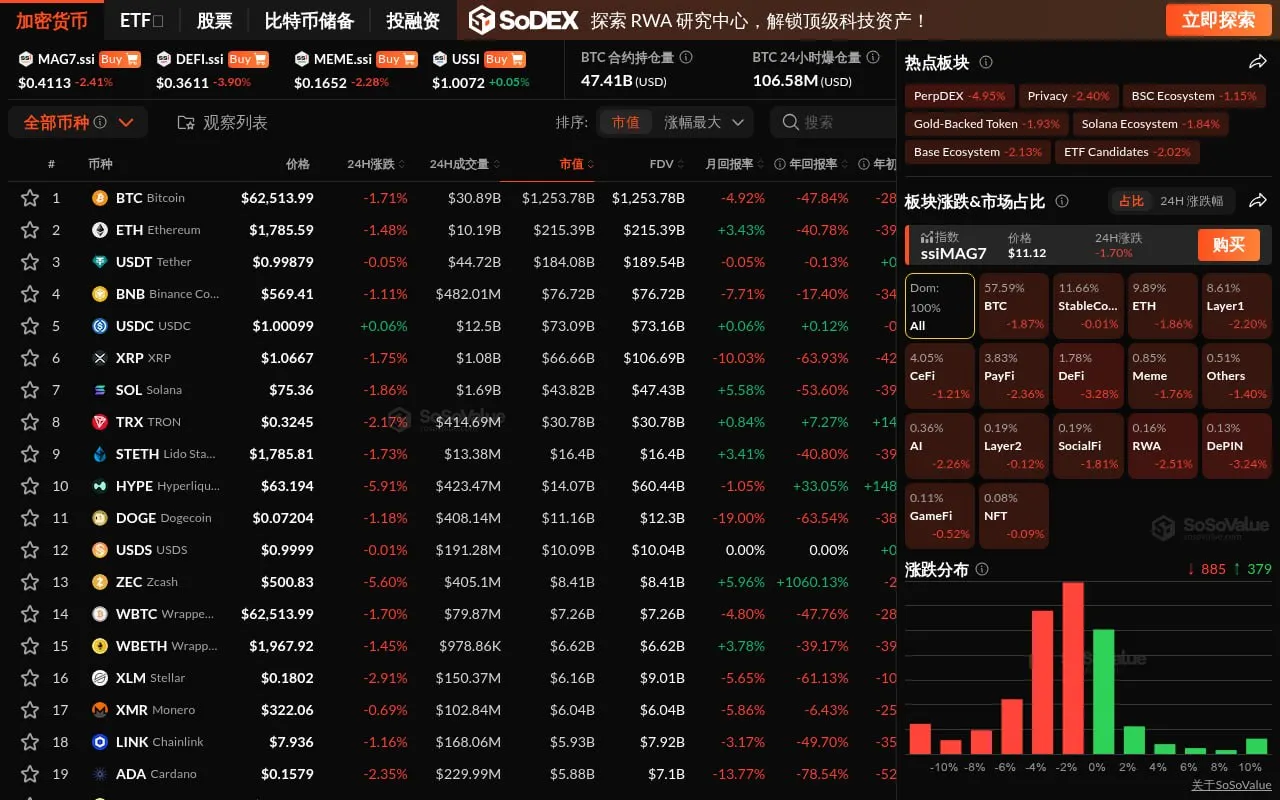
The crypto market is broadly down, with the DeFi sector falling more than 3%
Svmuu News, July 14: According to SoSoValue data, the crypto market saw a broad-based pullback, with the DeFi sector down 3.28% and Hyperliquid (HYPE) down 5.59%. DeXe (DEXE) fell 10.93%, but Beldex (
-
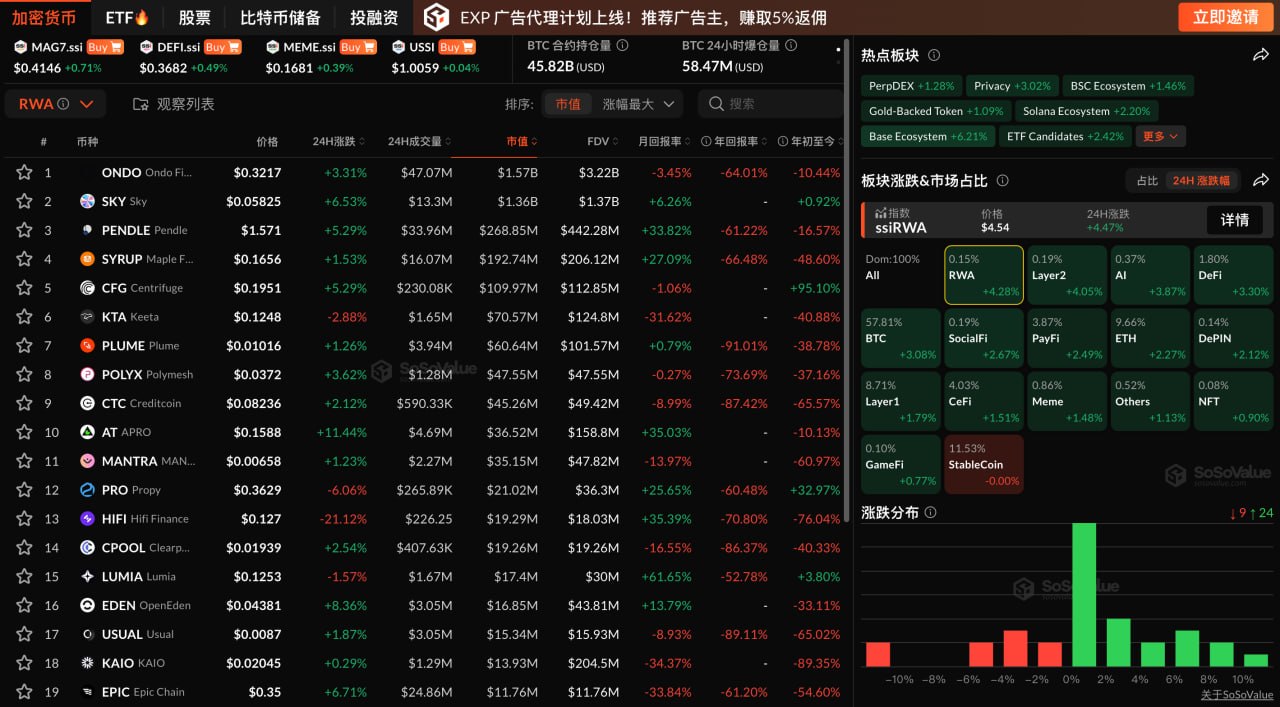
The crypto market is seeing a broad-based rebound, with the RWA sector up more than 4% and BTC holding steady at $63,000
Svmuu News, July 10: According to SoSoValue data, the crypto market rebounded after several consecutive days of declines, with the RWA sector performing particularly well, rising 4.28% over the past 2
-
Ave.ai now supports on-chain trading on Robinhood
Svmuu News: Ave.ai has officially added support for Robinhood Chain trading. Users can now view and trade Robinhood Chain-related assets through Ave.ai, further capitalizing on new opportunities prese
-
Taiko: Network services have been fully restored, and all user funds have been fully reimbursed.
Svmuu News Ethereum The Layer 2 project Taiko has reopened its cross-chain bridge. Taiko stated that the network has now fully recovered, all user funds have been restored, and a full post-mortem repo
-
Robinhood Chain Goes Live on Mainnet, Simultaneously Launching Tokenized Stocks, Perpetual Contracts, and AI-Powered Trading
Svmuu News: Robinhood announced that its proprietary Layer 2 network, Robinhood Chain, has officially launched on the public mainnet. Built on the Arbitrum technology stack, the chain is positioned as
-
The crypto market is broadly down, with the Layer 2 sector falling more than 3% and BTC dropping below $59,000.
Svmuu News: On July 1, according to SoSoValue data, the crypto sector saw widespread declines, with the Layer 2 sector falling 3.57% over the past 24 hours. Among them, Mantle (MNT) fell 4.97%, Starkn
-
Taiko: The mainnet will resume operations in four phases; the vulnerability exploited in the attack has been patched, and the security review has been completed.
Svmuu News Ethereum Layer 2 project Taiko announced that its fix has passed review by independent security experts, and the mainnet will resume operations in four steps, including: deploying the fix a
-
Base Announces the Causes of Its Two Recent Outages, Citing a Sequencer Vulnerability
Svmuu News: Last week, Base—Coinbase’s Layer 2 network—experienced two block production outages. The root cause was a vulnerability in the block-building logic of the sequencer. This vulnerability all
-
Base experienced its second mainnet outage in two days; service has now been restored
Svmuu News: Base has experienced an anomaly in mainnet block production for the second time in two days. According to the official status page, this outage occurred at 15:33 UTC. The team subsequently
-
Analyst: Single-sequencer model poses centralization risks; Base may experience downtime due to invalid blocks
Svmuu News: On-chain analyst Vadim noted in a post that Base experienced a consensus vulnerability today that resulted in a single invalid block. Block production ceased entirely after block height 47
-
Ethereum Lianchuang: Ethereum is a trusted, neutral digital asset settlement platform
Svmuu News: Joseph Lubin, co-founder of Ethereum and founder and CEO of Consensys, posted on X, stating that free-market capitalism is the best system, but through shared protocols, the underlying eco
-
Litecoin Lite Strategy, a venture capital firm, led a $1 million strategic investment in LitVM
Svmuu News Nasdaq: Lite Strategy, the financial services firm behind Litecoin, has announced that it is leading a $1 million strategic investment in LitVM, while also securing governance participation
-
tea Protocol Mainnet Officially Launches, Native Token TEA Lists on Multiple Trading Platforms Simultaneously
According to Svmuu, open-source software Layer 2 network tea Protocol announced that its mainnet and native token TEA officially launched at 08:00 Beijing time on June 4. TEA simultaneously listed on

-
What is MATIC? A Guide to Polygon's Native Token and Trading
MATIC is the native token of the Polygon network, which serves as a Layer-2 scaling solution for Ethereum, aiming to enhance transaction speed and reduce fees. MATIC is used within the network to pay transaction fees, for staking to maintain security, and to grant holders governance rights. Recently, Polygon has been advancing the token upgrade from MATIC to POL, and developing Polygon 2.0 and zkEVM technology. As of September 2026, MATIC's market capitalization is approximately $104 million, ranking it among the top cryptocurrencies, and it is available for trading on major cryptocurrency exchanges.
-
RYOSHI Coin Multi-Project Analysis: The Current Status and Risks of Ryoshis Vision, Ryoshi Token, and Ryoshi Research
The RYOSHI token name encompasses multiple independent crypto projects, including Ryoshis Vision, which aims to honor the founder of Shiba Inu and focuses on blockchain gaming; Ryoshi Token, a deflationary meme coin; and Ryoshi Research, an Ethereum-based Layer 2 solution. As of September 10, 2026, the first two projects exhibit extremely low trading volumes, near-depleted market activity, and anomalous or zero market capitalization data. Ryoshi Research, on the other hand, is a Layer 2 network based on Polygon CDK ZK technology, designed to enhance Ethereum's scalability. Investors must carefully distinguish between RYOSHI-related projects and fully understand their high-risk nature.
-
WLD Market Dynamics Analysis: Whale Sell-offs and Retail Behavior Observations
Worldcoin (WLD), a project aiming to build a global identity and financial network, has seen its recent market performance influenced by multiple factors. Its World Chain mainnet launched in October 2024 and has benefited from the AI narrative. However, market data reveals selling pressure from whales transferring large amounts of WLD to exchanges. Despite institutional interest (such as Grayscale's ETF application), WLD's price has been highly volatile, with a high percentage of circulating supply, making long-term oversupply a continued challenge. This article will analyze WLD's market drivers, whale dynamics, and clarify the public information status of specific market indicators.
-
VeChain (VET) vs. Polygon (POL) In-Depth Platform Analysis: New Opportunities in the Crypto Market
VeChain (VET), an enterprise-grade Layer-1 blockchain focused on supply chain and sustainability, is continuously deepening its impact in real-world applications through the Interstellar protocol upgrade and the development of its AI Agent ecosystem. Meanwhile, Ethereum Layer-2 scaling solution Polygon (formerly MATIC), after completing its token migration to POL, is committed to building an interconnected zero-knowledge proof network through AggLayer and the Polygon 2.0 vision, demonstrating immense potential in areas such as payments and RWA tokenization. This article will delve into the latest developments, technical characteristics, and new opportunities these two platforms bring to the crypto market.
-
What is Arbitrum Orbit? A Deep Dive into Arbitrum Airdrops and Ecosystem Development
Arbitrum Orbit is a customizable framework that allows developers to build dedicated Layer 2 or Layer 3 blockchains based on Arbitrum Nitro technology, offering high flexibility and scalability. The Arbitrum Foundation airdropped its governance token, ARB, to the community in March 2023, marking the network's transition to DAO governance. Recently, projects built on Orbit, such as Robinhood Chain, have introduced a new revenue-sharing narrative for the ARB token, driving its price fluctuations. This article will provide a detailed analysis of Orbit technology, the airdrop mechanism, and the market dynamics of the ARB token.
-
Nordek (NRK) Token Analysis: Project Positioning, Ecosystem, and Market Status
Nordek (NRK) is an Ethereum-based Layer 2 blockchain token utilizing a Delegated Proof-of-Stake (DPoS) mechanism, aiming to revolutionize the Web3 gaming and payment industries. Its ecosystem includes the crypto banking application NORPAY, the gaming platform PlayTradeWin, and the merchant payment solution FASTSCAN, among others. However, as of September 5, 2026, the NRK token exhibits extremely low market activity, with its 24-hour trading volume near zero and its circulating price at a very low level, indicating that its trading market is almost depleted.
-
OKB Market Performance and Investment Potential Analysis: Fixed Supply and Ecosystem Driven
OKB, the native utility token of the OKX exchange and its Web3 ecosystem, will have its total supply permanently fixed at 21 million, similar to Bitcoin's deflationary model, through a one-time burn and smart contract upgrade in 2025. Currently, OKB primarily serves as the native gas token for X Layer, OKX's EVM-compatible Layer 2 network, expanding its utility in DeFi and payments. As of September 2, 2026, OKB's market capitalization is approximately $2.226 billion, ranking 37th. Its scarcity narrative and ecosystem growth are key value drivers, but it also faces market volatility and competitive risks.
-
FRAX Token Analysis: From FXS to the Core of the Fraxtal Ecosystem, What Are Its Future Development Prospects?
The FRAX token is central to the Frax Finance ecosystem, having migrated and rebranded from the original governance token FXS in January 2026. FRAX now serves as the native gas token for the Fraxtal blockchain and supports its full-stack DeFi platform, which includes the 100% collateralized FRAX stablecoin, the liquid staking derivative frxETH, and lending markets. The protocol is actively pursuing real-world asset (RWA) integration and institutional adoption. Despite market volatility, its position as a cornerstone of the L2 ecosystem and the growth potential of DeFi are key drivers for its future development.
-
Reviewing Early Funding and Investment Returns for Immutable X (IMX)
Immutable X (IMX), as the first NFT Layer-2 scaling solution on Ethereum, has attracted numerous investors since its early fundraising in 2018. This article reviews its key funding stages, including seed round, private sale, public sale, and IEO, analyzing investor costs and historical peak ROI at different periods. As of September 2, 2026, IMX tokens are fully unlocked, and its price performance is contrasted with the potential returns for early investors.
-
Polygon Network Analysis: The Role of MATIC Token and the Transformation to POL
Polygon (formerly Matic Network) is a leading Layer-2 scaling solution for Ethereum, designed to increase transaction speed and reduce costs. Its native token, MATIC, previously played a key role in the network for paying fees, staking, and governance. However, as Polygon evolves towards its Polygon 2.0 vision, the MATIC token began a gradual migration to the new POL token in 2024, with most of the migration completed in 2025. POL has now become the core driver of the Polygon ecosystem.
-
What is FOXY? Analyzing its Position and Characteristics within the Linea Ecosystem
FOXY is the first "culture coin" and memecoin on the Linea blockchain, aiming to foster on-chain culture and user engagement within the Linea ecosystem through community-driven activities. As the native ERC-20 token of the Linea network, FOXY leverages Linea's Layer 2 technological advantages to provide low-cost and high-speed transactions. Its tokenomics include a total supply of 10 billion tokens, and it has established a large holder community through an airdrop mechanism. Given its current low trading activity, investors should be fully aware of the associated risks.
-
ZKS Coin Analysis: ZKSwap Token Status and Market Liquidity
ZKS is the native token of ZKSwap, a Layer-2 Ethereum-based DEX that utilizes ZK-Rollups technology. It belongs to the ZKSpace platform ecosystem, aiming to provide low-latency and gas-free transactions. However, as of now, the 24-hour trading volume for ZKS tokens is displayed as N/A, indicating that its active trading market has nearly dried up, and investors should be wary of potential liquidity risks.
-
CELR: How Celer Network Achieves Blockchain Scalability with Off-chain Smart Contracts
Celer Network (CELR) is a Layer-2 scaling platform that utilizes state channel technology to enable off-chain smart contract transactions, aiming to address blockchain scalability, transaction speed, and high cost issues. Its cross-chain interoperability and full-stack architecture allow it to work with multiple blockchains. Recently, Celer Network has continued to make progress in the AgentPay network upgrade, the release of the Celer Intent protocol, and the expansion of cBridge cross-chain bridge support, and has gained market attention for its cross-chain utility.
-
Ethereum Transaction Fees and Speed Analysis: Cleverly Setting Gas Fees to Save Costs
Gas on the Ethereum network is the "fuel" for Ethereum's operation, determining transaction fees and confirmation speed. Since the EIP-1559 upgrade, fees consist of a base fee and a priority fee, dynamically changing with network congestion. By choosing appropriate transaction times, utilizing Layer 2 solutions, and flexibly adjusting priority fees, users can effectively manage transaction costs and optimize confirmation speed. Ethereum's transition to PoS and the development of Layer 2 are continuously improving network efficiency and reducing user fees.
-
MATIC Coin Total Supply, All-Time High Price, and Polygon Ecosystem Analysis
MATIC is the native token of the Polygon network, with a maximum supply of 10 billion tokens. Its all-time high price reached $2.92 in December 2021. Polygon, as a Layer 2 scaling solution for Ethereum, aims to improve transaction speed and reduce costs, and has gained widespread adoption in the DeFi and NFT sectors. The EIP-1559 upgrade introduced a token burn mechanism, giving it deflationary potential.
-
What is LSK? A Comprehensive Analysis of the Lisk Blockchain Platform and LSK Token
Lisk (LSK) is an open-source Layer-1 blockchain application platform designed to lower Web3 development barriers through its JavaScript SDK. The project completed a major migration in December 2023, transitioning from its original Layer-1 to an Ethereum Layer 2 Rollup built on Optimism OP Stack, aiming to leverage Ethereum's security while offering lower transaction fees and faster execution speeds. The LSK token is the native utility token of the Lisk network, used for paying transaction fees, voting for delegates, and staking for rewards. Currently, the project faces market volatility and exchange risk monitoring.
-
MOV Coin Polysemic Analysis: Technical Characteristics and Development Prospects of Movement Network (MOVE)
The MOV coin may refer to multiple cryptocurrency projects; this article primarily focuses on Movement Network (MOVE). Movement Network is a modular blockchain ecosystem based on the Move language, designed to serve as an Ethereum Layer 2 solution, combining the security of the Move language with EVM compatibility. The project has completed $38 million in financing and received additional investment from Binance Labs. Its token, MOVE, is used for staking, Gas fees, governance, and more, and is highly anticipated by the market.
-
Reviewing Ethereum's Fifth Anniversary: 2020 Milestones and the State of Play in 2026
July 30, 2020, marked the fifth anniversary of Ethereum's launch, a period when it was experiencing a DeFi boom, network congestion, and a long wait for the Eth2 upgrade. That year, the price of ETH surged from $130 at the beginning of the year to $334, with a market capitalization of $37.4 billion. Now, in August 2026, Ethereum has successfully completed The Merge, transitioning to a PoS mechanism, and continues to enhance performance through a series of upgrades. This article will review the key events surrounding Ethereum's fifth anniversary and look ahead to its position and future development in the current crypto ecosystem.
-
What is KAT Coin? An Analysis of Katana Network and Kambria's KAT Token and Its Prospects
There are multiple tokens named KAT in the cryptocurrency space, with the most prominent being KAT, the native token of Katana Network. Katana Network is an Ethereum Layer 2 network incubated by Polygon Labs and GSR, designed to optimize DeFi liquidity and yield predictability. This article will delve into the uses, recent developments, market performance, and future outlook of Katana Network's KAT token, while also briefly mentioning another token with the same name, Kambria (KAT).
-
What is Mantle (MNT)? An Analysis of Its Ecosystem and Market Performance
Mantle (MNT) is a modular Layer 2 solution for Ethereum, designed to provide scalable, low-cost, and high-performance infrastructure for decentralized applications. It utilizes a Rollup architecture supported by ZK validity proofs and completed a brand merger with its original incubator, BitDAO, in May 2023. As of August 18, 2026, the MNT price is approximately $0.44, with a market capitalization of about $1.44 billion to $1.46 billion. Its ecosystem supports applications in areas such as DeFi and GameFi, and it manages a treasury of approximately $3.2 billion.
-
EGS Coin Analysis: EdgeSwap (EGS) vs. Eggs Finance (EGGS) Value and Investment Considerations
"EGS Coin" may refer to two different projects: EdgeSwap (EGS) or Eggs Finance (EGGS). EdgeSwap is an Ethereum-based ZK Rollup Layer 2 trading protocol designed to provide efficient and secure trading services, but its circulating supply data has uncertainties. Information on the Eggs Finance project is relatively scarce, and it is currently not tradable on major platforms. Investors considering any "EGS Coin" must first clarify which project is being referred to and conduct thorough due diligence, fully assessing its technology, ecosystem, market activity, and potential risks.
-
Taiko Token Recent Performance and GRND Token Analysis: Clarification and Outlook
As an Ethereum L2 solution, Taiko has recently experienced fluctuations in trading volume and market capitalization, successfully recovering after a security incident. Its token, TAIKO, is actively traded on major CEXs. GRND, mentioned in the title, is not a trading platform but rather the token of the Move-to-Earn project SuperWalk, primarily used for platform governance and incentives, with relatively smaller trading volume. This article will analyze the current status and characteristics of these two projects separately.
-
IM Coin Ambiguity: The Current Status and Investment Analysis of imToken Wallet and Immutable X (IMX) Token
The term "IM Coin" often causes confusion, potentially referring to the token associated with the decentralized wallet project imToken, or the more active Immutable X (IMX) token. This article will separately analyze the powerful ecosystem and development strategy of the imToken wallet, as well as the market status of its associated token; simultaneously, it will delve into the technical advantages, token economic model, and market performance of Immutable X (IMX) as an NFT Layer 2 solution, providing readers with a comprehensive value assessment and investment considerations.
-
Perception Analysis of Ethereum's "Decline": Challenges and Core Strengths Coexist
In recent years, Ethereum has faced numerous challenges in the crypto market, including a decline in market cap dominance, high Gas fees, moderate inflation after the Dencun upgrade, and the rise of competitors like Solana and TRON, leading some market observers to believe it is "on the decline." However, Ethereum still possesses a vast developer community, accelerating institutional adoption, a clear scaling roadmap, and a commitment to decentralization and security. These core strengths ensure its continued importance in the evolving blockchain ecosystem.





















Layer 2

24H Trending
-
1
Stock Tokenization: 2026 Market Overview and Top 5 Tokenized Stocks

-
2
JST (JUST) price surged to $0.11326, hitting a new 365-day high.
-
3
Aethir (ATH) Token Value Analysis: Decentralized Cloud Computing Project Potential and Risk Assessment

-
4
Standard Chartered Predicts XRP Could Reach $12.60 by 2028, Citing Unmet Catalysts
-
5
Bitcoin Trading Platforms and Mobile Apps Guide: Selection and Considerations

-
6
NEPT Coin Trading Guide: Distinguishing Between Similarly Named Projects and Their Respective Trading Channels

-
7
What is MEMO Coin? An Analysis of the Token, Transaction Memos, and Payment Platform

-
8
How will cyclical trends evolve after the Bitcoin halving?

-
9
LHC Coin: Analysis of Lightcoin Project Status and Development Prospects

-
10
What is WKAI? Wrapped KardiaChain (WKAI) Project Analysis and Risk Warning

Markets Today





Recommended Reading

Hot Topics

Svmuu focuses on blockchain industry trends and cutting-edge cryptocurrency news, while also covering real-time market data and in-depth analysis of the Hong Kong, U.S., and foreign exchange markets. Here, you can not only access professional 24/7 news updates and accurate market data, but also utilize practical investment tools to help you capitalize on opportunities in both digital assets and traditional financial markets. Whether you are a blockchain enthusiast or an investor in Hong Kong, U.S., or foreign exchange markets, we provide efficient and timely information services to empower your investment decisions.
- User Agreement
- Privacy Policy
- Contact Us
- Business Partnerships
- Disclaimer
- Content Statement
- About Us
- Sitemap
 Coming Soon!
