

Faster global financial news!
CBDC
-
OKB and Central Bank Digital Currencies (CBDCs): Potential Interactions and OKX's Strategy
OKB, as the core utility token of the OKX ecosystem and X Layer, is seeing its development intersect in an interesting way with the global trend of Central Bank Digital Currencies (CBDCs). OKX exchange actively embraces the CeDeFi concept and seeks to become a key component of future digital financial infrastructure through compliance and cooperation, potentially supporting CBDC integration. Central banks worldwide are actively exploring CBDCs to enhance payment efficiency and financial resilience, with Brazil's Drex and the Bank of Korea's pilot projects being representative examples. OKX's strategy foreshadows the potential role OKB and its ecosystem may play in the future digital currency landscape.
-
Bank of Japan's CBDC Forum held its sixth general meeting on June 3, explaining high-load testing findings and progress report supplements
The Bank of Japan's CBDC Forum held its sixth general meeting on June 3, 2026. During the meeting, the Bank explained the findings from performance evaluations of high-load testing and desktop analysi
-
What is FED Coin? An Analysis of the Cryptocurrency of the Same Name and the Concept of the Federal Reserve's Digital Currency
The term "FED coin" carries a dual meaning within the cryptocurrency space: it can refer to low-market-cap cryptocurrencies circulating on the market, such as "Federal Reserve (FED)" or "FEDCOIN," which have no official affiliation with the Federal Reserve System and exhibit extremely low trading volumes; alternatively, it may informally refer to the concept of a central bank digital currency (CBDC) that the Federal Reserve is currently researching and exploring. This article will elaborate on the background, current status, and related developments of these two types of "FED coins" separately.
-
Japan plans to proceed with stock and bond tokenization, with work on the project expected to begin in early 2027
Japan's financial regulator, the Bank of Japan, and major financial institutions are collaborating on a national blockchain-based settlement infrastructure for tokenized versions of stocks and Japanes
-
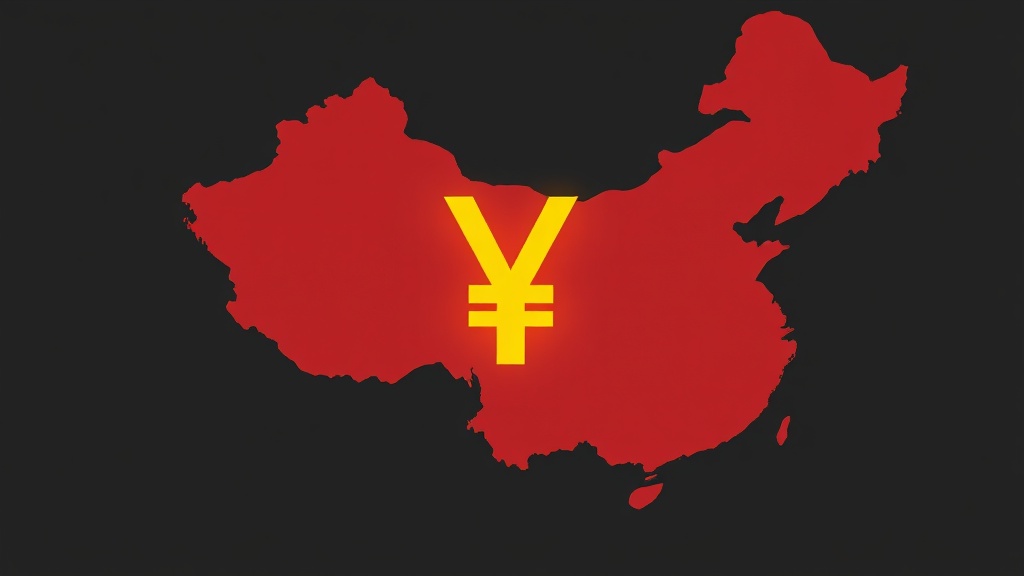
What is the Digital Yuan? An Analysis of the Background and Core Motivations Behind the Development of Central Bank Digital Currencies
The digital yuan (e-CNY) is a legal digital currency issued by the People's Bank of China (PBOC), designed to replace cash in circulation (M0), and backed by state credit. It adopts a "central bank-commercial bank" two-tier issuance system, possessing characteristics such as legal tender status, controllable anonymity, and dual-offline payment capabilities, fundamentally differing from decentralized cryptocurrencies and third-party payment tools. China initiated its research and development in 2014 and began pilot programs at the end of 2019. Its development is driven by factors including improving payment efficiency, promoting financial inclusion, curbing the monopoly of third-party payments, addressing the challenges posed by private cryptocurrencies, and advancing the internationalization of the RMB.
-
ECB Defends Digital Euro Privacy, Stating Eurosystem Will Not Identify Users
European Central Bank (ECB) Executive Board member Piero Cipollone clarified that the Eurosystem would not identify users of the digital euro. This statement comes amidst global scrutiny and privacy c
-
Why are Central Bank Digital Currencies (CBDCs) attracting attention? What are their fundamental differences from Bitcoin?
Central Bank Digital Currency (CBDC) is a form of legal digital currency actively explored by central banks worldwide, aiming to enhance payment efficiency, strengthen financial regulation, maintain monetary sovereignty, and promote financial inclusion. It differs significantly from decentralized Bitcoin in various aspects, including issuing authority, credit endorsement, degree of centralization, value stability, anonymity, and supply. These differences represent two distinct digital currency philosophies and application directions.
-
"KZT Coin": The Role and Future Outlook of the Kazakhstani Tenge in the Cryptocurrency Ecosystem
"KZT Coin" is not a cryptocurrency, but rather the official currency of Kazakhstan, the Tenge (KZT). However, the Kazakhstani government is actively promoting the development of digital assets through initiatives such as establishing the "CryptoCity" pilot zone, launching a central bank digital currency (CBDC) pilot, and introducing local digital asset trading platforms. These efforts are enabling KZT to play an increasingly important role in cryptocurrency trading and the digital economy. This article will delve into the connection between KZT and cryptocurrencies, Kazakhstan's regulatory framework, and its future development prospects.
-
XRP and Central Bank Digital Currencies (CBDCs): Ripple Platform and Global Partnership Progress
Ripple is actively involved in the development and exploration of global central bank digital currencies (CBDCs), with its CBDC platform designed to provide central banks with an end-to-end solution for issuing and managing digital currencies. Although the private ledger does not mandate the use of the XRP token, XRP is considered a "neutral bridge asset" for connecting different CBDCs and other currencies. Ripple's focus is on wholesale CBDCs, and it has initiated pilot collaborations with over 20 countries and regions, including Palau, Montenegro, Colombia, and Hong Kong, demonstrating the potential of XRP Ledger technology in enhancing transaction efficiency and reducing costs, while actively addressing regulatory compliance requirements.
-
Guide to Buying and Selling CBD Coins: Clarifying the Difference Between Central Bank Digital Currency (CBDC) and Cryptocurrency
Regarding the trading of “CBD Coin,” this article aims to clarify the common confusion between it and Central Bank Digital Currency (CBDC). CBDC is a digital version of fiat currency issued by national central banks, primarily used for payments and settlements; it is not traded on exchanges as a speculative crypto asset. Central banks around the world are actively exploring and advancing CBDC projects, whose operational mechanisms differ fundamentally from those of decentralized cryptocurrencies. If “CBD Coin” refers to an independent cryptocurrency, there is currently a lack of reliable information available.
-
Expanding into the consumer payments sector, South Korea launches a project to develop an infrastructure for deposit token payments
Svmuu News: The Korea Internet & Security Agency (KISA) and the Ministry of Science and ICT have launched the “Deposit Token Payment Infrastructure Expansion Project,” which will extend the results of
-
Lacking independent security verification, the first phase of the Bank of Korea’s CBDC pilot relies solely on self-assessments by participating banks
Svmuu News: According to data from the Financial Supervisory Service of South Korea, during the first phase of the CBDC pilot project led by the Bank of Korea, financial authorities did not conduct an
-
South Korea Unveils Roadmap for the Internationalization of the Won, Plans to Establish a Legal Framework for the Issuance and Circulation of Won-Denominated Stablecoins
Svmuu News: The South Korean government has released a “Roadmap for the Internationalization of the Won,” outlining plans to transition the won from a regulated currency to a freely convertible curren
-
Set to launch as early as September, the second phase of the Bank of Korea’s CBDC pilot program, “Project Han River,” will conduct real-world transaction tests
Svmuu News: The second phase of the Bank of Korea’s central bank digital currency (CBDC) pilot project, the “Han River Project,” is set to begin. The Bank of Korea and commercial banks are making fina
-
South Korea Unveils Roadmap for the Internationalization of the Won, Plans to Issue Won-Denominated Stablecoins and Pilot the Tokenization of Government Bonds
Svmuu News: The South Korean government today released a “Roadmap for the Internationalization of the Won,” with the goal of promoting the transition of the won from a regulated currency to a freely c
-
The Bank of Korea’s digital currency pilot program, “Project Han River,” has entered its second phase, with two new banks joining the initiative
Svmuu News: South Korea’s Financial Services Commission announced that the second phase of the “Han River Project,” a central bank digital currency (CBDC) pilot program, has begun, with Kyungnam Bank
-
An In-Depth Analysis of the Digital Yuan (e-CNY): The Current Status and Development of China’s Legal Digital Currency
The Digital Yuan (e-CNY) is a legal tender digital currency issued by the People's Bank of China (PBOC). As a digital version of the yuan, it is primarily used as cash in circulation (M0). It employs a two-tier operational system, supports offline-to-offline payments and controlled anonymity, and aims to enhance financial inclusion, improve payment efficiency, and promote the internationalization of the yuan.As of the end of November 2025, the cumulative transaction volume of the digital yuan had reached 16.7 trillion yuan. It has been extensively piloted in 17 provinces and municipalities across the country, gradually integrating into daily economic life, and in early 2026, it entered the era of interest-bearing “digital deposit currency.”
-
South Korea Plans to Include Digital Assets in Its National Asset Management System; Pilot Program for Tokenized Government Bonds to Launch in 2027
Svmuu News: South Korea’s Ministry of Economy and Finance (MOEF) plans to enact the “Framework Act on State Assets” to update the state asset management system established under the 1950 “State Proper
-
South Korea Will Push Forward with a Pilot Program for the Tokenization of Government Bonds on the Blockchain and Launch Three Major National Projects in Semiconductors, AI, and Other Fields
Svmuu News: The South Korean government has released its “Economic Growth Strategy for the Second Half of 2026,” announcing that it will accelerate progress on three major “super projects”—semiconduct
-
Housing bill containing a provision banning CBDCs officially takes effect; Donald Trump—even without the president’s signature—becomes law
Svmuu News: The U.S. “21st Century ROAD to Housing Act” has officially taken effect, and it includes provisions prohibiting the Federal Reserve from issuing a central bank digital currency (CBDC). Acc
-
Competition and Collaboration Between BNB and Central Bank Digital Currencies (CBDCs): The Future Landscape of Digital Finance
As the global financial sector accelerates its digital transformation, private cryptocurrencies such as BNB (BNB) are shaping the future of digital finance alongside central bank digital currencies (CBDCs) being explored by central banks around the world.As the core of the Binance ecosystem, BNB has a wide range of use cases, including discounts on trading fees, transaction fees on the BNB Chain, DeFi applications, payments, and participation in Launchpad projects.CBDCs, on the other hand, are digital versions of fiat currency issued and regulated by central banks, designed to improve payment efficiency, promote financial inclusion, and strengthen monetary sovereignty. While the two differ significantly in terms of centralization, privacy protection, and monetary policy control, the future may see a scenario where competition and collaboration coexist, jointly driving the development of the digital economy.
-
The Fundamental Difference Between a Central Bank Digital Currency (CBDC) and a "Bitcoin"
Although both central bank digital currencies (CBDCs) and Bitcoin are digital forms of currency, there are fundamental differences between them.A CBDC is a legal tender digital currency issued and controlled by a central bank, designed to enhance payment efficiency, promote financial inclusion, and maintain financial stability. In contrast, Bitcoin is a decentralized cryptocurrency created by an anonymous entity known as Satoshi Nakamoto. It is not issued or managed by any central authority, and its core value lies in the financial autonomy derived from its resistance to censorship, scarcity, and decentralization.
-
Galaxy Research Director: U.S. Senate Passes Housing Bill That Prohibits Federal Reserve the Issuance of a CBDC Before 2030
Svmuu News: The head of research at Galaxy posted on X, stating that the U.S. Senate passed a major housing bill with bipartisan support last night. The bill is expected to pass quickly in the House o
-
HKEX and the HKMA Launch Pilot Program to Provide Digital Payment Solutions for After-Hours Trading Sessions in Derivatives
Svmuu News: The Hong Kong Exchanges and Clearing Limited (HKEX) and the Hong Kong Monetary Authority (HKMA) announced today (June 18) the launch of a joint pilot project to explore new digital payment









-
Bank of Japan's CBDC Forum held its sixth general meeting on June 3, explaining high-load testing findings and progress report supplements
The Bank of Japan's CBDC Forum held its sixth general meeting on June 3, 2026. During the meeting, the Bank explained the findings from performance evaluations of high-load testing and desktop analysi
-
Japan plans to proceed with stock and bond tokenization, with work on the project expected to begin in early 2027
Japan's financial regulator, the Bank of Japan, and major financial institutions are collaborating on a national blockchain-based settlement infrastructure for tokenized versions of stocks and Japanes
-
ECB Defends Digital Euro Privacy, Stating Eurosystem Will Not Identify Users
European Central Bank (ECB) Executive Board member Piero Cipollone clarified that the Eurosystem would not identify users of the digital euro. This statement comes amidst global scrutiny and privacy c
-
Expanding into the consumer payments sector, South Korea launches a project to develop an infrastructure for deposit token payments
Svmuu News: The Korea Internet & Security Agency (KISA) and the Ministry of Science and ICT have launched the “Deposit Token Payment Infrastructure Expansion Project,” which will extend the results of
-
Lacking independent security verification, the first phase of the Bank of Korea’s CBDC pilot relies solely on self-assessments by participating banks
Svmuu News: According to data from the Financial Supervisory Service of South Korea, during the first phase of the CBDC pilot project led by the Bank of Korea, financial authorities did not conduct an
-
South Korea Unveils Roadmap for the Internationalization of the Won, Plans to Establish a Legal Framework for the Issuance and Circulation of Won-Denominated Stablecoins
Svmuu News: The South Korean government has released a “Roadmap for the Internationalization of the Won,” outlining plans to transition the won from a regulated currency to a freely convertible curren
-
Set to launch as early as September, the second phase of the Bank of Korea’s CBDC pilot program, “Project Han River,” will conduct real-world transaction tests
Svmuu News: The second phase of the Bank of Korea’s central bank digital currency (CBDC) pilot project, the “Han River Project,” is set to begin. The Bank of Korea and commercial banks are making fina
-
South Korea Unveils Roadmap for the Internationalization of the Won, Plans to Issue Won-Denominated Stablecoins and Pilot the Tokenization of Government Bonds
Svmuu News: The South Korean government today released a “Roadmap for the Internationalization of the Won,” with the goal of promoting the transition of the won from a regulated currency to a freely c
-
The Bank of Korea’s digital currency pilot program, “Project Han River,” has entered its second phase, with two new banks joining the initiative
Svmuu News: South Korea’s Financial Services Commission announced that the second phase of the “Han River Project,” a central bank digital currency (CBDC) pilot program, has begun, with Kyungnam Bank
-
South Korea Plans to Include Digital Assets in Its National Asset Management System; Pilot Program for Tokenized Government Bonds to Launch in 2027
Svmuu News: South Korea’s Ministry of Economy and Finance (MOEF) plans to enact the “Framework Act on State Assets” to update the state asset management system established under the 1950 “State Proper
-
South Korea Will Push Forward with a Pilot Program for the Tokenization of Government Bonds on the Blockchain and Launch Three Major National Projects in Semiconductors, AI, and Other Fields
Svmuu News: The South Korean government has released its “Economic Growth Strategy for the Second Half of 2026,” announcing that it will accelerate progress on three major “super projects”—semiconduct
-
Housing bill containing a provision banning CBDCs officially takes effect; Donald Trump—even without the president’s signature—becomes law
Svmuu News: The U.S. “21st Century ROAD to Housing Act” has officially taken effect, and it includes provisions prohibiting the Federal Reserve from issuing a central bank digital currency (CBDC). Acc
-
Galaxy Research Director: U.S. Senate Passes Housing Bill That Prohibits Federal Reserve the Issuance of a CBDC Before 2030
Svmuu News: The head of research at Galaxy posted on X, stating that the U.S. Senate passed a major housing bill with bipartisan support last night. The bill is expected to pass quickly in the House o
-
HKEX and the HKMA Launch Pilot Program to Provide Digital Payment Solutions for After-Hours Trading Sessions in Derivatives
Svmuu News: The Hong Kong Exchanges and Clearing Limited (HKEX) and the Hong Kong Monetary Authority (HKMA) announced today (June 18) the launch of a joint pilot project to explore new digital payment
-
OKB and Central Bank Digital Currencies (CBDCs): Potential Interactions and OKX's Strategy
OKB, as the core utility token of the OKX ecosystem and X Layer, is seeing its development intersect in an interesting way with the global trend of Central Bank Digital Currencies (CBDCs). OKX exchange actively embraces the CeDeFi concept and seeks to become a key component of future digital financial infrastructure through compliance and cooperation, potentially supporting CBDC integration. Central banks worldwide are actively exploring CBDCs to enhance payment efficiency and financial resilience, with Brazil's Drex and the Bank of Korea's pilot projects being representative examples. OKX's strategy foreshadows the potential role OKB and its ecosystem may play in the future digital currency landscape.
-
What is FED Coin? An Analysis of the Cryptocurrency of the Same Name and the Concept of the Federal Reserve's Digital Currency
The term "FED coin" carries a dual meaning within the cryptocurrency space: it can refer to low-market-cap cryptocurrencies circulating on the market, such as "Federal Reserve (FED)" or "FEDCOIN," which have no official affiliation with the Federal Reserve System and exhibit extremely low trading volumes; alternatively, it may informally refer to the concept of a central bank digital currency (CBDC) that the Federal Reserve is currently researching and exploring. This article will elaborate on the background, current status, and related developments of these two types of "FED coins" separately.
-
What is the Digital Yuan? An Analysis of the Background and Core Motivations Behind the Development of Central Bank Digital Currencies
The digital yuan (e-CNY) is a legal digital currency issued by the People's Bank of China (PBOC), designed to replace cash in circulation (M0), and backed by state credit. It adopts a "central bank-commercial bank" two-tier issuance system, possessing characteristics such as legal tender status, controllable anonymity, and dual-offline payment capabilities, fundamentally differing from decentralized cryptocurrencies and third-party payment tools. China initiated its research and development in 2014 and began pilot programs at the end of 2019. Its development is driven by factors including improving payment efficiency, promoting financial inclusion, curbing the monopoly of third-party payments, addressing the challenges posed by private cryptocurrencies, and advancing the internationalization of the RMB.
-
Why are Central Bank Digital Currencies (CBDCs) attracting attention? What are their fundamental differences from Bitcoin?
Central Bank Digital Currency (CBDC) is a form of legal digital currency actively explored by central banks worldwide, aiming to enhance payment efficiency, strengthen financial regulation, maintain monetary sovereignty, and promote financial inclusion. It differs significantly from decentralized Bitcoin in various aspects, including issuing authority, credit endorsement, degree of centralization, value stability, anonymity, and supply. These differences represent two distinct digital currency philosophies and application directions.
-
"KZT Coin": The Role and Future Outlook of the Kazakhstani Tenge in the Cryptocurrency Ecosystem
"KZT Coin" is not a cryptocurrency, but rather the official currency of Kazakhstan, the Tenge (KZT). However, the Kazakhstani government is actively promoting the development of digital assets through initiatives such as establishing the "CryptoCity" pilot zone, launching a central bank digital currency (CBDC) pilot, and introducing local digital asset trading platforms. These efforts are enabling KZT to play an increasingly important role in cryptocurrency trading and the digital economy. This article will delve into the connection between KZT and cryptocurrencies, Kazakhstan's regulatory framework, and its future development prospects.
-
XRP and Central Bank Digital Currencies (CBDCs): Ripple Platform and Global Partnership Progress
Ripple is actively involved in the development and exploration of global central bank digital currencies (CBDCs), with its CBDC platform designed to provide central banks with an end-to-end solution for issuing and managing digital currencies. Although the private ledger does not mandate the use of the XRP token, XRP is considered a "neutral bridge asset" for connecting different CBDCs and other currencies. Ripple's focus is on wholesale CBDCs, and it has initiated pilot collaborations with over 20 countries and regions, including Palau, Montenegro, Colombia, and Hong Kong, demonstrating the potential of XRP Ledger technology in enhancing transaction efficiency and reducing costs, while actively addressing regulatory compliance requirements.
-
Guide to Buying and Selling CBD Coins: Clarifying the Difference Between Central Bank Digital Currency (CBDC) and Cryptocurrency
Regarding the trading of “CBD Coin,” this article aims to clarify the common confusion between it and Central Bank Digital Currency (CBDC). CBDC is a digital version of fiat currency issued by national central banks, primarily used for payments and settlements; it is not traded on exchanges as a speculative crypto asset. Central banks around the world are actively exploring and advancing CBDC projects, whose operational mechanisms differ fundamentally from those of decentralized cryptocurrencies. If “CBD Coin” refers to an independent cryptocurrency, there is currently a lack of reliable information available.
-
An In-Depth Analysis of the Digital Yuan (e-CNY): The Current Status and Development of China’s Legal Digital Currency
The Digital Yuan (e-CNY) is a legal tender digital currency issued by the People's Bank of China (PBOC). As a digital version of the yuan, it is primarily used as cash in circulation (M0). It employs a two-tier operational system, supports offline-to-offline payments and controlled anonymity, and aims to enhance financial inclusion, improve payment efficiency, and promote the internationalization of the yuan.As of the end of November 2025, the cumulative transaction volume of the digital yuan had reached 16.7 trillion yuan. It has been extensively piloted in 17 provinces and municipalities across the country, gradually integrating into daily economic life, and in early 2026, it entered the era of interest-bearing “digital deposit currency.”
-
Competition and Collaboration Between BNB and Central Bank Digital Currencies (CBDCs): The Future Landscape of Digital Finance
As the global financial sector accelerates its digital transformation, private cryptocurrencies such as BNB (BNB) are shaping the future of digital finance alongside central bank digital currencies (CBDCs) being explored by central banks around the world.As the core of the Binance ecosystem, BNB has a wide range of use cases, including discounts on trading fees, transaction fees on the BNB Chain, DeFi applications, payments, and participation in Launchpad projects.CBDCs, on the other hand, are digital versions of fiat currency issued and regulated by central banks, designed to improve payment efficiency, promote financial inclusion, and strengthen monetary sovereignty. While the two differ significantly in terms of centralization, privacy protection, and monetary policy control, the future may see a scenario where competition and collaboration coexist, jointly driving the development of the digital economy.
-
The Fundamental Difference Between a Central Bank Digital Currency (CBDC) and a "Bitcoin"
Although both central bank digital currencies (CBDCs) and Bitcoin are digital forms of currency, there are fundamental differences between them.A CBDC is a legal tender digital currency issued and controlled by a central bank, designed to enhance payment efficiency, promote financial inclusion, and maintain financial stability. In contrast, Bitcoin is a decentralized cryptocurrency created by an anonymous entity known as Satoshi Nakamoto. It is not issued or managed by any central authority, and its core value lies in the financial autonomy derived from its resistance to censorship, scarcity, and decentralization.
CBDC

24H Trending
-
1
Court documents reveal: OpenAI and Microsoft executives admit AI poses a substantial threat to journalism, with a Microsoft executive calling it potentially "the largest theft of labor in human history."
-
2
S&P 500 could still advance after a Fed hike, according to a Jefferies strategist
-
3
The U.S. House of Representatives is in recess, and AI regulatory legislation will be postponed until after the midterm elections.
-
4
Bitcoin corporate treasuries bought just 5.9K BTC in three months as holdings remained at unrealized loss
-
5
Microsoft AI Head Warns: Uncontrolled AI Could Lead to "Silicon Species" Competing with Humans, Criticizes Anthropic's Approach to AI
-
6
Japan's central bank interest rate hike probability for Sept. 17-18 meeting surges to nearly 100% after U.S. Treasury's July 31 yen intervention
-
7
U.S. equity futures rose, with Nasdaq 100 futures up nearly 1%, and the 10-year U.S. Treasury yield falling below 5%.
-
8
Lula, Bolsonaro Tied as Bank Scandal Weighs on Both Campaigns
-
9
The New York Times reported that OpenAI employees were aware that AI posed an "existential threat" to publishers.
-
10
Goldman Sachs Analysis: Historically, US stock energy and technology sectors outperform after Federal Reserve rate hikes, while real estate lags; the pace of rate hikes is key to US stock performance.
Markets Today





Recommended Reading

Hot Topics

Svmuu focuses on blockchain industry trends and cutting-edge cryptocurrency news, while also covering real-time market data and in-depth analysis of the Hong Kong, U.S., and foreign exchange markets. Here, you can not only access professional 24/7 news updates and accurate market data, but also utilize practical investment tools to help you capitalize on opportunities in both digital assets and traditional financial markets. Whether you are a blockchain enthusiast or an investor in Hong Kong, U.S., or foreign exchange markets, we provide efficient and timely information services to empower your investment decisions.
- User Agreement
- Privacy Policy
- Contact Us
- Business Partnerships
- Disclaimer
- Content Statement
- About Us
- Sitemap
 Coming Soon!
