Digital Yuan vs. Bitcoin: Fundamental Nature and Legal Status
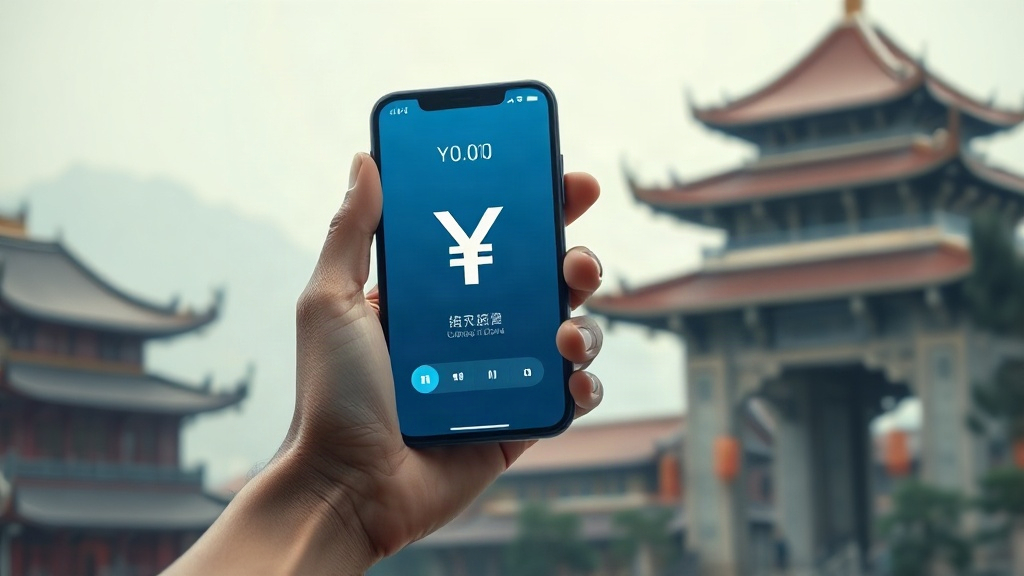
Digital Yuan (e-CNY) and Bitcoin (BTC) are two major representatives of the digital economy era, yet their essence and legal status are fundamentally different. The Digital Yuan is a legal digital currency issued by the People's Bank of China, backed by state credit and legal tender status, equivalent to physical RMB. It is positioned as a digitized form of cash in circulation (M0). This means it is a state-recognized means of payment, just like banknotes and coins. In contrast, Bitcoin is a decentralized virtual currency or crypto asset, lacking legal tender status. In most jurisdictions worldwide, it is regarded as a virtual commodity or investment product, with its value determined by market supply and demand.
Issuance and Control Mechanisms
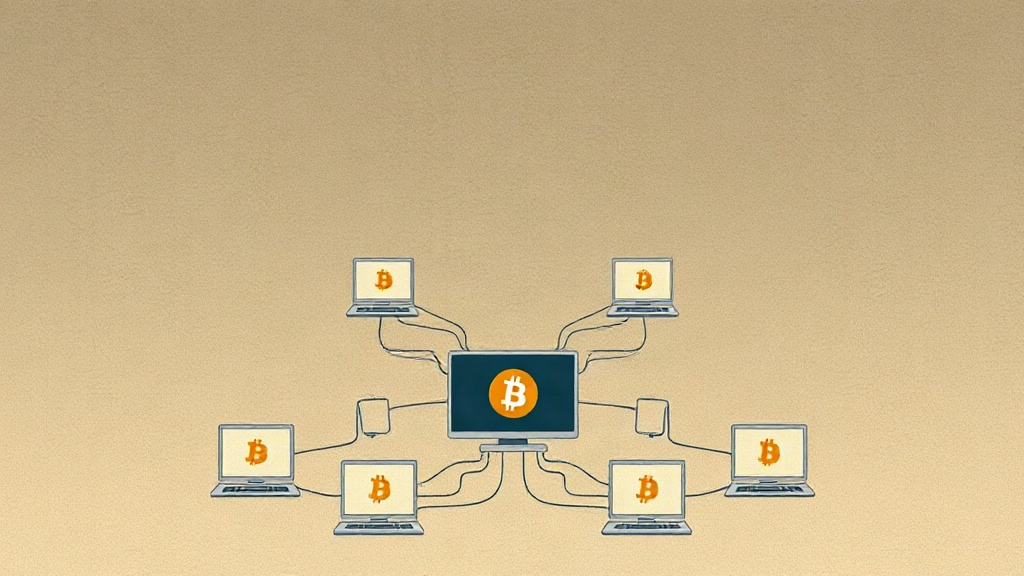
In terms of issuance and control, the two have adopted completely opposite paths. The Digital Yuan is centrally issued and managed by the People's Bank of China, employing a "two-tier operating system." Under this system, the central bank exchanges Digital Yuan with operating institutions such as commercial banks, which then provide exchange and circulation services to the public. This model ensures the unity of monetary policy and the stability of the financial system. Bitcoin, on the other hand, is generated through a "mining" process, with its blockchain ledger maintained by a global network of computers. It has no central issuer or governing body, making it completely decentralized.
Technical Foundation and Privacy Strategy
The Digital Yuan does not pre-set a specific technical solution but can draw on blockchain technology. Its core, however, is centralized management to ensure efficiency, security, and controllability. It implements a "controllable anonymity" principle, allowing small-value transactions to be anonymous while requiring real-name authentication for large-value transactions. This aims to prevent illicit activities such as money laundering and terrorist financing while protecting users' legitimate privacy. Bitcoin is entirely based on blockchain technology, recording all transactions through a distributed ledger. Its transaction records are publicly transparent, but addresses are pseudonymous, not completely anonymous. Real identities may still be traceable through professional technical means, and users need to take measures to protect their privacy.
Supply and Value Stability
The supply and value stability of the two also differ significantly. The supply of the Digital Yuan is regulated by the central bank according to economic development needs, with no fixed upper limit, to maintain monetary policy flexibility and economic stability. Its value is pegged 1:1 to physical RMB, thus ensuring value stability. Bitcoin's total supply is capped at 21 million coins, making it scarce, with the last block expected to be mined by 2140. This fixed supply leads to volatile prices, primarily used for speculation and investment rather than daily payments.
Functional Features and Latest Developments
- Interest: Digital Yuan version 1.0 was positioned as M0 and did not accrue interest. However, since January 2026, after the Digital Yuan App upgraded to version 2.0, real-name wallet balances began to accrue interest at the prevailing demand deposit rate, marking an expansion of its functionality from "digital cash" to "digital deposit currency." Bitcoin does not accrue interest.
- Offline Payment: The Digital Yuan supports "dual offline payment," allowing transactions to be completed even without network access, greatly enhancing payment convenience and resilience. Bitcoin transactions typically require a network connection for broadcasting and verification.
- Smart Contracts: The Digital Yuan can incorporate smart contracts that do not affect its monetary function, enabling programmability. This supports directed payments, conditional payments, and automatic payments, applicable in scenarios such as prepaid fund management and precise subsidy distribution. Bitcoin's scripting language also supports limited smart contract functionality, though less flexible than platforms like Ethereum.
As of the end of June 2024, the Digital Yuan has been piloted in 17 provinces (autonomous regions, municipalities), with cumulative transaction volume reaching 7 trillion yuan. In May 2024, Hong Kong expanded its Digital Yuan pilot scope, becoming the first city to pilot cross-border use. In October 2025, the Digital Yuan International Operations Center officially commenced operations, launching a cross-border digital payment platform and other initiatives to promote its internationalization. Relevant developments can be followed in Svmuu's ongoing reports. Regarding Bitcoin, data as of December 2023 shows approximately 1.4 million Bitcoins still available for mining, with the next "halving" event expected in 2028.
Trading Channels
The Digital Yuan is serviced through its two-tier operating system by designated commercial banks and institutions such as Industrial and Commercial Bank of China, Agricultural Bank of China, Bank of China, and China Construction Bank. Users can open wallets and conduct transactions within the Digital Yuan Apps of these banks. Bitcoin, as a global crypto asset, can be traded on numerous major cryptocurrency exchanges worldwide, such as Binance, Bybit, Gate, CoinW, etc. Users can trade on platforms that support this currency.
The platform information mentioned in the article changes with the listing and delisting dynamics of various exchanges. Please refer to the official announcements of the exchanges.