

Faster global financial news!

BTC Bitcoin1
BTCMarket
-
Trend
-
K-Line
BTCNews
-
Russia's largest bank Sberbank secures approval to trade crypto, plans to launch services on December 1
Russia's largest bank, Sberbank, has received approval from the Bank of Russia to exchange cryptocurrencies. The bank plans to open crypto trading to all clients on December 1 and is already testing B
-
Over 300 merchants in Colorado, including Moonflower Coffee, accept Bitcoin payments.
Over 300 merchants in Colorado now accept Bitcoin payments, according to Bitcoin Magazine. Among them, Moonflower Coffee has enabled this payment method through Square terminals' native Bitcoin settin
-
Bitcoin is fluctuating between $81,000 and $84,000, while altcoins are generally down.
Bitcoin experienced a $3,000 fluctuation in the past 24 hours, briefly dropping to $81,000 in early trading before rebounding above $84,000, and was trading around $83,500 early on Tuesday. Altcoins s
-
South Korea's KOSPI index plunged 5.5% due to AI concerns, while Bitcoin bucked the trend to rebound to $87,000.
The Korea Composite Stock Price Index (KOSPI) fell 5.5% on Tuesday, now down approximately 38% from its June historical high. Meanwhile, Bitcoin rebounded from a summer low of $58,000 to $87,000, show
-
Japanese company Metaplanet plans ¥52 billion bond sale to refinance Bitcoin loans
The company aims to replace some Bitcoin-collateralized borrowing with unsecured debt, with up to ¥28.3 billion potentially allocated to share repurchases.
-
South Korea's Supreme Court has issued new rules, paving the way for courts to seize and sell Bitcoin to repay outstanding debts starting in November.
South Korea's Supreme Court on October 12 enacted Rule No. 3280, establishing standardized procedures for courts to seize and sell debtors' cryptocurrencies to repay civil debts. The rule, effective N
-
Bitcoin stalls at $84,000 as South Korean tech stocks deepen KOSPI's decline.
Bitcoin's liquidity prevented its price from breaking through the $84,000 resistance level, while the KOSPI index's decline further widened amid an intensified sell-off in South Korean tech and semico
-
Lookonchain: Both the Dynamic Rainbow Chart and the 200 Week Moving Average Heatmap are showing a buy signal for $BTC.
Lookonchain: Both the Dynamic Rainbow Chart and the 200 Week Moving Average Heatmap are showing a buy signal for $BTC.
-
K33 Research: The U.S. government recently transferred approximately 17,700 BTC to Coinbase Prime, likely for custody rather than sale.
K33 Research reports that U.S. government-linked wallets transferred approximately 17,733 Bitcoins to Coinbase Prime in early October, including 12,267 Bitcoins related to the Bitfinex hack. This move
-
Bitcoin Trading Platforms: China Ban and Global Market Scam Risks
Since 2017, the Chinese government has imposed a strict ban on virtual currency transactions, with no legal Bitcoin trading platforms operating within its borders. Meanwhile, while the global cryptocurrency market does have compliant trading venues, it is also characterized by high volatility, platform risks, and a constant stream of fraudulent activities. This article reviews the evolution and current state of China's regulatory policies and analyzes typical fraud methods and risk types present in the global market, aiming to provide a risk identification guide for global investors.

-
Bitcoin falls below Strategy's average holding price of $75,451, resulting in floating losses on holdings
Bitcoin has fallen below Strategy's average holding price of $75,451, resulting in an unrealized loss on its holdings. Based on Sunday's quotes, the company disclosed that its holdings of 849,327 Bitc
-
BlackRock's IBIT accounted for 94% of US spot Bitcoin ETF net outflows last week
BlackRock's IBIT accounted for 94% of US spot Bitcoin ETF net outflows last week
-
Saylor posted on X that AI can make him rap, but it cannot print Bitcoin.
Saylor posted on X that AI can make him rap, but it cannot print Bitcoin.
-
Saylor retweeted ColeMacro, stating that "the hurdle rate is orange."
Saylor retweeted ColeMacro, stating that "the hurdle rate is orange."
-
A Finnish startup is using Bitcoin miners to provide free residential heating, provided that BTC stays above $70,000.
A Finnish startup is providing free residential heating using Bitcoin miners, on the condition that BTC stays above $70,000. According to CoinDesk, the company is using 30 Bitcoin mining systems for c
-
Lookonchain monitoring: A hacker transferred 3,100 ETH washed via Tornado Cash to Hyperliquid, opening a long position on BTC and a short position on ETH.
Lookonchain monitoring: A hacker transferred 3,100 ETH washed via Tornado Cash to Hyperliquid, opening a long position on BTC and a short position on ETH.
-
Saylor posted on X (formerly Twitter) stating that he is helping shorts think long-term, one cycle at a time.
Saylor posted on X (formerly Twitter) stating that he is helping shorts think long-term, one cycle at a time.
-
Coin Metrics: Binance wallet address coverage expansion could lead to higher Bitcoin supply data
Coin Metrics: Binance wallet address coverage expansion could lead to higher Bitcoin supply data
-
US spot Bitcoin ETFs saw net outflows of $1.28 billion last week, turning cumulative 2026 returns negative.
U.S. spot Bitcoin ETFs recorded $1.28 billion in net outflows last week, marking their worst weekly performance since June and dragging total cumulative net inflows for these funds in 2026 into negati
-
On November 6, U.S. spot Bitcoin ETFs saw a net outflow of $412 million, while spot Ethereum ETFs experienced a net outflow of $93.19 million.
On November 6, U.S. spot Bitcoin ETFs saw a net outflow of $412 million, while spot Ethereum ETFs experienced a net outflow of $93.19 million. Among them, Fidelity's FBTC recorded a net inflow of $42.
-
Did Buffett invest in Bitcoin? Why has he never invested in Bitcoin?
As a globally renowned value investing master, Warren Buffett’s stance on Bitcoin has always been a focal point for the market. He has repeatedly stated publicly that he has never bought and never will buy Bitcoin, viewing it as a non-productive asset that generates no cash flow, has zero value, and belongs to the realm of speculation rather than investment. However, Berkshire Hathaway, the company he leads, has gained indirect exposure to crypto-related businesses through its investment in the Brazilian digital bank Nu Holdings. This article reviews Buffett's classic views and the background of his indirect investments, while exploring the differences between traditional value investing philosophies and the value logic of crypto assets.
-
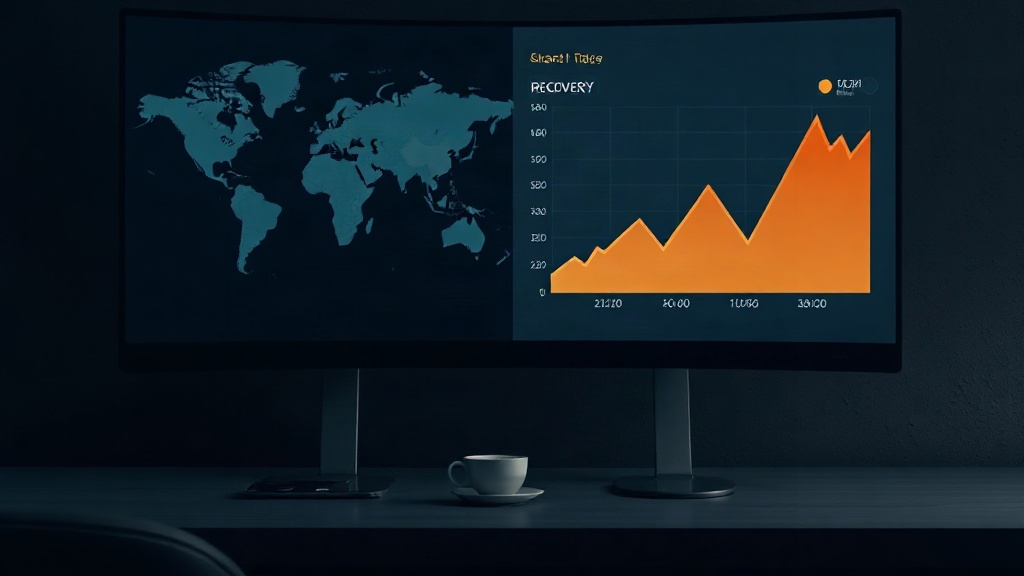
Reviewing Bitcoin's Historical Performance Amid Geopolitical Conflicts: From Flash Crash to V-Shaped Recovery—True Safe-Haven Asset or High Volatility?
Geopolitical crises are the ultimate litmus test for asset attributes. Looking back at events such as the Russia-Ukraine conflict in 2022 and the escalation of US-Iran tensions in 2026, Bitcoin's (BTC) performance exhibits a recurring pattern: during the initial outbreak of a crisis, market panic and liquidity squeezes often trigger "flash crashes," with intraday drops reaching 8%–10%. However, once sentiment is released, prices tend to stage a rapid "V-shaped recovery," regaining lost ground or even hitting new highs within days or weeks. This short-term high volatility makes it behave more like a risk asset, while its long-term "digital gold" narrative of resisting inflation and decentralization—coupled with institutional capital inflows that frequently follow crises—endows it with certain hedging characteristics. This article reviews key historical case studies to explore Bitcoin's dual identity in turbulent environments.
-
What is Cryptocurrency? A Review of the Top 5 Cryptocurrencies by Market Cap in 2026
Cryptocurrencies are decentralized digital assets based on blockchain technology, utilizing cryptography to ensure security and ownership. As of November 2026, the total global cryptocurrency market capitalization is approximately $2.64 trillion. The top five cryptocurrencies by market cap are: Bitcoin (BTC, approx. $1.52 trillion), Ethereum (ETH, approx. $272.5 billion), Tether (USDT, approx. $176.8 billion), BNB (BNB, approx. $91.6 billion), and XRP (XRP, approx. $73.9 billion). These assets play core roles in value storage, smart contracts, stable settlement, and specific ecosystem sectors.
-
Looking Back at the 2024 Cryptocurrency Market: Market Dynamics Under Halving and ETF Expectations
In 2024, the cryptocurrency market garnered significant attention driven by Bitcoin’s fourth halving and expectations surrounding the approval of US spot ETFs. The market widely viewed these two major events as potential bull market catalysts. This article reviews the primary market focuses at the time and notes the data metrics for tokens such as Internet Computer (ICP). It is important to point out that divergences exist between market forecasts and actual price action, and investment decisions should be based on comprehensive research and individual risk tolerance.
-
Key Considerations for Choosing a Bitcoin Trading Platform for Global Users
As the leading cryptocurrency, Bitcoin requires traders to carefully weigh security, liquidity, regulatory compliance, and user experience when choosing a trading platform. Due to varying regulatory environments across jurisdictions, users should prioritize platforms that operate legally in their local jurisdiction and possess a strong reputation and transparency. This article outlines the key dimensions for evaluating trading platforms, aiming to provide global investors with an objective reference framework.
-
Binance Hack and Suspension of Withdrawals: A Review of the Bitcoin Price Shock and Security Warning
In late October 2026, Binance, a leading global cryptocurrency exchange, suffered a hack and urgently suspended deposit and withdrawal services, triggering market panic and a decline in the price of Bitcoin. The incident resulted in approximately $6.3 billion to $6.4 billion worth of digital assets being stolen, a portion of which was frozen with the assistance of stablecoin issuers and law enforcement agencies. Binance pledged to fully cover user losses using its own funds and the SAFU fund, and restored services in phases starting November 1. This incident highlights the cybersecurity risks and asset custody challenges faced by centralized exchanges.
-
The Bitcoin Scalability Debate and a Review of Past Fork Events
Tracing the history of Bitcoin's scaling wars, this article analyzes the network congestion triggered by the 1TB block size limit, the divergence between the Segregated Witness (SegWit) and big-block routes, and the origins of Bitcoin Cash (BCH) and Bitcoin SV (BSV).
-
Which cryptocurrency platform has the lowest trading fees? How to choose a mobile Bitcoin trading platform?
There is no single minimum answer for Bitcoin transaction fees. Under common fee structures for 2026, Binance base spot trading is around 0.1%, dropping to about 0.075% when using BNB for fee deduction; OKX maker fees are around 0.08%, and taker fees are around 0.1%. When choosing a mobile trading platform, you also need to consider liquidity, spreads, fiat deposits and withdrawals, security, and compliance, subject to local regulations.
-
Could Ethereum Surpass Bitcoin? An Analysis of the Crypto Market's Long-Standing "Flippening" Index
The crypto community has long discussed the "Flippening," a hypothetical scenario in which Ethereum surpasses Bitcoin in market capitalization or other comprehensive metrics. This article outlines the arguments of proponents who favor Ethereum's utility value, such as smart contracts and staking yields, alongside the stance of conservatives who maintain Bitcoin's position as digital gold.
-
Morgan Stanley Bitcoin ETF Pulls in Over $100M in 6 Days: What This Counter-Trend Inflows Signal
Following the official launch of Morgan Stanley's spot Bitcoin ETF in April 2026, it took just 6 trading days to achieve over $100 million in net inflows. Driven by its lower fee structure to attract capital interest, analysts noted that its issuance performance ranks among the top tier of similar products nationwide in the U.S.




About BTC
Bitcoin operates on a peer-to-peer (P2P) network, with tens of thousands of nodes worldwide collectively maintaining a public, transparent, and tamper-proof distributed ledger. It employs a Proof-of-Work (PoW) consensus mechanism, in which miners compete using the computational power of the SHA-256 algorithm to earn the right to record transactions. On average, a new block is generated approximately every 10 minutes, and the miner receives a reward. This process both ensures network security and facilitates the issuance of new coins. The total supply of Bitcoin is hard-coded at 21 million coins and will never exceed this limit. The rate of new coin issuance is continuously reduced through a “halving” mechanism that occurs approximately every four years; the fourth halving was completed in 2024. It is precisely this verifiable scarcity and anti-inflationary nature that has earned Bitcoin the title of “digital gold.”
Decentralization, censorship resistance, and global liquidity are Bitcoin’s core value propositions: anyone can hold and transfer Bitcoin without permission; transactions occur 24/7, uninterrupted by geographical boundaries or bank operating hours; and the ledger—based on cryptography and network-wide consensus—is extremely difficult to tamper with or freeze. Alongside the mainnet, Layer 2 solutions such as the Lightning Network continue to enhance the speed and cost-efficiency of micropayments.
As the cryptocurrency with the largest market capitalization and strongest consensus, Bitcoin serves not only as a key asset for storing value and hedging against risk but also as the cornerstone and pricing anchor of the entire crypto industry; its price movements serve as a barometer for the entire digital asset market. With the approval and listing of U.S. Bitcoin spot ETFs in early 2024, institutional investors, publicly traded companies, and even some sovereign wealth funds are accelerating their inclusion of Bitcoin in their asset allocations. At the same time, Bitcoin’s price remains highly volatile, and investors should continue to approach market risks with a rational mindset.
Since its inception, Bitcoin has undergone multiple bull and bear cycles, growing from being virtually worthless to a global asset with a market capitalization in the trillions, all while experiencing significant volatility. It has spawned vast industries—including mining, exchanges, wallets, and derivatives—and driven the development of the entire blockchain sector; Today, Bitcoin is not only a consensus asset among crypto enthusiasts but is also gradually being viewed by traditional financial institutions as a new type of alternative investment.
This page aggregates comprehensive Bitcoin (BTC) market data: real-time prices, 24-hour and multi-period price changes, multi-period candlestick charts and moving averages (MA), MACD, RSI, Bollinger Bands, and other technical indicators; BTC’s real-time market capitalization ranking; trading volume and historical price data. It also aggregates the latest Bitcoin news and policy updates, supports real-time conversion between BTC and fiat currencies such as the Chinese yuan, U.S. dollar, and euro, helping you quickly assess value and stay on top of market trends.
BTC Data

24H Trending
-
1
Current Status of BUSD (Binance USD): Issuance Halted, Orderly Wind-Down Underway
-
2
Verification of DOGEBLUE Coin Purchase Channels and Long-Term Holding Risk Analysis

-
3
USDT Perpetual Contract Auto-Margin Deposition: Mechanism, Trigger Conditions, and Risks
-
4
Reviewing Bitcoin's Historical Performance Amid Geopolitical Conflicts: From Flash Crash to V-Shaped Recovery—True Safe-Haven Asset or High Volatility?
-
5
What is Computing Power? A Comprehensive Analysis from Concept to Market

-
6
DNT Issue Price at 0.1 Yuan? Current Status and Risks of district0x
-
7
Current Status and Long-Term Investment Value Analysis of TajCoin (TAJ)

-
8
What is Cryptocurrency? A Review of the Top 5 Cryptocurrencies by Market Cap in 2026
-
9
1MIL Token Analysis: Project Positioning and High-Risk Attributes

-
10
What is the value of the JavaScript token? Is it worth a long-term investment?


Recommended Reading

Hot Topics

Svmuu focuses on blockchain industry trends and cutting-edge cryptocurrency news, while also covering real-time market data and in-depth analysis of the Hong Kong, U.S., and foreign exchange markets. Here, you can not only access professional 24/7 news updates and accurate market data, but also utilize practical investment tools to help you capitalize on opportunities in both digital assets and traditional financial markets. Whether you are a blockchain enthusiast or an investor in Hong Kong, U.S., or foreign exchange markets, we provide efficient and timely information services to empower your investment decisions.
- User Agreement
- Privacy Policy
- Contact Us
- Business Partnerships
- Disclaimer
- Content Statement
- About Us
- Sitemap
 Coming Soon!
