

Faster global financial news!
Web3
-
0G Labs Collaborates with HackQuest to Launch APAC Hackathon with $150,000 Prize Pool
Svmuu News 0G Labs announced on platform X that the 0G APAC Hackathon has officially launched. Co-hosted with HackQuest, the event features a total prize pool of $150,000. The competition includes fou
-
Web3 Wallet TopNod Surpasses 1 Million Total Users in Just 170 Days Since Launch
Svmuu News Web3 wallet application TopNod officially announced today that its global user base has surpassed the 1 million milestone. It is reported that the product achieved this in just 170 days sin
-
ShareX Launches TreasureX Season 2 to Accelerate Web3 Access to IRL Business IoT with $1 Million Reward Pool
Svmuu News ShareX has officially launched its flagship growth product TreasureX Season 2, uniting 10+ global sharing economy brands and releasing a reward pool worth $1 million, including Token, USDT
-
CertiK Shines at DC Blockchain Summit: Focusing on Crypto Security and Regulatory Coordination, Warning of Cross-Chain Bridge and Supply Chain Attack Risks
Svmuu News Web3 security company CertiK made an appearance at the DC Blockchain Summit in the United States. CBO Jason Jiang participated in a thematic forum, engaging in in-depth discussions on crypt
-
Gate Announces the Launch of Its 13th Anniversary Global Celebration to Strengthen Global Connections and Industry Collaboration
Svmuu News: Gate has announced the launch of its 13th-anniversary global celebration, centered on the theme “Your Gateway to iWeb3.” Through in-depth conversations with founders and high-level global
-
SlowMist and Bitget Jointly Release AI Agent Security Report, Systematically Outlining Seven Major Security Threats in Web3 Trading Scenarios
Svmuu News SlowMist and Bitget have jointly released an AI Agent security report. The report indicates that as AI Agents undertake tasks such as market analysis, strategy generation, and automated tra
-
Sam Altman-Backed World Launches AI Agent Identity Toolkit, Compatible with Coinbase x402 Protocol
Svmuu News World, a Web3 identity solution backed by Sam Altman, announced today the launch of AgentKit, a developer toolkit for the x402 protocol. This toolkit allows users verified by World to autho
-
ZetaChain 2.0 Officially Launches, Unveiling Privacy-First AI Product ANUMA AI
Svmuu News ZetaChain has officially released ZetaChain 2.0, positioning it as a universal layer for AI and Web3, and simultaneously launched its first consumer-grade AI product, ANUMA AI. ANUMA is a p
-
Jiuzi Holdings Signs MOU to Invest $30 Million in AetheriumX
Svmuu News: Nasdaq-listed company Jiuzi Holdings announced the signing of a strategic cooperation memorandum of understanding (MOU) with blockchain infrastructure company AetheriumX. Jiuzi Holdings wi
-
Svmuu Evening Brief
1. The China Internet Finance Association issued a "Risk Warning on the Application Security of OpenClaw in the Internet Finance Industry"; 2. Claude: Message limits during off-peak hours and weekends
-
OKX Star Clarifies Misunderstanding of "Wallet Vulnerability": Advises Users to Avoid Installing Software or Plugins from Unknown Sources
Svmuu News In response to the hacker attack incident carried out by the Wuhan Ansun Technology team exploiting the OKX wallet plugin vulnerability, OKX Star posted on the X platform stating that the O
-
CZ: Binance Web3 Wallet Now Supports Filtering Spam Transactions to Reduce Address Poisoning Risks
Svmuu News Binance founder CZ posted on platform X stating that the Binance Web3 Wallet now supports filtering spam transactions to reduce address poisoning risks. Due to the recent increase in Ethere
-
Gate Launches GateRouter: Supports Unified API Calls to Mainstream Large Language Models, Reducing Costs by Up to 80%
Svmuu News: Gate has officially launched its AI model routing platform, GateRouter, providing developers with a unified entry point for calling large language models. Through a single API, users can a
-
Listed company UTime plans to acquire the Web3 data platform "Feixiaohao" for $80 million
Svmuu News Nasdaq Listed company UTime Limited (Stock Code: WTO) announced the signing of a non-binding letter of intent to acquire 100% of the equity in Feixiaohao Technology Inc., the operator of "F
-
LBank has entered into a strategic brand partnership with Ponke and is simultaneously launching a 40,000 USDT promotion
Svmuu News: According to official reports, LBank has officially announced a strategic brand partnership with Ponke, an internationally renowned meme culture IP with millions of followers, and has desi
-
CertiK Report: Cryptocurrency ATM Scams Cause $330 Million in Losses in 2025, AI Technology Exacerbates Crime Escalation
Svmuu News Web3 security company CertiK has released the "Skynet Cryptocurrency ATM Fraud Report." The report indicates that losses from such scams reached $330 million in 2025, a year-on-year increas
-
BitMart’s 8th Anniversary Celebration Kicks Off in Style, with a $1.5 Million USDT Prize Pool for Users Worldwide
Svmuu News: According to official announcements, BitMart’s “Towards ∞: 8th Anniversary Super Celebration” has officially kicked off, with a total prize pool of 1,500,000 USDT. The event will run throu
-
BNB Chain Surpasses Ethereum to Become the World's Top Public Chain for AI Agent Deployments
Svmuu News Since the concept of AI Agents emerged in the cryptocurrency space in January this year, the number of on-chain AI Agents has skyrocketed from approximately 337 to over 123,000 in just thre
-
Gate has released the second episode of *Behind Gate: Dr. Han*, a documentary chronicling the founder’s 72 hours at Consensus HK.
Svmuu News: Cryptocurrency exchange Gate has released the second episode of "Behind Gate: Dr. Han," a documentary chronicling the 72 hours of the platform’s founder and CEO, Dr. Han, during Consensus
-
AINFT Platform User Base Exceeds 550,000
Svmuu News According to official data, the cumulative number of users on the AINFT platform has exceeded 550,000, rapidly becoming one of the most active AI application ecosystems in the Web3 space. B
-
Bitcoin Ecosystem BTCS to Launch Mining Ecosystem on March 20
Svmuu News Bitcoin ecosystem BTCS's mining ecosystem is scheduled to launch on March 20, 2026. The technical foundation of BTCS is built upon the BTC Rollup Layer 2 network, aiming to transform Bitcoi
-
Roundtable Space Preview: With OpenClaw taking the world by storm and AI agents like Bank of AI bridging on-chain payments and DeFi applications, does this signal the arrival of an era of AI for everyone?
Svmuu News: With the explosive popularity of phenomenon-level applications like OpenClaw, AI agents are rapidly becoming a central narrative in Web3. AI has transcended its role as a mere "chat tool"
-
Solana Shanghai Builder Station Officially Launches at Shanghai Hongqiao Alibaba Center
Svmuu News Solana has partnered with the Shanghai Hongqiao Alibaba Center to jointly establish the Solana Shanghai Builder Station. Supported by relevant government units in Shanghai's Minhang Distric
-
Gate Releases February Transparency Report, Accelerating the Rollout of Its Intelligent Web3 Strategy
Svmuu News: Digital asset trading platform Gate has released its February 2026 Transparency Report, showing continued growth in the platform’s overall trading volume and market share. The platform ran

-
CZ retweeted a post introducing YZi Labs' startup bootcamp, EASY Residency, stating that it has completed four seasons, with each shortlisted project in the fourth season receiving a $500,000 investment.
Binance founder CZ retweeted 0xBeyondLee's detailed introduction to YZi Labs (formerly Binance Labs) startup bootcamp, EASY Residency. The bootcamp aims to assist early-stage Web3 and AI entrepreneurs
-
Vitalik Buterin tweets, quoting danwwang's "engineer society vs lawyer society" distinction, noting he expected an "engineering system" but found an "entire legal system" instead.
Vitalik Buterin tweets, quoting danwwang's "engineer society vs lawyer society" distinction, noting he expected an "engineering system" but found an "entire legal system" instead.
-
Saudi Arabia, UAE Push Ahead With Data Center Plans
Saudi Arabia, UAE Push Ahead With Data Center Plans
-
Rezolve AI (RZLV) H1 2026 Revenue Surges to $130.8M, Reaffirms Full-Year Target of $360M
Rezolve AI reported its first-half 2026 revenue increased to $130.8 million, up from $6.3 million a year earlier, with its customer base expanding to over 1,640 accounts. Despite strong growth, the co
-
Nano Labs (Nasdaq: NA) reported a net loss of $46.5 million in the first half of 2026, widening due to a fair value change loss of RMB 250 million on BNB, while also announcing its expansion into AI and Web3.
Nano Labs reported a net loss of RMB 316.7 million (approximately $46.5 million) for the first half of 2026, significantly higher than the RMB 11.8 million loss in the same period last year. The incre
-
Rezolve AI (RZLV) Slides 4% on Profit-Taking After a 22% Rally Triggered by Google Cloud Database Selection, Alphabet (GOOGL) Holds Flat
Rezolve AI (NASDAQ:RZLV) stock fell 4% to $2.84 in early Wednesday trading, following a 22% surge to $2.96 on Tuesday. The rally was driven by the company's announcement that Alphabet's (NASDAQ:GOOGL)
-
Japanese stablecoin firm JPYC raises $38 million in extended Series B to expand its financial and Web3 ecosystem
JPYC Inc., which issues the yen-pegged stablecoin JPYC, announced the total 6 billion yen ($38 million) raise on Wednesday. The extended round includes a fresh 1 billion yen ($6.3 million) investment
-
US Arbitration Giant Launches Specialist Panel for Crypto Disputes
The American Arbitration Association (AAA), a leading US arbitration organization, has launched a specialist Web3 Panel. This panel brings together experts in blockchain, smart contracts, digital asse
-
SlowMist Detects a Fake Recruitment Campaign in Which Scammers Posing as Headhunters Send Malicious GitHub Code
Svmuu News: SlowMist MistEye recently detected a malicious campaign targeting developers that uses fake Web3 job postings to carry out attacks. The attackers impersonate recruiters on LinkedIn, buildi
-
BitMart Releases Its First-Half 2026 Report, Continuing to Expand Its Global Digital Asset Services
Svmuu News: According to official reports, BitMart has released its report for the first half of 2026. The report shows that, despite significant pressure in the crypto market, BitMart has continued t
-
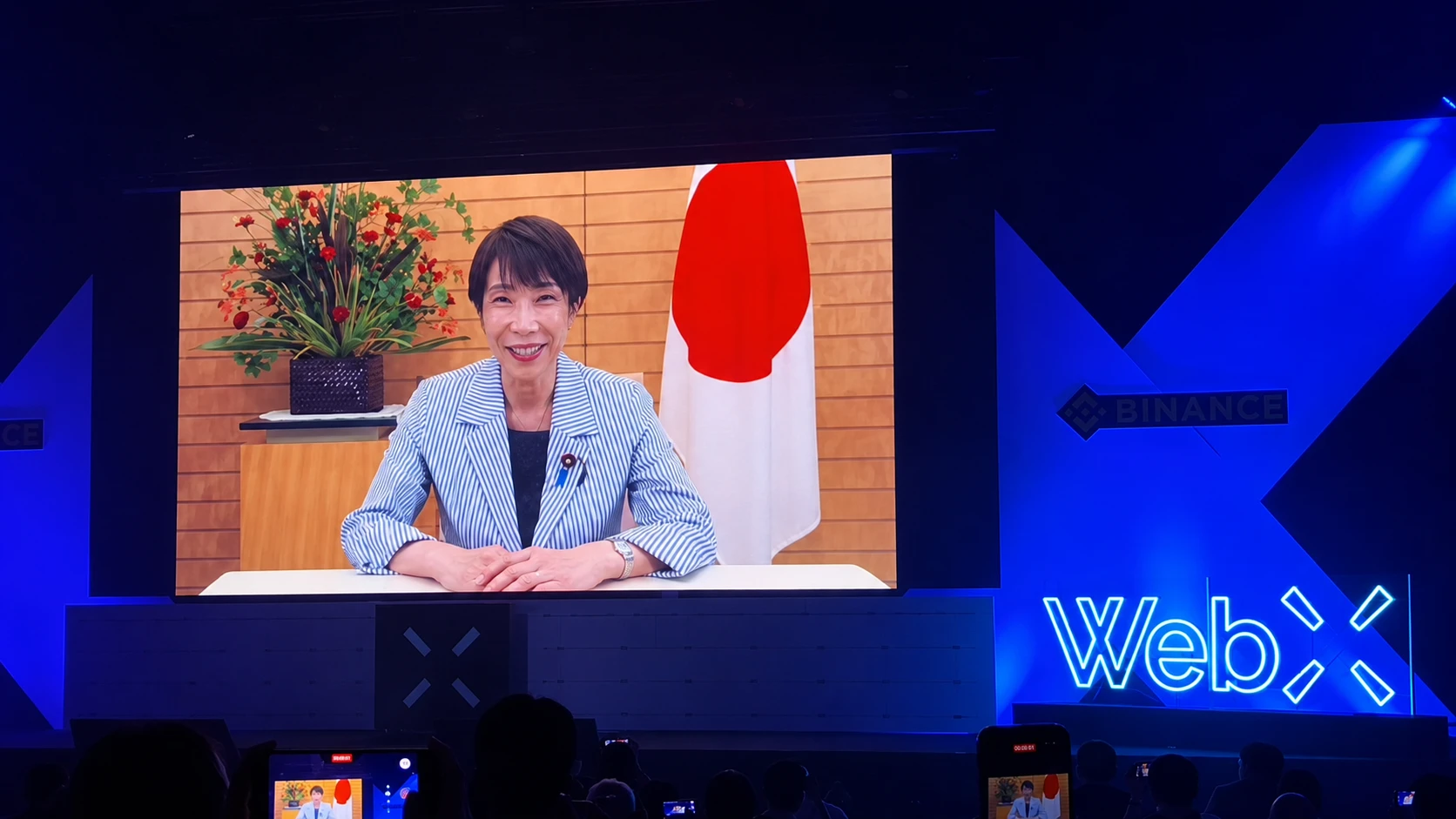
Sanae Takashi: The social applications of Web3 are steadily advancing, contributing to the development of Japan’s innovation ecosystem
Svmuu News: On July 13 in Tokyo, Japanese Prime Minister Sanae Takaichi delivered an opening address via video at WebX 2026, an event hosted by Coinpost. Sanae Takaichi began by extending her heartfel
-
Japanese Prime Minister Sanae Takaichi Confirms She Will Attend WebX2026 via Video Conference
Svmuu News: Sanae Takaichi, the 105th Prime Minister of Japan, will attend the 2026 WebX Conference via video link and deliver a speech. According to the organizers, the event is scheduled to take pla
-
ForeGate Launches Limited-Time World Cup Final Promotion, Featuring a Total Prize Pool of One Million and 500 USDT in Loss Protection
Svmuu News: ForeGate, a Web3 prediction trading platform, has announced the launch of a limited-time “Predict Every Match, Win Every Step” World Cup Final incentive campaign. According to the official
-
Down 2-0, but coming back to win 3-2? predict.fun currently puts the probability of “T1 defeating G2 in the League of Legends MSI Knockout Stage” at 48%.
According to PPP’s prediction market tracking, the probability of T1 defeating G2 in the “League of Legends MSI Knockout Stage: T1 vs. G2” prediction event on predict.fun is currently reported at 48%.
-
KOR Protocol Completes $7.5 Million Series A Funding Round, with 1kx and Others Participating
Svmuu News: KOR Protocol announced the completion of a $7.5 million Series A funding round, with participation from 1kx, Blockchain Capital, and others, valuing the company at $100 million. The funds
-
Huawei's "Young Genius" Li Bojie Responds to Du Jun's Allegations: Investment Funds Were Not Received in Full; His Resignation Was Approved by the Board of Directors
Svmuu News: In response to Du Jun, co-founder of Web3 venture capital firm ABCDE, publicly accusing Li Bojie of lacking a spirit of contractual integrity and alleging that Li Bojie and his partner Zhu
-
CertiK Hack3D Report: Web3 Losses Exceed $1.3 Billion in the First Half of 2026; Attacks Are Increasingly Targeting High-Value Targets
Svmuu News: Web3 security firm CertiK has released its “Hack3D: First Half of 2026 Report.” The report shows that 344 security incidents occurred in the Web3 ecosystem during the first half of 2026, r
-
BNB Chain will host the BNB Chain Tokyo event during the WebX conference in Japan
Svmuu News: According to official reports, BNB Chain will host the “BNB Chain Tokyo” event during the WebX conference in Japan. The event will take place on July 13 from 5:30 p.m. to 10:00 p.m. (GMT+9
-
OKX Officially Launches the OKX.AI Genesis Hackathon
Svmuu News: According to official reports, OKX has announced the official launch of the OKX.AI Genesis Hackathon, recruiting the first batch of Agent Service Providers (ASPs) from AI developers worldw
-
BNB Agent Studio Officially Launches on the BNB Chain Mainnet
Svmuu News: BNB Chain has announced that BNB Agent Studio, its AI agent development platform, has officially launched on the mainnet. Developers can use AI programming tools such as Cursor and Claude
-
Gate.AI Upgrades Its End-to-End Large Model Management Platform, Enhancing Unified Large Model Integration and Enterprise Governance Capabilities
Svmuu News: Gate.AI, the end-to-end large-model management platform operated by the digital asset trading platform Gate, recently completed an upgrade and launched a one-stop large-model routing servi
-
CatFee.IO Completes Infrastructure Expansion and Upgrade; Daily Average API Calls on TRON Node Exceed 720 Million
Svmuu News: It is reported that CatFee.IO, a TRON infrastructure service provider, recently announced the completion of a new round of infrastructure expansion and upgrades to meet the growing demand
-
ARX (ARCIUM) is set to launch on the Bybit spot trading platform
Svmuu News: According to an official announcement, Bybit Spot will list ARCIUM (ARX/USDT) on its spot market, and deposits are now open. Arcium is a crypto-computing network designed for the Web3 era.
-
Bitget Releases Web3 Talent Report: 54% of Job Seekers Struggle with “Experience Barriers”; AI and Blockchain Integration Emerges as the Hottest Career Path
Svmuu News: According to the "Web3 New Generation Talent Insights Report" released by Bitget, the core challenge currently facing the industry is not a talent shortage, but rather recruitment barriers
-
ASV Coin: Current Status and Risk Analysis of Web3 and AI Projects in the Solana Ecosystem
ASV is the native token of the Asvoria project, which aims to build a versatile ecosystem on the Solana blockchain, integrating Web3 and AI. It offers services such as NFT issuance, a token launchpad, and a Web3 recruitment marketplace. However, as of September 2026, the project's official website is offline, and its market data shows significant inconsistencies and low activity, indicating high risks for the token. Investors should exercise caution.
-
DREP Token and DREP Chain Analysis: The Vision of Reputation Quantification and Web3 Connector
DREP is a decentralized ecosystem designed to quantify and monetize online reputation through blockchain technology. At its core is DREP Chain, a high-performance Layer-1 blockchain compatible with EVM and WASM, featuring a dual-layer architecture. DREP is committed to providing user-friendly connectors and toolkits for the Web3 era, facilitating the transformation and acceleration of internet platforms with a reputation-centric token economic model.
-
CMOS Coin Status Analysis: CoinMerge OS Project and Market Activity Assessment
CMOS (CoinMerge OS) coin was once aimed at building a Web3 tool ecosystem to simplify cryptocurrency trading and tracking, developed by CoinMerge Technologies Inc. However, as of September 15, 2026, the token shows zero 24-hour trading volume, market capitalization, and circulating supply on multiple major data platforms, with the last trading record in May 2025. This indicates that CMOS coin currently has no active market, and its future development faces severe challenges.
-
The Solana Foundation actively promotes blockchain education and ecosystem adoption.
The Solana Foundation is committed to nurturing the next generation of blockchain developers and expanding the influence of the Solana ecosystem through various educational and outreach programs. These initiatives include Solana U for university students, the seven-week developer course Solana School, and the Developer Educator Program aimed at promoting education globally. The Foundation also supports the development of innovative decentralized applications (dApps) through grants, hackathons, and collaborations with universities and institutions, while actively educating policymakers about blockchain to foster a healthier regulatory environment.
-
What is MSQ Coin? MSquare Global Token Analysis and Trading Channels
MSQ coin is the cryptocurrency issued by the MSquare Global platform, aiming to integrate blockchain technology into real-world applications such as digital payments, marketplace services, and the Web3 business ecosystem. The platform incentivizes its community and supports marketplace transactions through the MSQ token, which is also used in various sub-projects like its real estate information platform Metastar and loyalty points platform Point to You. The total supply of MSQ tokens is 25,916,431, and the foundation claims to hold zero tokens to ensure transparency. As of now, MSQ's 24-hour trading volume is approximately several thousand US dollars, and it can be traded on CEXs like Gate.io and decentralized platforms such as Uniswap V3/V4 (on the Polygon chain).
-
CHO Token Analysis: Choise.ai Ecosystem and Future Development Prospects
The CHO token is the native cryptocurrency of the Choise.ai ecosystem, a platform designed to bridge decentralized finance (DeFi) with traditional finance (TradFi). Choise.ai evolved from Crypterium and Choise.com, and merged with the enterprise-grade crypto banking platform Vault, focusing on providing Web3 B2B solutions for banks, fintech companies, and more. Its ecosystem encompasses various modules such as Vault.ist, Choise.com, Entropy, PerpeX, and Charism. The CHO token is used for staking, governance, and fee payments. Despite the project's ambitious vision, as of September 14, 2026, the CHO token's market performance has been relatively subdued, with both its 24-hour trading volume and market capitalization remaining at low levels.
-
Binance Wallet and BNB Chain Transaction Guide: Features, Fees, and Ecosystem Analysis
This article provides an in-depth analysis of the core functions of Binance Wallet and the BNB Chain ecosystem. Binance Wallet, a self-custodial Web3 wallet integrated within the Binance App, offers secure multi-chain asset management and DApp interaction through MPC technology. BNB Chain, as an independent decentralized ecosystem, saw significant growth in user activity and RWA in 2026. The article details Binance platform's spot, futures, and options trading fees, as well as cryptocurrency and fiat deposit/withdrawal fees, and explains the low transaction fees characteristic of BNB Chain on-chain transactions, helping users effectively manage and trade crypto assets within the Binance ecosystem.
-
Savage (SAVG) Token Overview and Market Conditions
Savage (SAVG) was formerly a carbon-neutral NFT media marketplace project focused on video and photography, aiming to provide creators with a high percentage of earnings and emphasizing community-driven and eco-friendly principles. However, as of September 14, 2026, the market price of the SAVG token is displayed as $0.00, and market capitalization information on major data platforms is either missing or shows invalid data, indicating that its trading market has nearly dried up with a lack of effective transactions.
-
What is the Cryptocurrency Circle (Crypto Circle)? A Comprehensive Analysis of Its Ecosystem and Characteristics
The cryptocurrency sphere, commonly known as "crypto," is a global ecosystem comprising digital currency investors, miners, developers, and community members. It encompasses mainstream cryptocurrencies like Bitcoin and Ethereum, as well as emerging sectors such as DeFi, NFTs, and Web3. Crypto is primarily characterized by its decentralization, high volatility, and potential for high returns, but it also comes with challenges like drastic price fluctuations, project risks, and regulatory uncertainties. This article will delve into the origins, core components, main participants, and future development trends of crypto.
-
OKX Wallet Download and Registration Guide: Get the Latest Version and Detailed Registration Methods
OKX Wallet is a self-custodial, multi-chain crypto wallet that supports over 120 blockchains, offering features such as DApp connectivity, DeFi staking, and token swaps. This article will detail how to download the latest version of OKX Wallet through official channels, and how users can choose to register an OKX account using either a mobile number or email address, typically requiring both to be linked for account security and to receive verification information.
-
A Deep Dive into IPFS: Decentralized Storage Protocol and its Synergy with Blockchain
The InterPlanetary File System (IPFS) is a decentralized, peer-to-peer hypermedia distribution protocol designed to store and share files using content-addressing rather than location-addressing, aiming to complement or even replace traditional HTTP. While not a blockchain itself, it serves as Web3 infrastructure, providing an efficient, censorship-resistant underlying storage solution for blockchain applications. Filecoin, acting as the incentive layer for IPFS, incentivizes storage providers with FIL tokens, addressing IPFS's data persistence issues and collectively building a decentralized storage network.
-
VCE Coin: Vince Chain Project Analysis and Market Status
VCE Coin, full name Vince Chain, is a BNB Smart Chain (BEP20) token launched in 2022, aiming to build blockchain infrastructure in the metaverse, Web3, freelancing, and gaming sectors. However, according to public data, VCE Coin has a circulating supply of zero, extremely low or N/A 24-hour trading volume, and a lack of effective market capitalization data. Multiple trading platforms and data tracking agencies indicate that the token currently lacks an active trading market, price updates have ceased, or it has not yet been listed on any major exchanges.
-
ZORO Coin Multi-Project Analysis: The Value and Investment Risks of ZoRobotics and Zoro Inu
Multiple cryptocurrency projects exist under the ZORO token ticker. Among them, ZoRobotics (ZORO) is a decentralized robotics platform that combines AI, Web3, and zero-knowledge proofs, boasting active users and tasks. However, its ZORO token has extremely low trading volume and market capitalization, indicating a liquidity crunch. Another project, Zoro Inu (ZORO), is classified as a memecoin, also with negligible trading volume. This article will analyze the current status, token data, and potential risks of these projects, cautioning investors about the trading challenges posed by extremely low liquidity.
-
FAVOR Coin Analysis: Project Positioning, Market Status, and Development Potential
FAVOR Coin is the utility token of FAVOR Alliance, designed to bridge the gap between the traditional economy and Web3 by connecting the digital and physical worlds through NFT projects. The token was issued in April 2022 and is primarily used for transactions within the ecosystem, content discounts, and conversion to offline points. Its ecosystem includes the NFT wallet FAVORLET and the NFT marketplace Xclusive. However, as of September 2026, FAVOR Coin exhibits extremely low market activity, with insufficient 24-hour trading volume and market capitalization data, reflecting a lack of liquidity. The project's development is still in its early stages, and its ability to realize its vision will depend on the growth of its ecosystem and market adoption.
-
Global Cryptocurrency Exchange Platform Application Overview and Ranking Considerations
As the number of global cryptocurrency users continues to grow, cryptocurrency trading platforms and their mobile applications have become an important part of the digital asset market. This article will delve into the current landscape of mainstream trading platforms, analyzing their performance in terms of financial strength, compliance, trading volume, and ecosystem services. Combined with the latest market data, it will provide readers with a reference for understanding how to evaluate and select cryptocurrency platforms. The global trend towards regulatory compliance is accelerating industry development, and capital is increasingly favoring licensed operations.
-
OKX Official Download Guide: Securely Obtain the Latest Version and Platform Overview
OKX, a leading global cryptocurrency exchange and Web3 technology company, offers users diverse services including digital asset trading, DeFi, and NFTs. This article will detail the latest official download channels for the OKX app, including its official website, Google Play, and Apple App Store, emphasizing the importance of downloading only through official channels to ensure asset security. Concurrently, it will briefly introduce OKX's platform overview and core services.
-
GRT: The Graph Protocol's Value Analysis and Long-Term Outlook
GRT is the native token of The Graph, a decentralized data indexing protocol dubbed "Google of Web3." It provides efficient on-chain data querying services for Web3 applications through Subgraphs, serving as critical infrastructure for the multi-chain ecosystem. GRT is used to incentivize Indexers, Curators, and Delegators, and to pay for query fees. As of September 11, 2026, the price of GRT is approximately $0.017-$0.018, with a market capitalization of about $193 million. The project continues to undergo modular upgrades and enterprise-level integrations, but its long-term value is influenced by factors such as Web3 development, competition, and token inflation. Investment requires caution.
-
ISP Coin Value Analysis: Ispolink Project Positioning, Tokenomics, and Market Status
ISP is the native token of Ispolink, a decentralized platform that combines AI and blockchain technology to revolutionize Web3 talent acquisition and the gaming industry. ISP tokens are used for platform services, governance, staking, and rewards. Despite the project's innovative positioning, ISP's current market performance is weak, with its price down over 99% from its all-time high, and extremely low market capitalization and 24-hour trading volume, indicating significant high risk. Investors need to fully assess its volatility and liquidity risks.
-
BoostAI ($BOOST) Token Analysis: Project Overview and Market Dynamics
BoostAI is a platform designed to enhance Telegram channel interaction and Web3 community engagement, with its native token being $BOOST. Although the project aims to connect Web2 marketing with Web3 participation, the exact issuance price of the $BOOST token could not be found in public information. As of September 11, 2026, the token exhibits extremely low market activity, with significant discrepancies in trading volume and market capitalization data, indicating characteristics of depleted liquidity. Investors should be wary of the trading risks associated with such assets.
-
ITHEUM Coin Analysis: The Current Status and Development Prospects of Decentralized Data Brokerage Platform Itheum
ITHEUM is the native token of Itheum, a decentralized data brokerage platform designed to empower individuals and enterprises to securely trade and exchange personal data. The project has evolved from a data NFT marketplace to a trust and tokenization layer supporting the AI data economy, with its V3 (Aithra) upgrade launched in October 2025. Post-V3, the ITHEUM token is primarily used for governance. However, as of now, ITHEUM's market activity is extremely low, with 24-hour trading volume near zero. Investors should be wary of its liquidity risk.
-
BOSS Wallet: A Multi-Chain Decentralized Wallet with Zero Transaction Costs
BOSS Wallet, established in 2023, is a decentralized multi-chain wallet that enables zero-cost transfers through its unique "Gas Pool" mechanism, eliminating the need for users to hold specific Gas tokens. It supports over 120 public chain assets and features a built-in Web3 browser for secure access to various DApps. The wallet emphasizes high security through software and hardware integration and pledges not to collect user private keys, committing to providing reliable Web3 asset management and trading services for global users.
-
Trust Wallet Customer Feedback and Product Iteration: Evolving Towards a Web3 Personal Companion
Trust Wallet, a leading non-custodial crypto wallet, surpassed 220 million users in 2025 and continues to solidify its market position through product iterations. Recent updates include the launch of Trust Wallet AI in July 2026, stablecoin yield features in 2025, RWA support, and professional trading tools. While users generally praise its ease of use and multi-chain support, concerns about security scams, customer service responsiveness, and some technical issues remain challenges. Trust Wallet is committed to simplifying the Web3 experience, enhancing security, and plans to adjust network support on September 15, 2026, to optimize efficiency.
-
GRT Coin Future Prospects and Price Trend Analysis: Opportunities and Challenges Coexist
The Graph (GRT), a decentralized protocol for indexing and querying blockchain data, is hailed as the "Google of Web3." The GRT token plays a crucial role in the network, used for paying queries and incentivizing indexers and curators. Recently, The Graph completed its decentralization transition and launched a series of technological advancements, including the Horizon upgrade and the Reward Eligibility Oracle, aiming to enhance protocol utility and expand its ecosystem. However, market competition, token inflation, and macroeconomic factors also bring uncertainty to its future performance. This article will delve into GRT's potential growth drivers and the risks it faces.
-
Ocean Protocol (OCEAN) Analysis: Web3 Data Economy and Token Acquisition Methods
Ocean Protocol is a decentralized data exchange protocol designed to leverage blockchain technology to drive the Web3 data economy, allowing data providers to tokenize and trade their data assets while preserving privacy. Its core functionalities include data publishing, staking, discovery, and consumption, as well as Compute-to-Data privacy computation. Recently, the Ocean Protocol Foundation has withdrawn from the ASI Alliance formed with Fetch.ai and SingularityNET. The OCEAN token is its ecosystem's utility token, used for data transactions and governance. This article will delve into its project overview, latest developments, and methods for acquiring tokens.























Web3

24H Trending
-
1
Can a Police Report Be Filed After Bitcoin Theft? Analysis of Individual Recovery Possibilities

-
2
A Rundown of Mainstream Crypto Exchanges: An Analysis of Security and Compliance

-
3
What is POPO Coin? Analyzing Multiple Meme Token Projects with the Same Name

-
4
What is KEKW Coin? An Analysis of the Origins, Risks, and Trading Status of the Multi-Chain Memecoin

-
5
Fed Rate Hike Expectations Rise: Dogecoin and Crypto Market Face Risk-Off Sentiment Challenge

-
6
How to Choose a Cryptocurrency Exchange: A Guide to Spot and Futures Trading

-
7
CMOS Coin Status Analysis: CoinMerge OS Project and Market Activity Assessment

-
8
Major Cryptocurrency Trading Platforms: An Overview of Apple App and PC Clients

-
9
CINEMA Token Analysis: An Overview of Absolute Cinema and CinemaKoin Projects and Investment Considerations

-
10
ALQO (XLQ) Project Status Analysis: Website Offline and Trading Activity Review

Markets Today





Recommended Reading

Hot Topics

Svmuu focuses on blockchain industry trends and cutting-edge cryptocurrency news, while also covering real-time market data and in-depth analysis of the Hong Kong, U.S., and foreign exchange markets. Here, you can not only access professional 24/7 news updates and accurate market data, but also utilize practical investment tools to help you capitalize on opportunities in both digital assets and traditional financial markets. Whether you are a blockchain enthusiast or an investor in Hong Kong, U.S., or foreign exchange markets, we provide efficient and timely information services to empower your investment decisions.
- User Agreement
- Privacy Policy
- Contact Us
- Business Partnerships
- Disclaimer
- Content Statement
- About Us
- Sitemap
 Coming Soon!
