

Faster global financial news!
Web3
-
LPT Coin: Livepeer's Future Outlook and Market Performance Analysis
Livepeer (LPT) is a decentralized video streaming network built on Ethereum, focusing on video transcoding and AI computing infrastructure. The recent Livepeer 2.0 upgrade, the launch of Livepeer Agent, and its deep dive into the AI video sector signal a significant evolution in its technological direction. This article will explore the economic model of the LPT token, its current market performance, and analyze its future opportunities and challenges in the decentralized AI video computing domain.
-
REFI Coin: Regenerative Finance Concept Analysis and Overview of Trading the Token
The term "REFI" in the cryptocurrency space carries a dual meaning: it refers both to "Regenerative Finance (ReFi)," a broad movement dedicated to solving environmental and social problems through Web3 technologies, and to multiple cryptocurrency projects sharing the same token ticker, such as Realfinance Network, Reimagined Finance, and Retard Finance. These identically named tokens differ significantly in project positioning, blockchain platform, and market activity. This article will elaborate on the ReFi concept and its applications, introduce several major REFI token projects and their current trading status, and caution investors to distinguish between the concept and specific tokens, as well as to be wary of the risks associated with low-liquidity assets.
-
Filecoin (FIL) Value Analysis: Long-Term Investment Potential and Risks of Decentralized Storage
Filecoin (FIL) is a decentralized storage network based on IPFS, designed to provide secure and verifiable data storage services. Its token, FIL, is used to incentivize storage providers and pay for storage fees. With the launch of the Filecoin Virtual Machine (FVM) and its AI integration strategy, the project is shifting from infrastructure development towards utility and revenue growth. Despite market volatility, competition, and regulatory risks, Filecoin's potential as Web3 and AI data infrastructure makes it a long-term target for some investors. However, potential investors need to fully understand its tokenomics and market risks.
-
BOLT Token Valuation: Social Media Ecosystem and Potential Investment Considerations
The BOLT token aims to power a global social media ecosystem, enabling value sharing between content creators and users through its Bolt+ social network and BoltX mobile wallet. The project has established partnerships with well-known entities such as Binance and Hisense, striving to become a content-driven mobile wallet. However, BOLT's market performance indicates low trading activity, with daily trading volumes of only a few hundred dollars and a low market capitalization. Cryptocurrency investments inherently carry high risks, and BOLT investors need to thoroughly assess its liquidity, price volatility, and project development prospects before making investment decisions.
-
Beware of "BOSS Wallet: Register to Get 20U": An Analysis of Multi-Chain Digital Asset Management Tools and Potential Risks
"BOSS Wallet" is advertised as a decentralized multi-chain digital asset management tool, featuring seed phrase management, zero-gas fee transfers, a Web3 browser, and an aggregator algorithm. However, any promotion claiming "20 USDT upon registration" should be viewed with extreme caution, as there is a risk of scams impersonating well-known brands. Such high rewards in the cryptocurrency space are often associated with Ponzi schemes or phishing websites. Users must rigorously verify information sources for official authenticity and reliability before participating in any such activities.
-
OH Coin Analysis: The Current Status and Future Prospects of Oh! Finance and Web3 AI Project OH
There are two main projects using the "OH" code in the cryptocurrency market: Oh! Finance and Oh - AI Project. Oh! Finance is a DeFi yield aggregation protocol with low current market activity, contradictory trading data, and an uncertain future. Oh - AI Project, on the other hand, is an innovative project combining Web3 and AI, dedicated to developing decentralized AI models and applications. It has successfully raised $4.5 million in funding and shows potential in the current hot sector, but still faces market volatility and competitive challenges.
-
The Significance and Value of Virtual Currencies: A Multi-Dimensional Analysis of Their Core Functions
Since the birth of Bitcoin, virtual currencies (cryptocurrencies) have evolved into a significant force in the global FinTech landscape. Their core value is reflected in multiple aspects, including decentralization, financial inclusivity, technological innovation, asset allocation, and efficiency improvements. Through blockchain technology, virtual currencies offer users economic freedom, asset security, and censorship resistance, laying the foundation for emerging fields such as Web3 and the metaverse. Simultaneously, as a highly volatile investment asset, it has attracted the attention of global investors and prompted governments and institutions worldwide to actively explore regulatory frameworks and central bank digital currencies.
-
OriginTrail (TRAC) Token Analysis: Future Prospects for a Trusted Knowledge Infrastructure in the AI Era
OriginTrail (TRAC) aims to build a Decentralized Knowledge Graph (DKG) to provide a trusted information infrastructure for artificial intelligence, addressing the problem of misinformation in the AI era. Its native token, TRAC, is used for network operations, node staking, and settlement of AI inference services. The project has recently made progress in AI service layer deployment and tokenomics upgrades, and has partnered with an EU AI platform project. This article will delve into TRAC's positioning, technology, token economic model, and market performance, and analyze its future development potential and challenges.
-
MetaMask Wallet Setup Guide and Cross-Chain Technology Analysis
MetaMask is a popular non-custodial cryptocurrency wallet, available as a browser extension and mobile app, providing users with full control over their assets on Ethereum and EVM-compatible chains. This article will detail the MetaMask setup process, including downloading and installing, creating a wallet, setting a password, backing up the seed phrase, and adding networks. Concurrently, the article will delve into cross-chain wallet technology, explaining its role in connecting different blockchain networks and breaking down "information silos." It will also analyze MetaMask's built-in cross-chain aggregation feature, its working principles, security challenges, and future development trends, helping readers gain a comprehensive understanding of digital asset management and interoperability.
-
Conflux (CFX) Token Analysis: Technology, Ecosystem, and Investment Considerations
Conflux (CFX) is a Layer-1 public blockchain designed to support decentralized applications and Web3 infrastructure. It aims to solve blockchain scalability issues with its unique Tree-Graph structure and a hybrid PoW/PoS consensus mechanism. Hailed as "China's Ethereum," the project boasts unique regulatory advantages in the Chinese market and has established partnerships with government entities and large enterprises. This article will delve into CFX's technological innovations, ecosystem development, token economic model, and its potential investment value and risks, helping readers gain a comprehensive understanding of the project.
-
Analysis of EOS Project Status: Has the Core Team "Exit Scammed"? What are the Future Development Prospects?
Since its inception, the EOS project (formerly known as "Yuzu") has undergone significant changes in its development path and community governance model. Regarding rumors of a "project exit scam," there is currently no evidence that the EOS core team has ceased operations, but vigilance is needed against fraudulent activities using its name. Under community leadership, the EOS Network Foundation (ENF) is driving technological upgrades and ecosystem development, including the Savanna consensus upgrade and EOS EVM enhancements, and rebranded to Vaulta (A) in March 2025. Despite facing market competition and challenges in rebuilding trust, its high-performance features and feeless transaction model remain a focus of attention.
-
Hong Kong Cryptocurrency Exchanges: Regulatory Landscape and Popular Platforms Analysis
Hong Kong is playing an increasingly important role in the global cryptocurrency landscape. The virtual asset service provider (VASP) licensing regime implemented by its Securities and Futures Commission (SFC) since June 2023 has brought a clear regulatory framework to the market. Currently, platforms such as OSL Exchange, HashKey Exchange, and HKVAX have obtained official licenses, providing compliant services to both retail and professional investors. Meanwhile, a group of applicants are in a "deemed licensed" transition period. Despite the presence of local licensed platforms, many Hong Kong users remain active on global mainstream exchanges like OKX and Binance. The Hong Kong government is actively promoting Web3 development, making it an important hub for the crypto market in Asia and globally.
-
DIMO Token: Vision and Trading Overview of a Decentralized Vehicle Data Network
DIMO (Digital Infrastructure for Moving Objects) is a decentralized network designed to revolutionize how car owners interact with their vehicles. It leverages blockchain technology to create digital identities (NFTs) for vehicles, enabling owners to collect, utilize, and monetize their vehicle data, thus returning data ownership to users. The DIMO token plays a crucial role within this ecosystem. This article will delve into DIMO's core functionalities, market performance, and provide its main trading channels.
-
BOSS Wallet: Multi-Chain Decentralized Wallet Feature Analysis and Marketing Promotion Clarification
BOSS Wallet is a decentralized multi-chain cryptocurrency wallet that allows users to manage cross-chain assets via seed phrases and offers a "Gas Pool" service for zero-gas fee transfers, aiming to simplify the Web3 interaction experience. The wallet emphasizes its security, extensive public chain support, and built-in Web3 browser. However, regarding the "register to get 20U" promotion, public information indicates that this is not an official offer from BOSS cryptocurrency wallet but rather a historical promotion associated with other services or brands sharing the same name.
-
Mainstream Cryptocurrency Exchanges: Security, Features, and Compliance Analysis
Choosing a secure and reliable cryptocurrency trading platform is crucial. This article provides an in-depth analysis of some of the leading trading platforms currently on the market, including Binance, OKX, and Coinbase, comparing them across core functionalities, security measures, compliance status, and unique services. Understanding the advantages and characteristics of these platforms will help global readers make informed decisions when selecting a trading platform based on their own needs.
-
MCOIN Token Trading Guide and Exchange Listing Analysis
MCOIN is a decentralized storage network token based on the Binance Smart Chain (BSC), aiming to build a Web3 ecosystem that integrates learning, investment, trading, and rewards. This article will delve into the uses of the MCOIN token, its current market performance, and provide detailed buying and selling methods, including operational procedures through both centralized and decentralized exchanges. It will also list the main platforms currently supporting MCOIN trading, helping readers gain a comprehensive understanding of MCOIN's acquisition and circulation channels.
-
TRVL Coin Analysis: Token Value and Market Status of Dtravel Decentralized Travel Network
TRVL is the native utility and governance token of the Dtravel decentralized travel network, designed to connect travelers with hosts via Web3 technology, eliminate intermediaries, and enhance the travel experience. Launched in 2021, the token supports Ethereum, BNB Smart Chain, and Base. Within the Dtravel ecosystem, TRVL is used for discount payments, staking, governance, and rewards. As of September 2026, TRVL's market performance has been volatile, with a low circulating market capitalization and limited 24-hour trading volume. Investors should fully understand its application scenarios and market risks.
-
What is SUKU Coin? SUKU Token Project Analysis and Trading Channels
SUKU is a crypto project aiming to connect Web3 technology with everyday users, with its native token, SUKU, playing a key role in the ecosystem. The project is dedicated to simplifying Web3 access through tools like SukuPay and SukuWallet, and leveraging DeFi protocols to enhance supply chain transparency. The SUKU token is used for transactions, platform governance, and paying fees. Currently, SUKU tokens are available for trading on major centralized exchanges such as Coinbase Exchange, KuCoin, Kraken, and Gate.
-
The Current State of Gifto (GTO) and Project Evolution: From GTO to GFT
The Gifto project was initially designed to empower content creators with a decentralized tipping ecosystem via the GTO token. However, the project completed a crucial token migration in February 2023, upgrading the original GTO token to the new GFT token and expanding its Web3 application ecosystem. This means that the active trading market for the original GTO token has nearly dried up, and its future prospects have shifted to the new GFT token and the new Gifto ecosystem it represents.
-
Polkadot (DOT) In-Depth Analysis: Architecture, Advantages, and Latest Developments
Polkadot (DOT) is a next-generation protocol designed to connect multiple specialized blockchains, aiming to achieve interoperability, scalability, and shared security, making it a key component of the Web3 vision. Its core architecture includes a Relay Chain, parachains, and bridges, utilizing a Nominated Proof-of-Stake (NPoS) consensus mechanism. Polkadot supports forkless upgrades and high customizability, recently making progress in decentralization rankings, tokenomics adjustments, and native stablecoin proposals. This article will delve into Polkadot's technical features, ecosystem, and market positioning.
-
What is DIA Coin? An In-depth Analysis of the Decentralized Oracle Platform DIA and Its Token
DIA (Decentralized Information Asset) is an open-source Web3 data and oracle platform dedicated to providing reliable, transparent, and verifiable off-chain data for the DeFi ecosystem. Its native token, DIA, is used for governance, data collection rewards, and staking. The platform addresses data centralization issues through its innovative Lumina architecture and continues to make progress in the RWA and ZK technology fields. As of September 23, 2026, the price of DIA coin is approximately $0.14-$0.16, with a market capitalization of about $17 million-$19 million, and it has achieved integration across multiple blockchains.
-
OKX Exchange App Latest Version Analysis and Official Download Guide
OKX recently updated its mobile application, introducing a unified user interface with three modes: "Lite," "Trade," and "Web3," aiming to create a comprehensive "crypto super app." This update also integrates "Money App" features, enhancing payment and asset management capabilities. Users can securely download the app via the iOS App Store, Google Play Store, or the official APK file. OKX boasts over 120 million global users, with platform assets exceeding $22 billion, and publishes proof of reserves monthly. The article will detail its latest features, download methods, and user feedback.
-
Polkadot (DOT) Ecosystem Deep Dive: Core Technologies, Projects, and Partners
Polkadot (DOT) is undergoing a Polkadot 2.0 upgrade, introducing core technologies such as Agile Coretime and Elastic Scaling, aimed at enhancing network flexibility and scalability. The ecosystem boasts over 50 active parachains, attracts more than 2,000 developers monthly, and has funded over 700 projects. This article will delve into Polkadot's governance model, tokenomics, major DeFi, smart contract, RWA, and privacy projects, as well as key partnerships with entities like Chainlink and Deutsche Telekom, analyzing its unique value and market positioning in the multi-chain interoperability space. Before trading, verify the latest prices and project information on Svmuu.
-
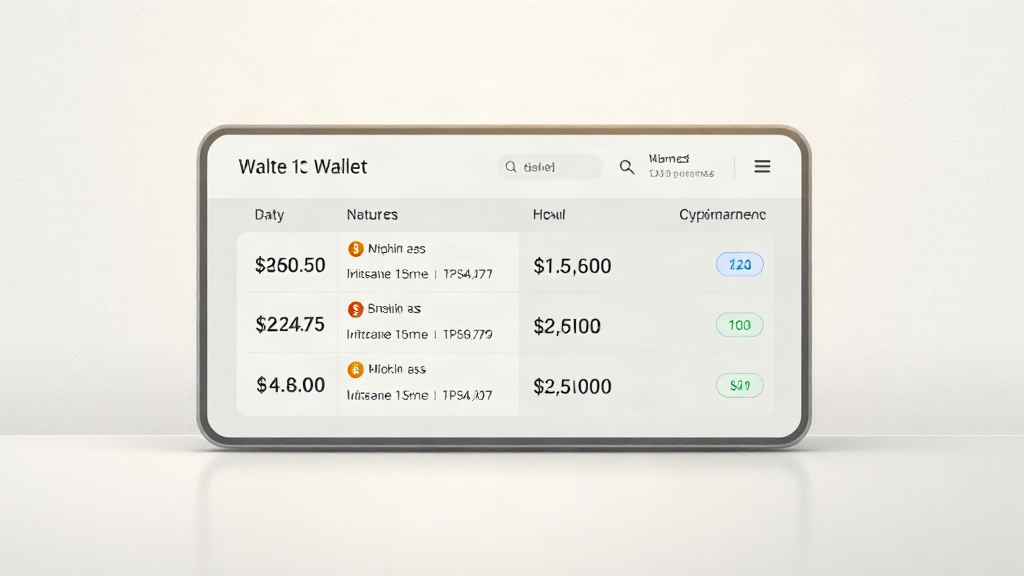
Cryptocurrency Wallet Functionality Analysis and Top Picks for 2026
Cryptocurrency wallets are essential tools for managing digital assets, with their core function being the secure storage of private keys, enabling users to send, receive, and track cryptocurrencies. Additionally, wallets serve as a gateway to connect with Web3 applications, participate in DeFi, engage in staking, and facilitate asset swaps. As of 2026, various wallet solutions are available in the market, including hardware wallets like Ledger, known for offline private key storage, and software wallets such as MetaMask, widely used in the Web3 ecosystem. Trust Wallet is favored for its multi-chain support and user-friendliness, while Zengo offers an innovative seed phrase-less experience through MPC technology.























-
BitTorrent Completes First BTT Burn and Strategic Rebranding
BitTorrent completed its first BTT token burn on October 16, destroying a total of 21,621,611,570,729.6 BTT, valued at approximately $7.6 million. The funds for this burn came from its decentralized s
-
Balaji Srinivasan aims to make Farcaster the "Singapore of social media," kicking off with a wave of bans intended to make it a haven for polite techno-optimists.
Balaji Srinivasan aims to make Farcaster the "Singapore of social media," kicking off with a wave of bans intended to make it a haven for polite techno-optimists.
-
Porsche terminates its Web3 project and the Pioneers Circle community due to a sharp decline in 911 NFT trading activity.
Porsche is reportedly discontinuing its Web3 project and Pioneers Circle community due to a significant drop in trading activity for its 911 NFT collection compared to earlier levels, less than four y
-
CZ retweeted a post introducing YZi Labs' startup bootcamp, EASY Residency, stating that it has completed four seasons, with each shortlisted project in the fourth season receiving a $500,000 investment.
Binance founder CZ retweeted 0xBeyondLee's detailed introduction to YZi Labs (formerly Binance Labs) startup bootcamp, EASY Residency. The bootcamp aims to assist early-stage Web3 and AI entrepreneurs
-
Vitalik Buterin tweets, quoting danwwang's "engineer society vs lawyer society" distinction, noting he expected an "engineering system" but found an "entire legal system" instead.
Vitalik Buterin tweets, quoting danwwang's "engineer society vs lawyer society" distinction, noting he expected an "engineering system" but found an "entire legal system" instead.
-
Saudi Arabia, UAE Push Ahead With Data Center Plans
Saudi Arabia, UAE Push Ahead With Data Center Plans
-
Rezolve AI (RZLV) H1 2026 Revenue Surges to $130.8M, Reaffirms Full-Year Target of $360M
Rezolve AI reported its first-half 2026 revenue increased to $130.8 million, up from $6.3 million a year earlier, with its customer base expanding to over 1,640 accounts. Despite strong growth, the co
-
Nano Labs (Nasdaq: NA) reported a net loss of $46.5 million in the first half of 2026, widening due to a fair value change loss of RMB 250 million on BNB, while also announcing its expansion into AI and Web3.
Nano Labs reported a net loss of RMB 316.7 million (approximately $46.5 million) for the first half of 2026, significantly higher than the RMB 11.8 million loss in the same period last year. The incre
-
Rezolve AI (RZLV) Slides 4% on Profit-Taking After a 22% Rally Triggered by Google Cloud Database Selection, Alphabet (GOOGL) Holds Flat
Rezolve AI (NASDAQ:RZLV) stock fell 4% to $2.84 in early Wednesday trading, following a 22% surge to $2.96 on Tuesday. The rally was driven by the company's announcement that Alphabet's (NASDAQ:GOOGL)
-
Japanese stablecoin firm JPYC raises $38 million in extended Series B to expand its financial and Web3 ecosystem
JPYC Inc., which issues the yen-pegged stablecoin JPYC, announced the total 6 billion yen ($38 million) raise on Wednesday. The extended round includes a fresh 1 billion yen ($6.3 million) investment
-
US Arbitration Giant Launches Specialist Panel for Crypto Disputes
The American Arbitration Association (AAA), a leading US arbitration organization, has launched a specialist Web3 Panel. This panel brings together experts in blockchain, smart contracts, digital asse
-
SlowMist Detects a Fake Recruitment Campaign in Which Scammers Posing as Headhunters Send Malicious GitHub Code
Svmuu News: SlowMist MistEye recently detected a malicious campaign targeting developers that uses fake Web3 job postings to carry out attacks. The attackers impersonate recruiters on LinkedIn, buildi
-
BitMart Releases Its First-Half 2026 Report, Continuing to Expand Its Global Digital Asset Services
Svmuu News: According to official reports, BitMart has released its report for the first half of 2026. The report shows that, despite significant pressure in the crypto market, BitMart has continued t
-
Sanae Takashi: The social applications of Web3 are steadily advancing, contributing to the development of Japan’s innovation ecosystem
Svmuu News: On July 13 in Tokyo, Japanese Prime Minister Sanae Takaichi delivered an opening address via video at WebX 2026, an event hosted by Coinpost. Sanae Takaichi began by extending her heartfel
-
Japanese Prime Minister Sanae Takaichi Confirms She Will Attend WebX2026 via Video Conference
Svmuu News: Sanae Takaichi, the 105th Prime Minister of Japan, will attend the 2026 WebX Conference via video link and deliver a speech. According to the organizers, the event is scheduled to take pla
-
ForeGate Launches Limited-Time World Cup Final Promotion, Featuring a Total Prize Pool of One Million and 500 USDT in Loss Protection
Svmuu News: ForeGate, a Web3 prediction trading platform, has announced the launch of a limited-time “Predict Every Match, Win Every Step” World Cup Final incentive campaign. According to the official
-
Down 2-0, but coming back to win 3-2? predict.fun currently puts the probability of “T1 defeating G2 in the League of Legends MSI Knockout Stage” at 48%.
According to PPP’s prediction market tracking, the probability of T1 defeating G2 in the “League of Legends MSI Knockout Stage: T1 vs. G2” prediction event on predict.fun is currently reported at 48%.
-
KOR Protocol Completes $7.5 Million Series A Funding Round, with 1kx and Others Participating
Svmuu News: KOR Protocol announced the completion of a $7.5 million Series A funding round, with participation from 1kx, Blockchain Capital, and others, valuing the company at $100 million. The funds
-
Huawei's "Young Genius" Li Bojie Responds to Du Jun's Allegations: Investment Funds Were Not Received in Full; His Resignation Was Approved by the Board of Directors
Svmuu News: In response to Du Jun, co-founder of Web3 venture capital firm ABCDE, publicly accusing Li Bojie of lacking a spirit of contractual integrity and alleging that Li Bojie and his partner Zhu
-
CertiK Hack3D Report: Web3 Losses Exceed $1.3 Billion in the First Half of 2026; Attacks Are Increasingly Targeting High-Value Targets
Svmuu News: Web3 security firm CertiK has released its “Hack3D: First Half of 2026 Report.” The report shows that 344 security incidents occurred in the Web3 ecosystem during the first half of 2026, r
-
BNB Chain will host the BNB Chain Tokyo event during the WebX conference in Japan
Svmuu News: According to official reports, BNB Chain will host the “BNB Chain Tokyo” event during the WebX conference in Japan. The event will take place on July 13 from 5:30 p.m. to 10:00 p.m. (GMT+9
-
OKX Officially Launches the OKX.AI Genesis Hackathon
Svmuu News: According to official reports, OKX has announced the official launch of the OKX.AI Genesis Hackathon, recruiting the first batch of Agent Service Providers (ASPs) from AI developers worldw
-
BNB Agent Studio Officially Launches on the BNB Chain Mainnet
Svmuu News: BNB Chain has announced that BNB Agent Studio, its AI agent development platform, has officially launched on the mainnet. Developers can use AI programming tools such as Cursor and Claude
-
Gate.AI Upgrades Its End-to-End Large Model Management Platform, Enhancing Unified Large Model Integration and Enterprise Governance Capabilities
Svmuu News: Gate.AI, the end-to-end large-model management platform operated by the digital asset trading platform Gate, recently completed an upgrade and launched a one-stop large-model routing servi

-
SAITAMA Coin Analysis: Transition from Meme Coin, and Current Market and Trading Channels
SAITAMA was initially launched as Saitama Inu, a meme coin on Ethereum, and later transitioned into a Web3 technology company. Its goal is to educate Gen Z about cryptocurrencies and DeFi through its ecosystem, which includes the SaitaMask wallet, SaitaMarket marketplace, and Saita Edutainment education platform. The project underwent a rebranding and launched SAITAMA V2. However, given that its earlier version, SAITAMA, shows extremely low or zero trading volume on mainstream data platforms, market activity has significantly decreased, and investors should be wary of related risks. The trading activity of SAITAMA V2 also requires further verification.
-
RSS3 Token Analysis: Project Positioning and Trading Status
RSS3 is a protocol that provides an open information layer for decentralized applications, with its native token RSS3 used for network services and governance. This article outlines the project's core mechanisms and tokenomics model, and based on current market data, describes its trading activity and main circulation channels.
-
KENSHI (KNS) Analysis: Web3 Data Platform and Its Trading Status
KENSHI Coin (KNS) is the native token of the Kenshi platform, launched in Switzerland in 2021. The platform aims to combine blockchain, IoT, and traditional network functionalities to provide decentralized data verification and indexing services. KNS tokens are used to facilitate network transactions and reward participants. However, according to the latest market data, the trading market for KNS tokens has nearly dried up, with 24-hour trading volumes being extremely low or even zero. Trading has ceased on most listed exchanges, and investors should be wary of its liquidity risks.
-
BOSS Wallet: A Multi-Chain Digital Asset Management Tool Analysis
BOSS Wallet is a decentralized multi-chain digital asset wallet that supports asset display and management across more than 120 public chains. Its core features include security ensured by seed phrases and the BIP44 standard, a built-in Web3 browser for DApp access, and an aggregator algorithm that finds optimal trading paths across multiple decentralized exchanges and cross-chain bridges. This article aims to analyze BOSS Wallet's functional positioning and technical characteristics and does not constitute investment advice.
-
ALI Token: Current Status and Future Prospects of the Alethea AI Project
ALI is the native utility token of the Alethea AI project, which aims to connect blockchain with artificial intelligence, empowering intelligent NFTs (iNFTs) and AI-driven digital characters. The project has introduced innovative technologies such as CharacterGPT, allowing users to generate interactive AI characters through natural language. ALI tokens are used within the ecosystem for iNFT minting, training, and governance. Despite recent market volatility, Alethea AI holds early exploratory significance in the intersection of AI and Web3 and has garnered support from several well-known institutions. Its future development depends on technological implementation and market acceptance.
-
What is FLAP: An Analysis of the On-Chain Token Issuance and Fundraising Protocol
FLAP (flap.sh) is a decentralized protocol operating on EVM-compatible chains, designed to simplify token issuance and fundraising processes for projects and creators. It supports no-code creation of tokens, with or without taxes, and offers automated liquidity management and a FLAPSHARE revenue-sharing mechanism. FLAP has been deployed on multiple networks, including BNB Chain and X Layer, and will launch its "Stocks Vault" feature on Robinhood Chain in July 2026, allowing Meme coins to pay tokenized stock dividends, exploring the integration of cryptocurrency and traditional finance.
-
FLOKI Coin Value Analysis and Long-Term Investment Considerations
FLOKI, initially launched as a memecoin, has evolved into a Web3 ecosystem encompassing gaming, DeFi, and educational applications. Its value is influenced not only by market sentiment but also by the progress of its ecosystem development, such as the Valhalla game and FlokiFi Locker. As a high-volatility asset, its long-term investment value depends on the actual effectiveness of its ecosystem development and market acceptance. Investors should fully consider its risk characteristics.
-
MNTG Token: Monetas Project Status, Valuation, and Investment Risk Analysis
MNTG is the native token of the Monetas project, which aims to provide Web3 utility solutions for NFT games and plans to expand to the Polygon and ERC-20 networks. Despite the project team's commitment to developing games and utility tools, as of October 21, 2026, MNTG's market performance shows zero 24-hour trading volume and market capitalization. Institutions such as CertiK have conducted security audits on it, but given its extremely low liquidity and high-risk assessment, MNTG currently has no active trading market, and its investment value is subject to significant uncertainty.
-
CLY Token: Analysis of Colony Project Status and Market Performance
CLY is the native token of the Colony project, which aims to build a community-driven Web3 venture capital platform within the Avalanche ecosystem, providing funding for early-stage projects and empowering community participation. CLY tokens are used for early-stage investments, staking rewards, and governance. However, as of October 2026, CLY's market performance faces severe challenges, with its price significantly below its all-time high and IDO price, extremely low 24-hour trading volume, and a near-zero return on investment, indicating that its active trading market is almost depleted.
-
SATT Token: Current Status and Future Challenges of a Blockchain Advertising Token
SATT (Smart Advertising Transaction Token) is a token designed to revolutionize Web2 advertising models through blockchain technology, allowing users to earn revenue by sharing content. The project was founded by the Atayen, Inc. team and supports a multi-chain strategy. However, as of October 2026, SATT's market activity is extremely low, with a 24-hour trading volume of only $1, and it has been assessed as "dormant," facing severe challenges for its future development.
-
OKX Exchange: Evolution and Current Status from OKEx to a Global Crypto Giant
OKX (formerly OKEx) is one of the world's leading digital asset trading platforms, founded by Star Xu in 2014. Headquartered in Singapore, the platform serves tens of millions of users in over 160 countries, offering spot and derivatives trading, as well as Web3 ecosystem services. In recent years, OKX has actively expanded its compliance footprint, holding licenses in Dubai, Australia, and other regions, but its operations in Hong Kong, Thailand, and elsewhere also face regulatory challenges. In 2026, its joint venture with Intercontinental Exchange, OKXICE, plans to launch tokenized stock trading, which has garnered market attention and opposition from some issuers. This article outlines OKX's development history, core services, compliance status, and recent developments.
-
Gamium (GMM) Token Analysis and Trading Activity Review
Gamium (GMM) is a Web3 and metaverse project aiming to build a human-centric internet experience, with its GMM token used for transaction fees and feature unlocking within the ecosystem. However, as of October 19, 2026, the market trading activity for GMM coin is extremely low, with a 24-hour trading volume of only tens to hundreds of US dollars and a market capitalization of approximately $189,700. Its value has also significantly depreciated over the past year. Given its depleted liquidity, there are currently no reliable active trading channels, and investors should be wary of the associated risks.
-
What is MMIT? A Deep Dive into MangoMan Intelligent Cryptocurrency
MMIT typically refers to MangoMan Intelligent, a memecoin launched in 2022 that has since evolved into an ecosystem encompassing Web3 domains, a decentralized exchange (DEX), and a wallet. Deployed on the Binance Smart Chain (BSC), the token has gained recognition for its community-driven nature and innovative features. However, its trading activity is extremely low, and investors should be wary of high volatility and liquidity risks.
-
Galxe (G) Token Analysis: From Web3 Credential Network to Gravity L1 Mainnet
Galxe (formerly Project Galaxy) is a platform focused on Web3 growth and digital identity credentials, aiming to build an open data network through modular AI and blockchain technology. Its native token GAL has migrated to the new token G at a ratio of 1 GAL = 60 G, operating on its proprietary Gravity L1 blockchain. The G token is used for platform governance, staking, and payments. Users can trade it on some centralized exchanges (such as Kraken) or decentralized exchanges (such as PancakeSwap), but should be aware of the contract address changes after the token migration.
-
Decentralized Exchanges (DEXs): A New Paradigm for Trading with Asset Control and Privacy
Decentralized exchanges (DEXs) offer users distinct advantages compared to traditional centralized platforms. They allow users full control over private keys and crypto assets, significantly enhancing security and censorship resistance. DEXs typically do not require KYC, safeguarding user privacy, and ensure transparency by publicly recording all transactions on the blockchain. Furthermore, DEXs support a wider range of cryptocurrency trading and have benefited from innovations in Automated Market Maker (AMM) models and Layer 2 scaling solutions, leading to significant user growth and market development. These advantages collectively establish DEXs as a crucial component of the crypto landscape.
-
CZRX Token: Current Status and Future Challenges of the Governance Token for AI-Driven Web3 Assets
CZRX (c0x or Compound 0x) is a governance token focused on Web3 on-chain infrastructure, aiming to coordinate Web3 asset networks through AI-driven mechanisms. As part of the Virtuals protocol ecosystem, it grants holders voting rights to participate in protocol upgrades and parameter adjustments. However, the token currently faces severe challenges including extremely low trading volume, significant price volatility, and a lack of a clear development roadmap. Its market activity is very low, and investors should be cautious about the difference between short-term sentiment and long-term value.
-
FLUX Trading Guide and Exchange Listings
FLUX is the native token of the Flux decentralized cloud infrastructure ecosystem, used for resource payments, node staking, and incentivizing network participants. It is actively traded and available on major centralized exchanges such as Binance, KuCoin, and Kraken, as well as some decentralized trading platforms. This article outlines FLUX's core uses, main trading channels, and recent market data, providing a reference for interested traders.
-
What is AMAS Coin? Amasa Token Project Overview and Market Status
AMAS is the native token of the Amasa project, which aims to build a micro-income stream platform connecting users to the Web3 and DeFi sectors to optimize their small earnings from gaming, content creation, and more. Amasa plans to develop an investment application to simplify the aggregation and management of micro-income streams and channel them into DeFi investments. However, as of October 2026, the AMAS token has extremely low market activity, with multiple data platforms showing its market capitalization near zero and negligible 24-hour trading volume. Investors should be wary of the associated risks.
-
OAX Token: Exploring and Developing a Decentralized Digital Asset Ecosystem
Since its establishment in 2017, the OAX Foundation has been dedicated to building a decentralized digital asset ecosystem, aiming to address the industry's challenges in speed, scalability, interoperability, and trust. The project actively promotes Web3, DeFi, and AI-driven digital financial innovation through core technologies such as the L2X protocol, 0x protocol, and Polkadot integration, and by launching products like Notifs App and OAX Learn. The OAX token, available as an ERC-20 and BEP-20 asset, continues to expand its ecosystem.
-
The Current Landscape and Regulatory Trends of Global Virtual Currency Trading Platforms
The global cryptocurrency trading market continues to evolve, with centralized exchanges still dominating trading volumes. Regulatory frameworks are rapidly taking shape, with the EU's MiCA regulation already in effect and the US CFTC recently proposing its initial set of regulatory rules. Major platforms such as Binance, Coinbase, and OKX continue to invest in compliance and innovation, and the trend of industry consolidation and cooperation is evident. For investors choosing a platform, security and compliance have become key considerations.
-
TokenPocket (TP Wallet) Feature Analysis and Digital Asset Connection Guide
TokenPocket, established in 2018, is a decentralized multi-chain wallet providing digital asset management services to tens of millions of users worldwide. This article delves into the core features of the TP Wallet, including extensive public chain support, a built-in DApp browser, cross-chain swaps, and DeFi connectivity such as liquidity mining. It also introduces its latest security features and technological advancements, helping users better understand and utilize this Web3 tool.
-
OKX App Latest Version and Official Download Channels Analysis
OKX, a world-leading cryptocurrency exchange and Web3 platform, offers a mobile app that serves as a core tool for users to trade and manage their digital assets. This article will detail the official download channels for the OKX App, its latest version updates, recently launched standalone applications and their core functions, and emphasize the importance of downloading through official channels to ensure asset security.
-
CSIX Token Trading Status and Channel Analysis
CSIX is the utility token for Carbon Browser, powering its Web3 ecosystem. Its current price remains very low, with both market valuation and trading activity being modest. Currently, CSIX is primarily traded on several decentralized exchanges on the BSC chain and a few centralized platforms. This article aims to outline the current trading status of CSIX and available trading channels to help readers understand its market dynamics.
-
S2K (Sports 2K75) Coin Status Analysis: No Active Trading or Market Value
S2K (Sports 2K75) is a cryptocurrency based on the BNB Smart Chain, aiming to build a Sport-Fi metaverse combining NFTs, DeFi, and betting functionalities. However, according to the latest data, S2K's 24-hour trading volume and circulating market capitalization are both zero, and its circulating supply also shows as zero. Furthermore, its smart contract carries the risk of being modifiable by the creator. Given the current lack of an active market, S2K holds no investment value, and investors should be wary of associated risks.























Web3

24H Trending
-
1
UAE's oil supply rebounded to a record high of 5.3 million barrels per day (bpd) in September
-
2
UN and human rights organizations condemn Israeli evictions in Hebron, while Israeli ministers express support.
-
3
TREAT Token: An Analysis of the Core Token in the Shiba Inu Ecosystem

-
4
stated at the 35th annual CASPA conference held in the US on October 23rd that AI infrastructure investment is facing multiple challenges
-
5
Bulgarians are voting in a presidential election today
-
6
X100 Exploit Proceeds Split Into Four 400-ETH Wallets
-
7
Mishaboar posted on X, proposing several measures for the growth of the Dogecoin ecosystem
-
8
Musk retweeted a post discussing how phones identify Starlink satellites as cellular base stations.
-
9
Sri Lanka's real estate market is experiencing a luxury property boom
-
10
A Review of Major Global Digital Currency Trading Platforms and Selection Considerations
Markets Today





Recommended Reading

Hot Topics

Svmuu focuses on blockchain industry trends and cutting-edge cryptocurrency news, while also covering real-time market data and in-depth analysis of the Hong Kong, U.S., and foreign exchange markets. Here, you can not only access professional 24/7 news updates and accurate market data, but also utilize practical investment tools to help you capitalize on opportunities in both digital assets and traditional financial markets. Whether you are a blockchain enthusiast or an investor in Hong Kong, U.S., or foreign exchange markets, we provide efficient and timely information services to empower your investment decisions.
- User Agreement
- Privacy Policy
- Contact Us
- Business Partnerships
- Disclaimer
- Content Statement
- About Us
- Sitemap
 Coming Soon!
