

Faster global financial news!
DeFi
-
Guide to Buying and Selling STG Tokens: Which Exchanges List Stargate Finance?
STG is the native governance token of Stargate Finance, a cross-chain bridge protocol built on LayerZero that aims to enable the seamless transfer of assets between different blockchains.Investors can buy and sell STG through centralized exchanges (CEXs) such as Binance, Kraken, and KuCoin, or decentralized exchanges (DEXs) such as Uniswap and PancakeSwap. Trading methods include depositing fiat currency or stablecoins, then placing market or limit orders on the spot market.STG tokens can be staked to earn protocol rewards.
-
WEFIN Token: Analysis and Outlook for the eFin Decentralized Project
WEFIN (eFin Decentralized) is a BEP-20 token built on the BNB Smart Chain, designed to create an ecosystem that integrates decentralized trading, cross-chain bridging, an aggregator, and a mobile wallet. This article provides an in-depth analysis of WEFIN’s positioning, core use cases, and current market performance, while also exploring the opportunities and challenges it may face in its future development.
-
Polymarket: How the Prediction Market Giant Is Unlocking a Hundred-Billion-Level Fund Pool and Reaping the Benefits of Globalization
Polymarket, a blockchain-based prediction market platform, is rapidly emerging as a major force in the Web3 space. The platform allows users to predict and trade on the outcomes of global events; its trading volume has surged to the tens of billions of dollars, attracting a large number of users worldwide. This article will delve into Polymarket’s operational mechanisms, its staggering capital scale, and how it is achieving growth through a global strategy, while also addressing the regulatory challenges the platform faces.
-
ARDR and POND: An Analysis of Two Cryptocurrencies and Their Ecosystems
This article aims to provide an in-depth exploration of the two cryptocurrencies, ARDR and POND, and the blockchain platforms behind them. ARDR is the native token of the Ardor platform, which employs a unique “parent-child chain” architecture designed to address issues such as blockchain scalability, customization, and data bloat. POND, on the other hand, is the native token of the Marlin Protocol, which is dedicated to improving the efficiency of peer-to-peer network communication and providing high-performance network infrastructure for scalable blockchain solutions. This article will detail their respective features, operating mechanisms, token economics, and trading activity on major exchanges.
-
DeFi Tokens: Core Assets of Decentralized Finance—An Analysis of Investment Value and Risks
DeFi (Decentralized Finance) tokens are at the core of a new generation of financial systems operating on blockchain via smart contracts. They span multiple subsectors—including trading, lending, derivatives, and insurance—providing users with peer-to-peer financial services designed to address the pain points of traditional finance. The value of DeFi tokens is closely tied to factors such as the innovation of the underlying project, market demand, technical security, and community governance. Although the DeFi market is growing rapidly and Total Value Locked (TVL) continues to rise, investing in DeFi tokens also carries inherent risks, including high volatility, smart contract vulnerabilities, and regulatory uncertainty. When considering an allocation to DeFi tokens, investors must fully understand their operational mechanisms, potential returns, and risks, and conduct thorough due diligence.
-
What is DAI? Where can I buy and sell DAI?
DAI is a decentralized stablecoin designed to maintain a 1:1 soft peg to the U.S. dollar. It was created and is managed by the Maker Protocol (now known as the Sky Protocol) and is backed by overcollateralized crypto assets held in smart contracts. What makes DAI unique is its decentralized nature; it does not rely on centralized institutions for issuance or management, but rather maintains its stability through smart contracts and governance by the MakerDAO community. Users can trade and buy or sell DAI through a variety of centralized and decentralized platforms.
-
What is SHIBDOGE? Where can I buy and sell SHIBDOGE?
SHIBDOGE is a community-driven cryptocurrency designed to unite the power of the Shiba Inu and Dogecoin meme coin communities. It is an ERC-20 token built on the Ethereum network, launched on December 24, 2021, and features a deflationary mechanism.SHIBDOGE’s mission is to promote the decentralized development of cryptocurrency, and it plans to expand its ecosystem through initiatives such as NFT projects. Currently, SHIBDOGE can be traded on both centralized and decentralized exchanges, including LBank and Uniswap V2 (Ethereum).
-
Global Market Trends for KMD: A Must-Read for Investors
KMD is the native cryptocurrency of the Komodo platform, which is dedicated to providing blockchain solutions, including decentralized exchanges, financial applications, and independent blockchains. KMD has exhibited significant volatility in global markets, with its price and market capitalization influenced by a variety of factors. This article will delve into KMD’s current market status, historical performance, core technology, and future growth potential, providing investors with a comprehensive perspective.
-
How can I buy and trade AQUA? On which exchanges is AQUA listed?
AQUA tokens are primarily used for rewards and on-chain voting on the Stellar network, with the aim of enhancing Stellar’s transaction liquidity. Currently, AQUA tokens can be purchased and traded on multiple centralized and decentralized exchanges. To purchase AQUA tokens, users typically need to first buy major cryptocurrencies such as USDT with fiat currency, and then exchange those cryptocurrencies for AQUA tokens.
-
The Current Status and Future Outlook of MONK: An Analysis of Multiple Projects
“MONK Coin” does not refer to a single cryptocurrency project, but rather encompasses multiple independent projects that use the same or similar names. These projects differ significantly in their technical approaches, ecosystem positioning, and stages of development. They include the early MONK, which is based on Proof-of-Stake (PoS) and masternode mechanisms; the Monk Protocol token deployed on Polygon; the meme coin MonkCoin within the Solana ecosystem; and Global Monk, which focuses on integration with traditional finance. Therefore, assessing the current status and future prospects of “MONK coins” requires distinguishing and analyzing each specific project.
-
What is the Reserve Protocol (RSR) stablecoin?
Reserve Protocol is a decentralized platform designed to create stablecoins backed by a variety of assets (known as RTokens) to provide an anti-inflationary global currency. RSR (Reserve Rights) is its native token, primarily used to provide collateral for RTokens and facilitate protocol governance, ensuring the stability of the stablecoin’s value and the decentralized operation of the ecosystem.
-
GRT Token Analysis: Is The Graph Token Worth Investing in for the Long Term?
GRT (Graph Token) is the native token of The Graph, a decentralized data indexing protocol, and is hailed as the “Google of the blockchain world.” By incentivizing network participants such as indexers, curators, and delegators, it provides efficient and reliable blockchain data query services for decentralized applications (dApps).The value of GRT is closely tied to the development of the Web3 ecosystem, the adoption rate of The Graph protocol, and its technological innovations. This article will delve into the uses of GRT, the key factors influencing its long-term value, and analyze its potential within decentralized data infrastructure.
-
Guide to Buying and Trading SETS: An In-Depth Analysis of Different SETS Tokens and the Exchanges Where They Are Listed
The term “SETS coin” may refer to several different tokens in the cryptocurrency space. This article will provide a detailed analysis of common “SETS” types, including the Set token under the TokenSets protocol, the Sensitrust (SETS) token, and the Stabilize Token (SET), and will outline how to purchase and trade each of them, as well as information on exchanges where they may be listed. Given the differences in the nature and use cases of these various tokens, understanding their specific backgrounds is a prerequisite for purchasing and trading them.
-
An In-Depth Analysis of the Carbon Stablecoin: Mechanisms and Key Features
The Carbon stablecoin (CUSD) is designed to provide a decentralized, censorship-resistant cryptocurrency stablecoin pegged to the U.S. dollar. This article will delve into how CUSD maintains its stability through an overcollateralized model, analyze its minting, burning, and liquidation mechanisms, and highlight its key strengths in terms of decentralization, transparency, and potential stability, providing readers with a comprehensive overview of the design philosophy behind this innovative stablecoin.
-
An In-Depth Analysis of SIENNA: The Positioning and Trading Channels of a Privacy-Focused DeFi Token
SIENNA is the native token of the Sienna Network, a privacy-preserving decentralized finance (DeFi) platform built on the Secret Network. It is dedicated to providing users with anonymous DeFi services such as crypto asset trading and lending, with a core focus on using programmable privacy technology to protect transaction data. This article will delve into the positioning of SIENNA, its key features, and common ways to trade and purchase it.
-
What Is the FEG Token (FEG)? An Analysis of Its Core Mechanisms and Trading Methods
This article provides an in-depth look at the FEG Token (FEG), a cryptocurrency designed to build a robust DeFi ecosystem. We will explore its unique deflationary and reflection mechanisms, as well as its various uses within the ecosystem. In addition, this article will guide you on how to safely trade and purchase FEG Tokens on both decentralized and centralized exchanges.
-
Understanding the Initial Value Formation of Decentralized Tokens Such as CyPepe: The Evolution of the Concept of Issue Price
For tokens like CyPepe that are listed on decentralized exchanges (DEXs), the concept of an “issue price” differs from that in traditional finance or the initial coin offerings (ICOs) of early cryptocurrencies. This article will explore in depth how such tokens establish their initial trading value in the market through liquidity pools and automated market maker (AMM) mechanisms, rather than having a fixed, pre-set issuance price.
-
Exploring SET Tokens: Tokenized Portfolios in the Set Protocol and How to Trade Them
The SET token is not a single cryptocurrency, but rather refers to a tokenized investment portfolio created on the Set Protocol platform. This article will provide an in-depth analysis of how the Set Protocol allows users to bundle multiple crypto assets into a single ERC-20 token to implement automated investment strategies. It will also explore the operational mechanisms, primary uses, and methods for acquiring and trading these SET tokens. Understanding SET tokens can help investors manage their crypto assets more efficiently.
-
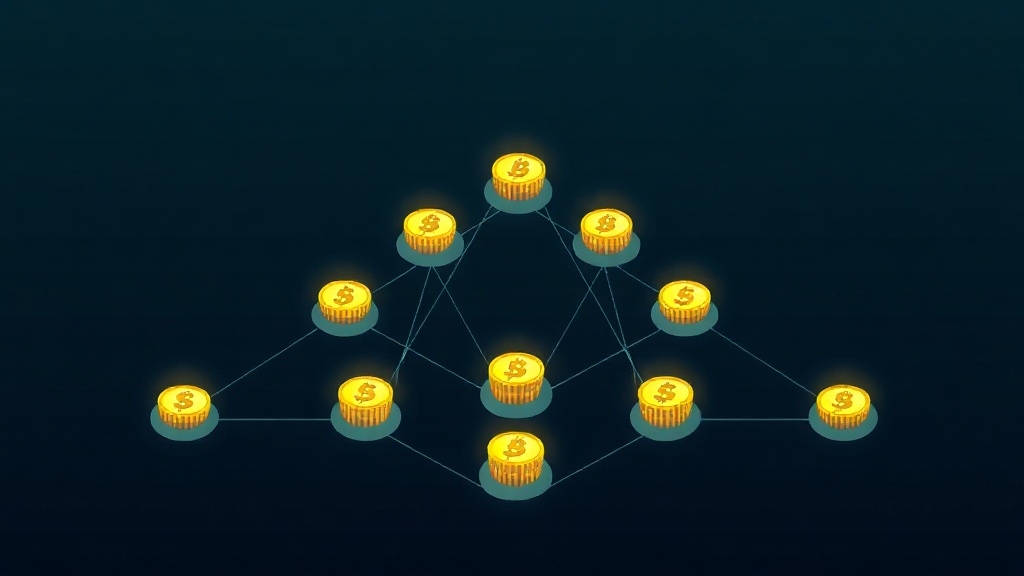
Binance Analysis of the Chain and Binance Smart Chain: The Core Driving Force of the BNB Ecosystem
This article provides an in-depth exploration of the two major blockchain platforms—the Binance (BC) and the Binance (BSC)—explaining their respective technical characteristics, positioning, and synergies within the Binance ecosystem.We will analyze how BNB, as the native token, plays a pivotal role within the dual-chain architecture of BC and BSC. By covering transaction fees, participating in staking, and driving various decentralized applications, BNB helps build and advance its diverse use cases and unlock its full potential.









- No data
-
Cardano (ADA): Positioning and Outlook in the Future Financial System
Cardano (ADA) is actively building its core position in the future financial system through a series of technological upgrades and strategic partnerships. Recently, its privacy sidechain Midnight partnered with UK-based Monument Bank to plan the tokenization of retail deposits and expand into RWA business. Simultaneously, Cardano is advancing its Dijkstra era upgrade, aiming to achieve 1000 TPS. The regulatory environment is becoming more favorable, with the SEC's "safe harbor" proposal classifying ADA as a non-security, and multiple spot ADA ETF applications awaiting approval. These developments collectively shape ADA's unique prospects in the convergence of decentralized and traditional finance.
-
What is YFFII Coin? Analyzing its Current Status and Market Activity
YFFII Finance (YFFII) was a DeFi project based on the Binance Smart Chain, aiming to provide automated market making and aggregated trading services. However, as of September 11, 2026, the YFFII token exhibits extremely low market activity, with trading volume and market capitalization close to zero. Its price has fallen significantly from its all-time high in September 2020 and is currently considered a high-risk asset lacking an active trading market.
-
YUZU Coin: A Multifaceted Analysis of YuzuSwap and Yuzu Money Project Status
The term "YUZU coin" carries multiple meanings in the crypto world, primarily referring to two independent projects: YuzuSwap and Yuzu Money. It is not the same asset as the mainstream "EOS" (often referred to as "Yuzibi" in Chinese). YuzuSwap was once the decentralized exchange token on the Oasis Network, but currently has no active trading market. Yuzu Money, on the other hand, is a DeFi protocol that offers the overcollateralized stablecoin yzUSD, and its governance token YUZU also lacks active trading data. This article will detail the background and current market status of these identically named tokens.
-
ASH Coin Analysis: Project Overview and Trading Status of the Homonymous Token ASH and AshSwap (ASH)
There are multiple entities sharing the "ASH" token name. One such entity, "ASIA SILVER HOARD (ASH)," is an Ethereum-based decentralized digital asset aiming to address development issues in Asia. However, its public data shows extremely low trading volume and an anomalous market capitalization, indicating near-depleted market activity. Another project, "AshSwap (ASH)," is a DeFi protocol token with relatively higher, but still low, trading volume. This article will introduce both projects separately and analyze their current market trading conditions.
-
PICKLE Coin Founder and 2026 Price Prediction Analysis
Pickle Finance, the project behind the PICKLE token, is known for its decentralized origins, with no single founder or traditional core team. Its tokens were primarily distributed through liquidity mining. The project aims to stabilize de-pegged stablecoins and build a DeFi yield optimization ecosystem. As of September 10, 2026, PICKLE is trading at approximately $0.01, having reached an all-time high of $85.24. Market predictions for its future price vary widely, with some institutions forecasting a potential range of $0.000256 to $0.01033 by the end of 2026, reflecting its high volatility and uncertainty.
-
IPOR Protocol: DeFi Interest Rate Benchmark and Derivatives Innovation, Future Development Prospects Analysis
The IPOR Protocol aims to be the credit hub in decentralized finance (DeFi) by introducing traditional finance's fixed-income instruments to DeFi through transparent IPOR indices, interest rate swaps, and asset management solutions. The protocol was launched in 2022, and in 2024, it introduced IPOR Fusion, expanding into on-chain asset management. The IPOR token is used for governance and liquidity mining, the project has received funding from well-known institutions, and it plans to gradually achieve fully decentralized governance. Its goal is to promote the maturation of the DeFi market and attract institutional capital.
-
HADES Token: An Analysis of Solana Ecosystem NFT Trading Platform Hadeswap and Its Market Status
HADES coin primarily refers to the native token of Hadeswap, a decentralized NFT trading platform on the Solana blockchain. Hadeswap utilizes an Automated Market Maker (AMM) model, aiming to enhance NFT liquidity. Its unique mechanisms include allocating most of the protocol's profits to HADES token buybacks and burns. Despite the project's commitment to decentralization, it has not yet completed an audit. Currently, HADES token has extremely low trading volume, incomplete market capitalization data, and a history of volatile price fluctuations, so investors should be wary of its high-risk nature. Relevant market data can be found on platforms such as Svmuu.
-
DFI Coin Analysis: DeFiChain's Native Token and Its Market Status
DFI is the native token of the DeFiChain blockchain, a Bitcoin-based platform focused on decentralized finance (DeFi). The project utilizes a hybrid consensus mechanism and emphasizes the security of financial transactions through a non-Turing complete design. DFI is used for paying transaction fees, participating in governance, and providing liquidity. However, as of September 10, 2026, DFI's market performance shows extremely low trading volume and market capitalization, reflecting severe illiquidity. Investors should be wary of high volatility risks.
-
BAI Coin: A Multifaceted Analysis of Project Backgrounds, Trading Status, and Risk Warnings
"BAI coin" refers to multiple cryptocurrency projects, including AstridDAO's USD stablecoin BAI, Based AI, which is based on AI and Meme culture, and other tokens with the same name deployed on the Solana and BNB chains. Due to the extremely low trading volume or lack of publicly active data for most "BAI" tokens, investors must carefully verify project details, contract addresses, and the underlying blockchain before trading, and be aware of potential risks. This article will introduce the background and current market status of these identically named tokens.
-
PAID Network (PAID) Token Value Deep Dive: Long-Term Investment Potential and Risk Assessment
PAID Network aims to simplify business agreements through blockchain technology and operate a Web3 project incubation platform. Its PAID token showed promise in early fundraising and Launchpad projects, but a hack in 2021 led to a price crash. As of September 2026, the PAID token price is extremely low, trading volume has nearly dried up, and market activity is severely lacking. Investors need to fully assess its innovation potential, historical security incidents, current market performance, and high risks.
-
WCADAI (CADAI) Token Issuance Mechanism Analysis: No Traditional Fixed Issuance Price
WCADAI (project token CADAI) did not adopt the traditional fixed-price Initial Coin Offering (ICO) model. The token launched its Token Generation Event (TGE) on May 15 of a certain year via the decentralized exchange Uniswap, with its initial price determined by liquidity pools and market supply and demand dynamics. CADAI aims to combine AI and blockchain technology to enhance efficiency in the Computer-Aided Design (CAD) industry, with a total supply of 100 million tokens, primarily deployed on Ethereum, Arbitrum, and BNB Chain.
-
Cosmos Ecosystem: Core Cryptocurrencies and Diverse Projects Analysis
The Cosmos ecosystem is a decentralized network composed of multiple blockchains, interconnected via the Inter-Blockchain Communication (IBC) protocol, aiming to solve blockchain interoperability and scalability issues. As of August 2026, the ecosystem has attracted over 250 projects, covering various fields such as DeFi, cloud computing, and privacy computing, and boasts numerous core tokens like Cosmos Hub (ATOM), Osmosis (OSMO), and Injective (INJ), collectively building towards the vision of an "Internet of Blockchains."
-
GRAPE Coin: A Multifaceted Analysis of Grape Protocol and its Namesake Token's Ecosystem and Trading Channels
GRAPE coin refers to multiple crypto projects, with the most prominent being GRAPE, the native token of the Web3 entertainment ecosystem Grape Protocol. This project aims to integrate traditional gaming with Web3 technology, building an economic system through NFTs and ERC-20 tokens. The token can be used for in-game payments, governance, and staking. This article will provide a detailed analysis of Grape Protocol's mechanisms and market performance, briefly introduce other projects with the same name, and list current trading channels.
-
SMARTCREDIT Token: Decentralized Lending Project and Its Market Status Analysis
SMARTCREDIT (SMARTCREDIT token) is a project aiming to build a decentralized peer-to-peer lending market. Its platform, SmartCredit.io, offers AI-driven self-custodial banking services, connecting lenders and borrowers for fixed-term, fixed-rate collateralized loans, supporting stablecoin and Ethereum lending. The project was founded by former Credit Suisse executives and emphasizes security through audited smart contracts and AI monitoring. However, as of early September 2026, the SMARTCREDIT token exhibits extremely low market activity, with a 24-hour trading volume of only a few dollars and a market capitalization ranging from approximately $290,000 to $340,000, indicating a near-depleted trading market.
-
RELAX Coin: Relaxable Project Analysis and Trading Status
RELAX coin is an Ethereum token launched by the Relaxable.com platform, aiming to integrate Web3 functionalities into its relaxation and wellness services. The token has no developer or marketing wallets, with a maximum supply of 1 billion. However, RELAX coin currently has limited trading support on mainstream centralized exchanges, with Coinbase and KuCoin explicitly stating no support. Users who wish to trade may need to do so via decentralized exchanges, but should verify liquidity and risks independently.
-
PARIO Coin Value Analysis and Investment Risk Assessment
PARIO is a blockchain platform designed to empower creators in the financial sector, with its ecosystem including ParioPad. The project was launched in May 2023 by a U.S. team. However, multiple mainstream data platforms indicate that the PARIO token currently lacks real-time price and market capitalization data, and Gopluslabs reports that its smart contract carries a risk of being modifiable by the creator. Given these factors, the value and long-term investment potential of the PARIO token face significant uncertainty.
-
DFI Coin Value Analysis: DeFiChain Token Status and Investment Risk Discussion
DFI is the native token of the DeFiChain decentralized blockchain, designed to bring DeFi functionalities to the Bitcoin ecosystem. The project utilizes a hybrid PoS-PoW consensus and has transitioned to community governance. As of September 7, 2026, the price of DFI is extremely low, with a market capitalization of approximately $2.5 million and a 24-hour trading volume of only a few hundred dollars, indicating severe lack of market liquidity. Despite DFI's various utility functions within its ecosystem, its extremely high price volatility and nearly depleted trading market pose significant uncertainty and high risks for long-term investment.
-
OKX Web3 Wallet vs. International Version: Features, Security, and a One-Stop Web3 Experience Analysis
OKX Web3 Wallet is a non-custodial, multi-chain crypto wallet that allows users to manage digital assets, connect to DApps, and explore DeFi and NFT markets across more than 140 blockchain networks. It emphasizes users' complete control over their private keys and ensures security through a risk interception system. The "unrestricted version" typically refers to OKX's international version, designed to provide comprehensive trading services and Web3 ecosystem functionalities to global users, in contrast to region-restricted versions. The wallet is available as a browser extension and a mobile app, aiming to create a convenient and secure entry point to Web3.
-
What is DAY Coin? An Analysis of ChronoLogic and Dayhub's Same-Named Token
There are multiple tokens named "DAY" in the cryptocurrency space, with the more prominent ones being ChronoLogic's DAY and Dayhub's $DAY. ChronoLogic's DAY aims to implement the "Proof of Time" concept, but its market activity is currently very low. Dayhub's $DAY, as the core token of its ecosystem, is dedicated to revolutionizing fund transactions, but its contract carries a high risk of centralization, requiring users to exercise caution in their evaluation.
-
VV Token Trading Guide: Understanding Virtual Versions (VV) and How to Buy It
Virtual Versions (VV) is an Ethereum-based Web3 platform that leverages AI to generate realistic 3D avatars, aiming to revolutionize digital identity and social media. Its native token, VV, is used to access metaverse experiences, purchase NFTs, and acquire land, among other things. As of September 4, 2026, the VV token price is approximately $0.00001065, with a market capitalization of about $3,950. Currently, VV tokens can be traded on a few CEXs, such as KuCoin, and on decentralized exchanges that support Ethereum tokens.
-
HBOT Token: The Governance Core and Future Outlook of the Hummingbot Ecosystem
HBOT (Hummingbot Governance Token) is an Ethereum-based ERC-20 governance token for the Hummingbot open-source project. It grants holders voting rights on the project's direction, including code modifications, additions or removals of connectors, bounty allocations, and board elections. Hummingbot was open-sourced by the CoinAlpha team in 2019, aiming to democratize high-frequency trading, and is community-driven with new versions released monthly. The foundation operates independently through a fee-sharing model with exchanges, without reliance on traditional venture capital. The value of HBOT is closely tied to the continuous development of the Hummingbot ecosystem and community activity.
-
TUBE2 (ESWAP.TUBE) Tokenomics and Supply Analysis
TUBE2 (ESWAP.TUBE) is the native token of ESWAP, a decentralized exchange protocol based on Ethereum. ESWAP aims to provide AMM trading services without KYC. Users can earn TUBE2 by providing liquidity, participating in liquidity mining, and running nodes. However, there are significant discrepancies across various data platforms regarding TUBE2's total supply and circulating supply, with some platforms showing zero circulating supply. Its market activity is also low, and investors should exercise caution when evaluating it.
-
Trust Wallet Launches Blockchain Education Initiative: Gamified Learning and Harvard Collaboration
Trust Wallet, a leading self-custody Web3 wallet, is actively advancing its blockchain education initiatives to lower the barrier to entry for Web3. A core component of this plan is the "Trust Wallet Quests" on-chain task platform, launched in August 2024, which rewards users with "Trust Points" for learning Web3 knowledge through gamified challenges. Additionally, Trust Wallet announced on August 19, 2026, a partnership with Harvard University to jointly offer a Web3 financial literacy course, focusing on security, asset management, and self-custody skills. These initiatives aim to empower its over 130 million global users and promote the widespread adoption of decentralized technologies.
-
KYOKO Token Analysis: Project Overview, Market Performance, and Development Prospects
KYOKO is the native token of the Kyoko Finance project, which aims to build a cross-chain GameFi NFT lending market and credit provider for DAOs, gaming guilds, and players. Its goal is to allow these entities to obtain credit loans collateralized by their existing resources. The KYOKO token was created in August 2026 and operates on the Ethereum platform. As of September 3, 2026, KYOKO's market performance has been volatile with limited trading volume. Future development will depend on its ability to empower practical applications and gain market recognition. Investors need to closely monitor market dynamics and be aware of the risks.
























DeFi

24H Trending
-
1
Bitcoin rises above $77,000, bucking tech selloff driven by AI safety concerns and rising oil prices
-
2
Cosco Shipping Heavy Industry Completes China IPO Guidance Registration
-
3
The Current State of Virtual Currency Trading Platforms in Mainland China: Comprehensive Ban and Risk Warnings

-
4
Taiwan to open second quasi-diplomatic mission in the Philippines, sources say
-
5
Samsung Display develops world's first 6.9-inch mobile OLED panel with 2K resolution, 165Hz refresh rate, and 30% lower power consumption
-
6
Multiple wealth management companies in China have submitted applications for pension wealth management qualifications, signaling an expansion in product offerings.
-
7
How to Buy USDT with USD on Major Global Platforms? An Analysis of the Regulatory Landscape in Mainland China

-
8
Xi Pitches AI Vision as Silicon Valley Leaders Tap Brakes
-
9
NFT Market: Current State and Future Potential – Which Projects Are Worth Watching?

-
10
TAIL Coin Multi-Entity Analysis: Current Status, Risks, and Development Prospects Assessment

Markets Today





Recommended Reading

Hot Topics

Svmuu focuses on blockchain industry trends and cutting-edge cryptocurrency news, while also covering real-time market data and in-depth analysis of the Hong Kong, U.S., and foreign exchange markets. Here, you can not only access professional 24/7 news updates and accurate market data, but also utilize practical investment tools to help you capitalize on opportunities in both digital assets and traditional financial markets. Whether you are a blockchain enthusiast or an investor in Hong Kong, U.S., or foreign exchange markets, we provide efficient and timely information services to empower your investment decisions.
- User Agreement
- Privacy Policy
- Contact Us
- Business Partnerships
- Disclaimer
- Content Statement
- About Us
- Sitemap
 Coming Soon!
