

Faster global financial news!
DeFi
-
Based USA (USA) Token Analysis: What Is It? What Are Its Features and Risks?
Based USA (USA) is a blockchain-based cryptocurrency explicitly defined by CoinGecko as a “parody” project and has no affiliation with the United States government. The token is primarily traded on decentralized exchanges (DEXs), such as Uniswap V2 (Base). As of July 2026, it has a relatively small market capitalization, highly volatile trading volume, and has experienced significant price fluctuations in the past. Investors should fully understand its nature and be aware of the risks associated with high volatility.
-
Dango announced it is ceasing operations; trading will be suspended on July 29, and the L1 network will shut down on August 13.
Svmuu News: DeFi platform Dango has announced it will cease operations. The team stated that, due to a variety of factors, it was unable to identify a viable path to long-term commercial success. Dang
-
ROOK Token: An Analysis and Overview of the Development of Rook (formerly KeeperDAO), the DeFi Keeper Coordination Protocol
The ROOK token is the governance token of the decentralized protocol Rook (formerly KeeperDAO), which aims to optimize Miners’ Extractable Value (MEV) and Keeper operations within the DeFi ecosystem through coordinated game theory. Its holders can participate in protocol governance and incentivize Keepers. In 2023, the project underwent a “Rage Quit” event to adjust the value of its treasury. As of July 2026, ROOK’s market performance has been influenced by overall crypto market sentiment but remains subject to high volatility.
-
KAVA Token Price Outlook: Can the Zero-Inflation Model and Ecosystem Development Sustain Its Value?
Kava is a Layer-1 blockchain that combines the Cosmos SDK with the Ethereum Virtual Machine (EVM). It has implemented a zero-inflation model effective January 1, 2024, with the aim of increasing scarcity through a fixed supply.The project strategically focuses on the tokenization of real-world assets (RWAs), decentralized finance (DeFi), and artificial intelligence (AI). This article will analyze KAVA’s unique architecture, recent roadmap, market performance, and potential influencing factors to explore its future value trends, while also highlighting the risks associated with market volatility.
-
Uniswap Founder: Please Use the 5% Yield Users Can Earn as a New Reason to Oppose Clear Regulation
Svmuu News: Uniswap founder Hayden posted on X, stating, “But if cryptocurrency is allowed to exist, there is a risk that users might choose to use it and earn a 5% yield instead of 0.000005%.” He the
-
Analysis of the Long-Term Holding Value of the ABYSS Token: Ecosystem, Market Performance, and Future Outlook
ABYSS is the utility token of the Abyss.Finance platform, which integrates DeFi and CeFi and focuses on MMO/MMORPG game distribution, NFT marketplaces, staking, and masternode services. As an ERC-20 token, ABYSS serves as a means of payment, a governance token, and an incentive within the ecosystem. Although the project successfully raised funds in 2018 through the DAICO model and boasts an experienced team, its current market price has fallen significantly from its all-time high. This article will explore ABYSS’s ecosystem, technical features, market performance, and the various factors influencing its long-term value, for the reader’s reference.
-
xDAI: The Stablecoin on the Gnosis Chain and Its Future Prospects
xDAI is a stablecoin pegged 1:1 to the U.S. dollar. As the native token of the Gnosis Chain (formerly xDai Chain), it is primarily used to pay transaction fees.It is known for its extremely low transaction costs and fast transaction confirmation speeds, and is compatible with the Ethereum Virtual Machine (EVM), facilitating the development of applications such as DeFi, NFTs, and DAOs.As Gnosis Chain works to enhance decentralization and scalability and integrates real-world applications such as Gnosis Pay, xDAI’s utility and strategic position within the Web3 ecosystem are expected to continue growing.
-
LEND Token (Now AAVE) Issuance Price and Historical Overview
The LEND token is the native token of the decentralized lending protocol ETHLend, a project founded by Stani Kulechov in 2017. The LEND token was launched in November 2017 through an initial coin offering (ICO) at an issue price of $0.02. The ETHLend project was later rebranded as Aave, and in October 2020, the LEND tokens were migrated to the new AAVE tokens at a ratio of 100:1, marking its transition from a peer-to-peer model to a liquidity pool model.
-
COMP Token Price Overview: Current Value and Market Performance of the Compound Protocol’s Governance Token
COMP is the governance token of the Compound decentralized lending protocol, allowing holders to participate in protocol decision-making. As of July 24, 2026, at the time of publication, the price of COMP was approximately $17.26, with a market capitalization of approximately $172 million. Launched in 2020, the token plays a significant role in the DeFi space and has reached an all-time high of $854.45. This article will provide a detailed overview of COMP’s current market data, project background, and its role within the crypto ecosystem.
-
An In-Depth Analysis of BTB: The Current Status and Future Prospects of BitBall (ETH) and the BNB Chain Version of BTB
There are two main versions of the BTB token: BitBall (BTB) on the Ethereum and BTB on the BNB Chain. The Ethereum-based BitBall is designed to build DeFi and gaming ecosystems; it has been the target of a hack and underwent a token swap, and its market value is currently at an extremely low level.Relatively little information is available about the BNB Chain version of BTB, but it has a higher market capitalization and user base. This article will examine the use cases, technical features, market performance, and potential risks of both versions of BTB separately, while also reminding investors of the high volatility of the cryptocurrency market.
-
Shyft Network (SHFT) Token Analysis: Value, Use Cases, and Investment Considerations
Shyft Network is a public blockchain protocol designed to bridge the gap between centralized and decentralized finance by aggregating trust and verification. Its SHFT token supports core use cases such as FATF Travel Rule compliance, KYC processes, and data-verified payments. As of July 24, 2026, SHFT has a market capitalization of approximately $570,000, with low trading volume. Its all-time high was $6.34 (March 2021), and its current price is approximately $0.0002456. Although some believe its technological innovations hold growth potential, market volatility, regulatory challenges, and intense competition make it a high-risk investment.
-
What Is FVT? An Analysis of the Finance Vote Token (FVT) Project and Trading Channels
FVT, short for Finance Vote Token, is a governance token in the decentralized finance (DeFi) space designed to build a consensus layer for DeFi by introducing secondary voting technology and price discovery mechanisms. The project drives the development of prediction markets and decentralized autonomous organizations (DAOs), allowing users to earn FVT tokens through accurate price predictions and participation in governance. As of this writing, FVT’s all-time high was $0.09371 on March 20, 2021, and its all-time low was $0.0001472 on July 2, 2026. Currently, FVT is primarily traded on decentralized exchanges (DEXs).
-
LOVE Token: The Love.io Protocol’s Value Proposition, Use Cases, and Market Overview
The LOVE token is the core asset of the Love.io decentralized protocol, designed to bridge Web3 with traditional social media and e-commerce platforms. The protocol supports cross-chain micro-tipping, loyalty rewards, and DeFi integration, and connects influencers with brands through the Lovefy.com marketplace. Built on an EVM-compatible blockchain, the LOVE token has already launched staking, lending, and bridging DApps. This article will delve into its features, technical characteristics, and current market performance to help you gain a comprehensive understanding of the LOVE token.
-
APIX: Analysis of the AvaxPixel Token’s Value and Assessment of Its Long-Term Investment Potential
The APIX token primarily refers to the utility token of the AvaxPixel project, a decentralized pixel art canvas on the Avalanche chain. This article will take an in-depth look at the APIX token’s current market performance, its tokenomics, and its potential as an engine for Web3 art and culture. We will analyze the short-term liquidity challenges it faces and assess its potential for long-term value growth, while reminding investors of the high volatility and risks inherent in cryptocurrencies.
-
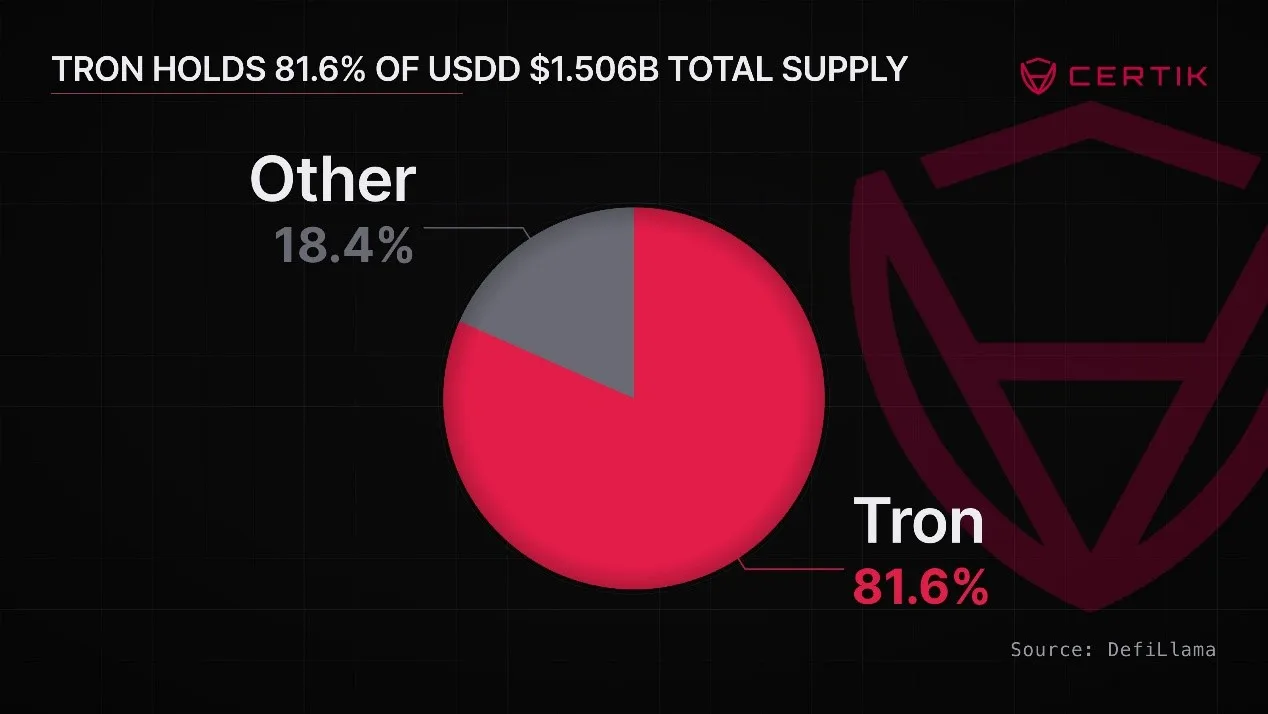
TRON The supply of USDD on TRON increased by $145 million in a single week, with the total supply surpassing $1.23 billion.
Svmuu News: According to data from CertiK Skynet, over the past week, the supply of USDD on the TRONTRON network has surged by approximately $145 million, bringing the total supply to over $1.23 billi
-
Lien Finance Suffers Approximately $542,000 in Losses from an Attack; Attackers Exploited a Vulnerability to Steal USDC
Svmuu News: According to monitoring by SlowMist, the decentralized finance protocol Lien Finance was attacked. The attacker exploited a smart contract vulnerability to mint uncollateralized BondTokens
-
Aster has launched the Vault Beta feature, allowing users to participate in profit- and risk-sharing through custodial policies.
Svmuu News: The decentralized trading platform Aster has announced the launch of Aster Vault Beta, which allows users to participate in trading strategies driven by actively managed strategies without
-
Single-Token Staking vs. Dual-Token Liquidity Mining: Key Differences and Risk Analysis
In the field of decentralized finance (DeFi), single-token staking and dual-token liquidity mining are two common yield strategies, but they differ significantly in terms of their operational mechanisms, risks, and potential returns. Single-token staking typically involves locking up a single cryptocurrency to support the blockchain network’s consensus and earn network rewards; while the risks are relatively low, the returns may also be more conservative. Two-token liquidity mining, on the other hand, requires providing two tokens of equal value to a decentralized exchange (DEX) liquidity pool to earn trading fees and additional token rewards. It offers higher potential returns but comes with the unique risk of “impermanent loss.”
-
EverValue Coin (EVA) Buying and Trading Guide: Listed Exchanges and Step-by-Step Process
EverValue Coin (EVA) is a deflationary cryptocurrency running on the Arbitrum One network, designed to achieve value pegging to and growth relative to BTC through its unique “Burn Vault” mechanism. This article will provide a detailed guide on how to buy and trade EVA, including options on decentralized exchanges (DEXs) and centralized exchanges (CEXs), and list the major platforms currently supporting EVA trading to help readers worldwide understand how to safely buy and sell EVA.
-
Bitcoin Analysis of Trading Platforms and Core Applications: Trading and Value of Digital Gold
Bitcoin As the world’s first decentralized digital currency, its trading and use cases have become increasingly diverse since its inception in 2009.This article will delve into how to choose the right platform for trading Bitcoin globally and will elaborate in detail on the various core uses of Bitcoin as a means of payment, a store of value, and in decentralized finance (DeFi) innovations. Understanding the trading ecosystem and practical value of Bitcoin will help readers better grasp this digital asset.
-
An In-Depth Analysis of MakerDAO (MKR)’s Transformation and Future Prospects
MakerDAO, a well-known decentralized autonomous organization on the Ethereum, is undergoing a major transformation known as “Project Endgame.”The initiative aims to enhance the protocol’s efficiency, resilience, and scalability through a rebranding to “Sky,” the introduction of the new USDS and SKY tokens, the establishment of sub-DAOs, and ultimately a migration to the custom blockchain NewChain.However, controversies surrounding the centralization of USDS, questions about the transparency of governance processes, and the ongoing legal investigation triggered by the recent WBTC liquidation proposal have also raised challenges and sparked debate regarding MakerDAO’s future development. This article will delve into MakerDAO’s latest developments, its token economics, and the key issues it faces.
-
Hyperliquid's weekly RWA trading volume surpasses that of crypto trading, with HIP-3 RWA trading volume reaching $26 billion
Svmuu News: Lorenzo Valente, Head of Research at ARK Invest, posted on X that DeFi is entering a new era, with Hyperliquid seeing RWA trading volume surpass crypto trading for the first time in a sing
-
PHNX Coin Analysis: Multiple Projects with the Same Name—What Are Their Respective Prospects?
“PHNX” is not a single cryptocurrency, but rather a term that encompasses at least five distinct projects, ranging from meme coins and DeFi protocols to AI and DePIN infrastructure, as well as deflationary tokens. This article will delve into the unique aspects, technical features, current progress, and future growth potential of each PHNX project, helping readers distinguish between these tokens with the same name and understand their respective roles and objectives within the crypto ecosystem.
-
What Is GMX? An In-Depth Analysis of the Investment Value and Risks of the GMX Token
GMX is a decentralized exchange (DEX) cryptocurrency focused on perpetual contracts and spot trading, designed to provide a trading experience with low fees, low slippage, and self-custody. It operates on EVM-compatible networks such as Arbitrum and Avalanche and employs a unique GLP liquidity pool model. GMX token holders can earn real returns from the protocol and participate in governance. This article will delve into GMX’s core features, recent developments, token economics, and its potential investment value and risks.


















-
Sky's TVL drops 15% in a week, USDS circulating supply falls to $5.59 billion
According to The Defiant, the Total Value Locked (TVL) on the Sky platform dropped by 15% within a week, while the circulating supply of USDS fell to $5.59 billion over the same period.
-
Loopscale reopens all vaults following exploit-related freeze
Loopscale has reopened all vaults, including the USDC Genesis Vault, following freezes related to the exploit, and has lifted the remaining loan management restrictions. Loopscale stated that a techni
-
STRK Plunges 57% in Four Weeks as Starknet Rally Fades and DeFi TVL Drops to $35.8M
STRK Plunges 57% in Four Weeks as Starknet Rally Fades and DeFi TVL Drops to $35.8M
-
Dinari has promised to offer dShares on the day of Anthropic's IPO, with participation also open to US investors.
Dinari has promised to offer dShares on the day of Anthropic's IPO, allowing U.S. investors to participate as well. This pledge mirrors Ondo's rollout plan for non-U.S. regions, though Dinari's U.S. t
-
Greece Passes Crypto Tax Bill: Sets €500 Tax Exemption, 15% Tax on Staking and DeFi Yields, 10% Capital Gains Tax
Greece Passes Crypto Tax Bill: Sets €500 Tax Exemption, 15% Tax on Staking and DeFi Yields, 10% Capital Gains Tax
-
Greek Parliament Approves Cryptocurrency Tax Framework, Imposing 10% Capital Gains Tax on Bitcoin Gains
The Greek parliament has approved a cryptocurrency tax framework, imposing a 10% capital gains tax on Bitcoin gains. Individual gains under €500 per year are tax-exempt, while staking and DeFi yields
-
Safe: 12.4 billion dollars of smart-account assets sits in DeFi
Safe: 12.4 billion dollars of smart-account assets sits in DeFi
-
Greece has approved a 10% tax rate on cryptocurrency gains and a 15% tax rate on DeFi income.
Greece has approved a 10% tax rate on cryptocurrency gains and a 15% tax rate on DeFi income. Investors will have a 12-month window to declare past crypto gains with a waiver on late-filing penalties,
-
Loopscale Partly Restores Loan Functions, Keeps Vault Withdrawals Frozen
Loopscale Partly Restores Loan Functions, Keeps Vault Withdrawals Frozen
-
Gauntlet restricts V1 Vault deposits after op-reth vulnerability exposure
Gauntlet has restricted deposits into its V1 Vaults following the disclosure of the op-reth vulnerability. The risk management firm has also suspended capital allocation and reduced its exposure to La
-
Aave plans to vote on introducing Babylon native Bitcoin collateral for V4
Aave is planning to vote on introducing Babylon native Bitcoin collateral for V4. LlamaRisk has proposed setting a collateral cap of 300 Bitcoins, though activating the market will still require a sep
-
Lido Adds Firelight Loss Protection to Earn Vaults
Lido Adds Firelight Loss Protection to Earn Vaults
-
Payward, Kraken's parent company, and its clients purchase AAVE tokens to advance DeFi investments
According to CoinDesk, Kraken parent company Payward and its clients have purchased AAVE tokens, advancing their DeFi investments. CoinDesk previously broke the news on these negotiations in June, whe
-
Vitalik: Crypto industry should prioritize survival and strengthen security defenses over the next two years
According to Wu Blockchain citing an interview with Moneycontrol, Ethereum co-founder Vitalik Buterin stated that following recent major exchange hacks, the crypto industry should prioritize survival
-
Lookonchain monitoring: An address opened a long position of 450,000 LINK 2 hours ago, valued at approximately $5.18 million.
Lookonchain monitoring: An address opened a long position of 450,000 LINK 2 hours ago, valued at approximately $5.18 million.
-
Bitcoin rebounds from midterm dip to around $75,600 as Democrats win Congress, with DeFi leading gains and Trump-linked coins falling
Bitcoin rebounds from midterm dip to around $75,600 as Democrats win Congress, with DeFi leading gains and Trump-linked coins falling
-
Aave borrowers face up to 36% APR during frozen reserves, unable to replenish collateral.
Aave froze some reserves during the Binance hot wallet incident on October 29, 2026, leading to borrowers facing annual interest rates as high as 36% and being unable to deposit additional collateral
-
Research: Non-aggregator routes on Solana transactions exhibit wider round-trip spreads in most sampled pools.
A preprint study published in September 2026 revealed that across six major proprietary liquidity venues on Solana, five showed significantly wider round-trip spreads for trades routed directly (non-a
-
Kinetic's XRP-linked lending market snapshot on November 1st showed a pre-reward base APR of 0.04%.
Kinetic's XRP-backed lending market (FXRP) on Flare showed approximately $24 million in supply and $2 million in borrowing as of the November 1 snapshot. The market's pre-reward base annualized intere
-
Injective Introduces Priority Transaction Rail for Institutions
Injective has introduced a priority transaction rail for institutions. The service is currently in limited production, offering early execution feedback while still relying on the full validator netwo
-
XRP Ledger's 'Cleanup Upgrade' Set for Mainnet Activation This Week
The XRP Ledger (XRPL) is poised for a significant week as its long-awaited 'cleanup upgrade' (fixCleanup3_4_0 amendment) is scheduled for mainnet activation, potentially as early as November 4. This u
-
The Defiant explains Jupiter Lend mechanism: Lenders hold deposit receipts, borrowers have collateralized debt positions.
The Defiant published an article explaining the operational mechanism of Jupiter Lend, stating that lenders earning interest hold deposit receipts, while borrowing and leverage users hold collateral-b
-
THORChain co-founder opposes freezing funds, argues against halting protocol to comply with FBI demands
THORChain co-founder opposes freezing funds, argues against halting protocol to comply with FBI demands
-
Threshold Network pauses tBTC minting and redemption; Aave restricts new deposits and borrowing for $136 million tBTC market.
Decentralized lending protocol Aave has restricted new deposits and borrowing against its $136 million tokenized Bitcoin (tBTC) market after Threshold Network paused tBTC minting and redemption on Oct
-
HOLDEX: Current State of Value and Risks – Key Facts to Verify for Long-Term Monitoring
HOLDEX is a BEP20 token on the BNB Chain launched in 2021, positioned to connect independent blockchains and support DeFi applications. As of November 2026, public market data indicates that its circulating supply and trading volume are virtually missing, and its price has remained extremely low for a long time, making it difficult to establish an effective market capitalization reference. Long-term monitoring requires verifying project maintenance, on-chain activity, and real-world use cases, rather than judging value based on concepts alone.
-
What is VNLA Token? An Analysis of the Vanilla Network Ecosystem and Tokenomics
Vanilla Network (VNLA) is a deflationary token within a decentralized finance ecosystem that focuses on staking and gaming decentralized applications (dApps). It was founded in August 2020 by a professional team. This article outlines the basic positioning, tokenomics, and supply of the VNLA token.
-
What is MOBOX (MBOX)? Analysis of MBOX Token Trading and Ecosystem Mechanisms
MOBOX is a GameFi platform that combines decentralized finance (DeFi) with non-fungible tokens (NFTs), operating on blockchain networks such as the BNB Smart Chain. This article outlines the ecological positioning, core functions, and primary trading channels of the MBOX token, providing readers with a comprehensive project overview and objective reference.
-
What is DOGEWHALE? An Analysis of the Dogewhale Project Mechanism and Ecosystem
A comprehensive analysis of the core mechanisms and market status of the DOGEWHALE (Dogewhale) project. The protocol operates on the BNB Smart Chain (BSC) and adopts a deflationary tokenomics model combined with a Doge asset reserve mechanism, aiming to explore operational models that extend the lifecycle of DeFi projects.
-
What is the issue price of CAKE token? Introduction to CAKE token release date and initial offering price
A detailed introduction to the launch date and initial issue price of CAKE, the native token of the PancakeSwap platform. Launched in September 2020 as a leading DEX token on BNB Chain, CAKE had an initial issue price of approximately $0.40 and serves multiple functions within the ecosystem, including liquidity incentives, staking, and governance.
-
Galaxy Finance (GLF) Project Analysis: Positioning, Tokenomics, and Use Cases
Galaxy Finance (GLF) is a Web3 project built on the BNB Smart Chain, designed to provide non-custodial social wallets, DeFi applications, and synthetic asset trading services. This article outlines the token's basic positioning, ecosystem utility, and operating network.
-
What is Uniswap (UNI)? Analysis of UNI Price Trends and Tokenomics
Uniswap is a leading decentralized exchange (DEX) and a pioneer of the Automated Market Maker (AMM) protocol. This article analyzes its core mechanisms, the restructuring of UNI tokenomics, recent price trends, and the market outlook.
-
PLY Token Analysis: Current Status and Risks of the Aurigami Ecosystem Token
PLY is the native token of the Aurigami protocol, a decentralized liquidity protocol built on the Aurora network launched in late 2021. As of November 2026, the PLY token price languishes at extremely low levels, with negligible trading volume and market activity bordering on exhaustion. This article provides an analysis from the perspectives of project background and current market status, while highlighting associated investment risks.
-
How is ZLK? An Analysis of Zenlink’s Project Status and Future Outlook
The ZLK discussed in this article generally refers to the Zenlink-related token. Public information shows that Zenlink is positioned as a cross-chain DEX and composable liquidity protocol within the Polkadot ecosystem. It previously secured an angel round led by HashKey Capital and introduced DAO governance in 2021. Its prospects depend on ecosystem activity, protocol adoption, and competition, while small market capitalization and liquidity risks warrant close attention.
-
What are DeFi Aggregator Projects: A Comprehensive Overview of Trading, Yield, and Asset Management Protocols
Understand DeFi aggregator projects in the decentralized finance sector. This article categorizes and examines representative protocols of trading aggregators, yield aggregators, and comprehensive asset management platforms, while exploring their functions and potential risks in optimizing on-chain liquidity and asset management.
-
What is the Value of WFTM? An Analysis of Wrapped Fantom’s Utility and Market Status
A detailed analysis of the positioning, cross-chain use cases, and recent market performance of WFTM (Wrapped Fantom), exploring its close connection to the underlying Fantom ecosystem and prevailing market sentiment.
-
How to Buy Crypto on On-Chain Exchanges? A Beginner's Complete Guide to Decentralized Trading
A Detailed Guide to Buying Tokens on Decentralized Exchanges (DEXs): Full Workflow and Essential Tools. From setting up a non-custodial wallet and reserving gas fees to verifying contract addresses and executing swaps, this guide helps global users master the core steps of decentralized trading and key risk management practices.
-
What is ClinTex CTi (CTI)? An Analysis of the Clinical Trial Blockchain Platform
Comprehensive analysis of the ClinTex CTi (CTI) project, exploring its positioning in revolutionizing pharmaceutical clinical trials using blockchain, predictive analytics, and machine learning, alongside its multi-chain deployment status and on-chain holder data.
-
What is the YFTE Token? Current Status and Trading Market Analysis of the YFTE Project
YFTE (YFTether) is an ERC-20 token built on the Ethereum blockchain, designed to provide relevant solutions through decentralized finance and staking mechanisms. This article outlines the token's basic positioning, historical price performance, and current liquidity and market status.
-
Why Ethereum Has Value: The Value Logic of ETH Through the Lens of Smart Contracts, Ecosystem, and Staking Mechanisms
Ethereum’s value derives from its function as programmable public infrastructure: smart contracts and the EVM power decentralized applications, DeFi, NFTs, stablecoins, and Layer 2s form an ecosystem network effect, while EIP-1559 and Proof of Stake impact fees, supply, and security economics. Historical data and corporate allocation cases mentioned in the text are for background illustration only and do not constitute investment advice.
-
Analysis of OPXVESLIZ (opxSliz): An Optimism-Ecosystem DeFi Protocol
OPXVESLIZ (opxSliz) is a decentralized finance protocol deployed on the Optimism network, designed to simplify DeFi workflows and provide features such as token trading, staking, and liquidity management. According to data from October 2026, its trading activity is low, with market capitalization and circulating supply information shown on mainstream data platforms as unavailable or near zero. The token's current trading market is nearly exhausted, lacking effective volume, and investors need to carefully verify its specific status.
-
Pear Protocol (PEAR) Project Analysis: On-Chain Pair Trading and Current Market Status
An in-depth analysis of Pear Protocol's (PEAR) project positioning and operational mechanisms, outlining its use cases in the on-chain pairs trading sector, and discussing its liquidity performance and associated risks in conjunction with market data.
-
Why should we pay attention to Ethereum?
As the world's leading programmable smart contract platform, Ethereum has not only established the foundational bedrock for decentralized finance and Layer 2 ecosystems, but its technological iterations and institutional allocation trends also continue to shape the landscape of the entire digital asset market.
-
Crypto Lending Market Hits New Highs: Is the Current Leverage Crisis Serious?
The scale of crypto-backed lending surpassed its historical peak at the end of the third quarter of 2025, with on-chain lending emerging as the absolute dominant force in the market. Having learned lessons from previous cycles, what changes have occurred in current market collateral quality and institutional risk management standards? Based on industry data, this article analyzes the true risk profile of crypto lending.
-
Major Shift in the FIL Ecosystem: End of the Vesting Period and the Path to Deflation
As the six-year linear vesting period concludes in October 2026, Filecoin (FIL) is set to experience a sharp drop in issuance alongside a network upgrade, marking a shift in its ecosystem from expanding storage supply to servicing genuine paid demand. This article examines FIL's decelerating token release, the Solstice upgrade, and its deflationary evolution trends.
-
How to Buy and Sell HAMS Token? An Analysis of HAMS Ecosystem and Trading Channels
A detailed analysis of the ecosystem positioning, utility, and current market trading channels of the HAMS token. Learn how to interact within decentralized platforms and check relevant market trends and project developments on Svmuu.
-
FILDA Historical Price Review: Once Reached a High of $2.4
FILDA is a cross-chain lending DeFi project built on the Huobi ECO Chain (Heco), launched in January 2021. Its native token, FILDA, reached a historical high of approximately $2.39 to $2.40 before dropping to very low levels. The project adopted a fair-launch model with no fundraising and no pre-mining, aiming to provide lending services for ecosystems such as Heco. This article reviews its historical price performance and project overview.
-
FRAX Token Trading Guide: Frax Project Token Reshaping and Mainstream Exchange Support Status
A detailed analysis of the rebranding progress of the Frax project, which is renaming its governance token FXS to FRAX. The report also reviews the token conversion and listing status across major exchanges, as well as the current market channels and ecosystem landscape for trading this crypto asset.
-
An Analysis of the Current Status and Future Development Prospects of Curve (CRV)
Curve (CRV) is the native governance token of Curve, a decentralized exchange protocol on Ethereum focused on stablecoin and pegged-asset swaps. Its pioneering veCRV vote-escrow model has profoundly shaped DeFi governance. Currently, Curve has been deployed across multiple Layer-1 blockchains and launched its native stablecoin, crvUSD, to expand its ecosystem. Despite intense competition in the DEX sector, its position as a foundational DeFi liquidity infrastructure remains solid. This article provides an analysis covering its core mechanisms, current state, challenges, and opportunities.










DeFi

24H Trending
-
1
What is the LDN Token and How to Acquire and Trade It

-
2
A Review of Major Global Blockchain Trading Platforms and Apps
-
3
ANKR Token Analysis: Current State and Future Outlook of Web3 Infrastructure

-
4
What is the DIVX token? Total supply, official website, and project overview

-
5
Real-World Use Cases and Impact of Blockchain Brawlers (BRWL)
-
6
GRAM (Gram, prev. Toncoin) price pulls back to $1.057, hitting a nearly 365-day low
-
7
How is BFHT doing? What is the future outlook for BFHT?

-
8
What Cryptocurrency Is ADR? A Deep Dive into the Solana Meme Project American Dollar Reserve
-
9
2026 US Stock Market Safe-Haven Assets Encyclopedia: How Walmart and Caterpillar Lead the Industrial Sector Amid AI Bubble Doubts

-
10
Current Status of BUSD (Binance USD): Issuance Halted, Orderly Wind-Down Underway
Markets Today





Recommended Reading

Hot Topics

Svmuu focuses on blockchain industry trends and cutting-edge cryptocurrency news, while also covering real-time market data and in-depth analysis of the Hong Kong, U.S., and foreign exchange markets. Here, you can not only access professional 24/7 news updates and accurate market data, but also utilize practical investment tools to help you capitalize on opportunities in both digital assets and traditional financial markets. Whether you are a blockchain enthusiast or an investor in Hong Kong, U.S., or foreign exchange markets, we provide efficient and timely information services to empower your investment decisions.
- User Agreement
- Privacy Policy
- Contact Us
- Business Partnerships
- Disclaimer
- Content Statement
- About Us
- Sitemap
 Coming Soon!
