

Faster global financial news!
DeFi
-
An Analysis of ORN’s Value: Is Orion Protocol (ORN) Worth a Long-Term Investment?
ORN is the native token of the Orion Protocol, which aims to aggregate liquidity from both centralized and decentralized exchanges to provide users with the best trading prices and a seamless experience. The ORN token plays multiple roles within the ecosystem, including paying transaction fees, staking, participating in governance, and unlocking advanced features. This article will delve into ORN’s value proposition, token economics, market performance, and potential risks to help readers gain a comprehensive understanding of its long-term investment potential; however, please note that this article does not constitute investment advice.
-
What’s the Deal with CWV? An Analysis of CWV Chain’s Future Prospects
CWV Chain (CWV) is a public blockchain project designed to address issues such as blockchain adoption and cross-chain interoperability, utilizing a hybrid consensus mechanism and multi-chain technology. As of July 2026, CWV had a market capitalization of approximately $4.28 million, ranked near the bottom of the list, with extremely low trading volume and insufficient market activity. Its future growth potential depends on the successful implementation of its technology and market acceptance, but it faces intense competition and liquidity risks.
-
What is CHE? Is CHE a good investment?
As a cryptocurrency ticker, “CHE” may refer to multiple projects, including Crypto Harbor Exchange, CherrySwap, CheCoin, CHEQD Network, and Cache. Each of these projects has a distinct focus and token use case, such as community ecosystems, DeFi automated market making, reflective rewards, or decentralized identity management. Before considering the investment value of “CHE,” investors must identify the specific project and conduct in-depth research to evaluate its fundamentals, token economics, ecosystem, market performance, and potential risks. Cryptocurrency investments are highly volatile and carry significant risks; this article does not constitute investment advice.
-
The number of hacking incidents has reached a record high, with crypto projects losing approximately $972 million in the first half of 2026
Svmuu News: According to an Immunefi report, crypto projects suffered cumulative losses of approximately $972 million in the first half of 2026 due to 207 hacking incidents. While the number of attack
-
ITFX Token Analysis: Ins3 Finance (ITFX) Project Overview and Market Performance
The term “ITFX” may refer to several different entities, but in the cryptocurrency space, it is primarily associated with ITFX, the token of the decentralized insurance project Ins3 Finance. Ins3 Finance aims to build a decentralized insurance platform where decisions are made jointly by users and oracle nodes by combining DeFi, NFTs, oracles, and cross-chain technology, thereby reducing the role of traditional governance token voting in claims decisions. As of this writing, ITFX’s market data indicates low liquidity; its all-time high was $0.029571 on February 17, 2024, but current trading volume and market capitalization figures are extremely low or unreported.
-
List of Exchanges Where the BYN (NBX/Beyond Finance) Token Is Listed
The BYN token, also known as NBX or Beyond Finance, can be traded on multiple centralized and decentralized cryptocurrency exchanges. As of this writing, Gate.io is one of its most active trading platforms, while AscendEX (BitMax), Sushiswap (Polygon POS), and Uniswap V4 (Ethereum) are also major trading venues.
-
Hyperliquid and Phantom Jointly Recommend That the CFTC Update DeFi Regulatory Rules
Svmuu News: Hyperliquid and the non-custodial wallet Phantom have jointly submitted a comment letter to the U.S. Commodity Futures Trading Commission (CFTC), calling for an update to regulatory rules
-
Gauntlet Raises $125 Million in Funding; SBI Holdings Is the Sole Investor
Svmuu News: Gauntlet has announced the completion of a $125 million funding round, with SBI Holdings as the sole investor. The company primarily provides risk management, asset allocation, and risk as
-
Abraxas Capital provided approximately $39 million in assets to Aave within 24 hours
Svmuu News: According to Onchain Lens, Abraxas Capital has deposited approximately $39 million in assets into Aave over the past 24 hours, including 15,000 ETH worth $26.42 million; 9.912 million USDT
-
Balances on centralized exchanges for BTC and ETH Have Dropped to Multi-Year Lows
Svmuu News: Bitcoin and ether balances on centralized exchanges have fallen to multi-year lows. Analysts say the reliability of this metric as a price signal has declined, as large amounts of crypto a
-
DAI Stablecoin: Features, Uses, and Future Prospects
DAI is a decentralized, collateral-backed stablecoin designed to maintain a 1:1 soft peg to the U.S. dollar. It is issued and managed by the MakerDAO protocol on the Ethereum blockchain, and its stability is maintained through smart contracts and an overcollateralization mechanism.DAI plays a significant role in the decentralized finance (DeFi) space and is widely used in payments, lending, trading, and hedging against market volatility.Although the MakerDAO ecosystem is transitioning toward the Sky protocol and the USDS stablecoin, DAI, as a purely decentralized stablecoin, will continue to hold a unique market position and have promising prospects for development.
-
KOI Coin: An Analysis of the Koi Network and Koi Finance Projects and Their Future Prospects
The term “KOI” may refer to various cryptocurrency projects, the most well-known of which include Koi Network and Koi Finance. Koi Network is a blockchain network token based on the Ethereum, designed to promote interaction and transactions among network participants through economic incentives and a governance model.Koi Finance, on the other hand, is a DeFi platform built on the zkSync Era platform, offering features such as a DEX, yield farming, and bonds. Both projects are committed to providing innovative solutions in the blockchain space, but they differ in their specific positioning, technical features, and development priorities. Investors should clarify which specific project is being referred to when considering KOI.
-
Ethereum: A Dual Role in the Global Computing and Financial Infrastructure
Ethereum Since its launch in 2015, Ethereum—hailed as the “World Computer” for its smart contract capabilities—has provided a platform for the development of decentralized applications (DApps). At the same time, with the rapid growth of the decentralized finance (DeFi) ecosystem, has increasingly become a key component of the global financial infrastructure.This article will delve into the developments and challenges surrounding Ethereum in these two core areas, as well as its future direction.
-
Hyperliquid (HYPE) Breaks Through $72, with Open Interest Reaching $3 Billion: An Analysis of Market Movements
Hyperliquid (HYPE) has recently performed strongly, with its price briefly surpassing $72 and reaching an all-time high of $76.70. As a Layer 1 decentralized perpetual futures exchange, the platform’s open interest has reached $3 billion and even exceeded $4.3 billion at one point, demonstrating the market’s high level of interest and capital inflows. This article will delve into Hyperliquid’s unique mechanisms, token economics, and current market performance, analyzing its rise in the decentralized finance (DeFi) space and the potential challenges it faces.
-
GRVS Coin: An Analysis of the Gravis Finance Project and Its Future Outlook
GRVS is the native token of the Gravis Finance ecosystem. Gravis Finance is a decentralized finance (DeFi) project aimed at providing a range of DeFi products and services.However, market data for GRVS is currently limited; for example, it is not tradable on Coinbase, and market capitalization data is insufficient. Its future prospects depend on the project’s ability to stand out in the highly competitive DeFi market and achieve the goals outlined in its roadmap.
-
Zapper will shut down completely on August 3, with its official website, mobile app, and API services being taken offline.
Svmuu News: Seb Audet, CEO of DeFi portfolio tracker Zapper, announced that after nearly seven years of operation, the company has decided to shut down completely. All features, including the official
-
Can CAKE Gain Popularity Again? Today’s CAKE Price Analysis
CAKE is the native token of the PancakeSwap decentralized exchange and holds a significant position in the DeFi space. Its price once reached an all-time high of $43.96 but has since fallen sharply. Through continuous innovation, token burning mechanisms, and multi-chain expansion strategies, PancakeSwap strives to enhance CAKE’s value and market competitiveness. This article will delve into CAKE’s current market conditions, influencing factors, and future growth potential to help investors better understand this digital asset.
-
What Is the BONDLY Token? A Detailed Guide to the BONDLY Token
BONDLY is the native token of the Bondly Finance platform, which began as a decentralized finance (DeFi) project focused on leveraging blockchain technology to provide innovative financial products and services. Bondly was initially built on the Polkadot blockchain and has since expanded to multiple blockchain networks, including Ethereum and the Binance (BSC).The BONDLY token serves multiple purposes within the ecosystem, including payments, staking, accessing services, and participating in governance. The platform is known for its NFT solutions, secure and transparent transactions, and its vision to connect content creators with their fans.
-
Opinion: South Korea Has Not Yet Truly Entered the Stablecoin Market; It Must First Address Why They Are Worth Using
Svmuu News: Yoon Seung-sik, head of Tiger Research, stated that the South Korean won-pegged stablecoin market has not yet established a firm foothold. This is not due to a lack of potential, but rathe
-
ARDR and POND: An Analysis of Two Cryptocurrencies and Their Ecosystems
This article aims to provide an in-depth exploration of the two cryptocurrencies, ARDR and POND, and the blockchain platforms behind them. ARDR is the native token of the Ardor platform, which employs a unique “parent-child chain” architecture designed to address issues such as blockchain scalability, customization, and data bloat. POND, on the other hand, is the native token of the Marlin Protocol, which is dedicated to improving the efficiency of peer-to-peer network communication and providing high-performance network infrastructure for scalable blockchain solutions. This article will detail their respective features, operating mechanisms, token economics, and trading activity on major exchanges.
-
Levvy, a Cardano-based lending platform, will cease operations at the end of July
Svmuu News: Levvy, a Cardano ecosystem lending platform, has announced that it will cease operations at the end of July. Users must withdraw all their assets and settle their loans before then.
-
Analysis of Symbiosis Coin (SIS) Value and Long-Term Investment Potential
Symbiosis Coin (SIS) is the native token of the Symbiosis Finance protocol, a decentralized multi-chain liquidity protocol designed to address the issue of cross-chain liquidity fragmentation. The SIS token plays a key role in governance and network security within the protocol. This article will delve into the value drivers of SIS, its current market performance, and its potential as a long-term investment.
-
The crypto market fell across the board, with the DeFi sector dropping nearly 9%
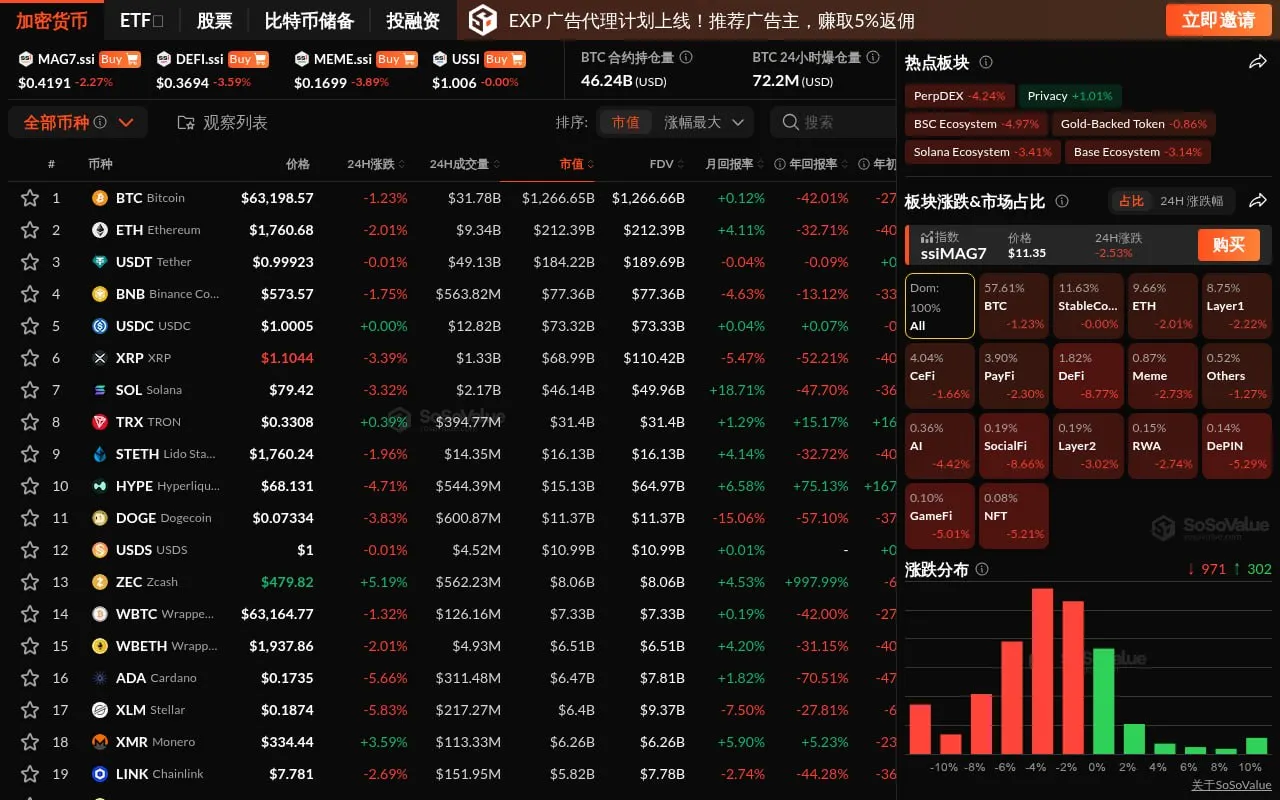
Svmuu News, July 8: According to data from SoSoValue, the crypto market fell across the board, with 24-hour declines generally ranging from 2% to 9%. The DeFi sector led the market lower, falling 8.77
-
What is GHST? Where can I buy and sell GHST?
GHST is the native governance and utility token of the Aavegotchi ecosystem, officially launched in September 2020.It combines decentralized finance (DeFi) with NFT gaming elements; holders can use GHST to participate in the governance of the Aavegotchi DAO and purchase NFT digital assets on the Aavegotchi marketplace.GHST can be traded on multiple centralized and decentralized cryptocurrency exchanges, such as MEXC, Coinbase, Kraken, Binance, Crypto.com, Gate, CoinEx, Uniswap, and Quickswap.










-
Research: Non-aggregator routes on Solana transactions exhibit wider round-trip spreads in most sampled pools.
A preprint study published in September 2026 revealed that across six major proprietary liquidity venues on Solana, five showed significantly wider round-trip spreads for trades routed directly (non-a
-
Kinetic's XRP-linked lending market snapshot on November 1st showed a pre-reward base APR of 0.04%.
Kinetic's XRP-backed lending market (FXRP) on Flare showed approximately $24 million in supply and $2 million in borrowing as of the November 1 snapshot. The market's pre-reward base annualized intere
-
Injective Introduces Priority Transaction Rail for Institutions
Injective has introduced a priority transaction rail for institutions. The service is currently in limited production, offering early execution feedback while still relying on the full validator netwo
-
XRP Ledger's 'Cleanup Upgrade' Set for Mainnet Activation This Week
The XRP Ledger (XRPL) is poised for a significant week as its long-awaited 'cleanup upgrade' (fixCleanup3_4_0 amendment) is scheduled for mainnet activation, potentially as early as November 4. This u
-
The Defiant explains Jupiter Lend mechanism: Lenders hold deposit receipts, borrowers have collateralized debt positions.
The Defiant published an article explaining the operational mechanism of Jupiter Lend, stating that lenders earning interest hold deposit receipts, while borrowing and leverage users hold collateral-b
-
THORChain co-founder opposes freezing funds, argues against halting protocol to comply with FBI demands
THORChain co-founder opposes freezing funds, argues against halting protocol to comply with FBI demands
-
Threshold Network pauses tBTC minting and redemption; Aave restricts new deposits and borrowing for $136 million tBTC market.
Decentralized lending protocol Aave has restricted new deposits and borrowing against its $136 million tokenized Bitcoin (tBTC) market after Threshold Network paused tBTC minting and redemption on Oct
-
The Defiant published an article analyzing DeFi capital flows, stating that buybacks and burns can be counted as holder income.
The Defiant published an article analyzing DeFi capital flows, stating that buybacks and burns can be counted as holder income, even if the funds do not directly enter their wallets. The article uses
-
The Defiant: Uniswap v3 Opening New Price Ranges Will Not Reset Cumulative Return Calculations
The Defiant published an article using an ETH/USDC example to illustrate that when a Uniswap v3 position moves outside its price range, opening a new range does not reset the accumulated returns to ze
-
Zero LTV on Aave Loans Means $10,000 Collateral Loses $1,500 Borrowing Headroom
For an existing Aave loan, a hypothetical $10,000 collateral position would lose $1,500 of borrowing headroom, while its health factor of 1.33 would remain unchanged.
-
THORChain co-founder Chad Barraford responded that THORNode operators do not possess non-public information, as all relevant data is publicly available in real-time and accessible to investigators without a subpoena, describing it as an ideal situation for an investigation.
THORChain co-founder Chad Barraford responded that THORNode operators do not possess non-public information, as all relevant data is publicly available in real-time and accessible to investigators wit
-
Premia Vaults exploited, approximately $437,000 in collateral drained.
According to Blockaid, attackers drained approximately $437,000 in collateral from Premia Vaults by transferring vault collateral to option pools and then withdrawing it as liquidity.
-
Morpho borrow rates briefly hit ~40% amid liquidity crunch
Morpho's borrow rates for one reUSD-backed market briefly surged to roughly 40% as liquidity in that market vanished within two hours, according to The Defiant. However, rates across four tracked mark
-
Tydro Restores $75 Million USDC Borrow Cap After Freeze, But Available Liquidity Caps Immediate New Lending at $18.6 Million
Tydro Restores $75 Million USDC Borrow Cap After Freeze, But Available Liquidity Caps Immediate New Lending at $18.6 Million
-
Origami Protocol stated that DNS has been restored, but deposits and withdrawals for its oOHM vault remain suspended. The vault's funds were not affected.
Origami Protocol stated that DNS has been restored, but deposits and withdrawals for its oOHM vault remain suspended. The vault's funds were not affected.
-
Hackers hijacked over a dozen DeFi websites, all registered with Name.com, stealing approximately $138,000 in crypto assets.
Hackers hijacked over a dozen DeFi websites late Friday, using them to drain visitors' crypto wallets, The Block reported. All 12 hijacked website domains were registered through Name.com, according t
-
Chainalysis Flags DeFi Receipt Token Laundering Path in Binance Hack Investigation
Chainalysis identified a DeFi receipt token money laundering path in the Binance hack investigation. An on-chain case showed USDT being deposited into JustLend, converted to jUSDT, and then redeemed b
-
Aave freezes tBTC reserves due to Threshold pausing minting and redemptions.
Aave's decision to freeze tBTC reserves stems from Threshold's suspension of tBTC minting and redemption. Aave's Ethereum core market holds approximately $136.5 million in tBTC deposits, but repayment
-
IPX launches its patent-pending Atomic Router, securing investor funds in bonding curves and offering Coinbase-funded rewards, enabling projects to automatically enter the liquidity market.
IPX has detailed its patent-pending Atomic Router, a core technology of its protocol designed to protect investor funds by maximizing returns, reducing risk, and enhancing secondary market liquidity.
-
DeFi protocol Tydro has resumed new lending, but kept the USDC lending cap at a lower 51.6 million tokens (down 31.2%), with approximately $1.1 million in available capacity remaining at the time of reporting.
DeFi protocol Tydro has resumed new lending, but kept the USDC lending cap at a lower 51.6 million tokens (down 31.2%), with approximately $1.1 million in available capacity remaining at the time of r
-
Aave reopens markets, but keeps LTV at zero for nine assets
DeFi lending protocol Aave has reopened its markets but maintains zero loan-to-value (LTV) collateral limits for nine assets. These restrictions apply to all platforms listing these assets and set dif
-
Uniswap, a16z, and DEF seek DeFi exemptions from Illinois crypto tax rules
Uniswap, a16z, and DEF are seeking DeFi exemptions from Illinois crypto tax rules, specifically requesting that wallet withdrawals and bridging be excluded from a levy calculated on asset value, and t
-
DeFi protocol Tydro unfreezes markets but still prevents new lending.
DeFi protocol Tydro has unfrozen its markets but continues to block new lending and borrowing activities. Repayment, withdrawal, and liquidation functions remained available during the precautionary f
-
Scroll announced plans for a licensed AI network and an Ethereum token migration scheme, with a transition target set for Q2 2027.
Scroll has detailed its plans for a licensed AI network and an Ethereum token migration scheme. The broader transition is targeted for Q2 2027, at which point users will need to make separate plans fo
-
Dollar On Chain (DOC) Stablecoin: Trading and Platform Listings Explained
Dollar On Chain (DOC) is a Bitcoin-collateralized stablecoin built on the Rootstock network, designed to maintain a 1:1 peg with the US dollar. It is issued through the Money On Chain protocol, utilizing rBTC as collateral, and features censorship resistance and non-liquidation mechanisms. This article will delve into the operational principles and market performance of DOC, and provide its primary trading channels to help readers understand how to buy and sell it.
-
JEUR (Jarvis Synthetic Euro) Analysis and Market Overview
JEUR, or Jarvis Synthetic Euro, is a multi-collateral synthetic token designed to track the price of the Euro, operating on EVM-compatible chains such as Ethereum and Polygon. Despite its design goal of stabilizing the Euro's value, it has recently experienced significant market volatility. Currently, JEUR's 24-hour trading volume is extremely low, indicating insufficient market activity, and investors should be wary of liquidity risks.
-
How Bitcoin Enters DeFi: Wrapped, Layer 2, and Native Protocol Paths
The Bitcoin mainchain does not directly support complex smart contracts. BTCFi integrates BTC into lending, staking, and trading scenarios through mechanisms such as wrapped Bitcoin, sidechains, Layer 2 solutions, cross-chain bridges, and protocols like Taproot, Ordinals, and Babylon. Different approaches involve trade-offs between capital efficiency, trust reliance, and security, and are accompanied by custody, contract, and cross-chain risks.
-
An Analysis of ZCHF (Frankencoin) Issuance and Circulation Status
ZCHF (Frankencoin) is a decentralized Swiss franc stablecoin. Since its launch in April 2023, its issuance and circulation have been entirely managed by smart contracts through an over-collateralization mechanism. As of the end of October 2026, its circulating supply is approximately 35 million tokens, with a market capitalization of about $42 million. This stablecoin has no central issuer, no upper limit on its maximum supply, and primarily circulates on multiple blockchain networks, including Ethereum.
-
SOMM Token: Analysis of Sommelier Protocol's Value, Mechanisms, and Market Performance
SOMM is the native token of Sommelier, a cross-chain DeFi protocol that aims to automate investment strategies through "Cellars" smart contracts, providing non-custodial, efficient DeFi investment services. The SOMM token is used for staking, transaction fees, and governance, with a fixed total supply of 500 million. Although the project has secured multiple rounds of funding, its market performance has been highly volatile, with extremely low current trading volume and a significant price drop from its all-time high. Investors should fully assess the risks.
-
ETHFI Coin (ETHFI) Analysis: Current State and Recent Developments of Liquid Staking Protocols
ETHFI is the governance token for Ether.fi, a decentralized liquid restaking protocol. The protocol allows users to stake Ethereum (ETH) and receive liquid tokens (eETH) while maintaining control over their private keys. Recently, Ether.fi announced a $3 billion long-term ETH staking commitment and has become the third-largest staking service provider. The price of ETHFI tokens has recently been affected by factors such as whale unlocks. Its future development is closely tied to its integration depth within the Ethereum staking ecosystem and protocol governance.
-
What is MATE? An Analysis of the Asset, Project Positioning, and Current Status
MATE typically refers to the DeFi token launched on BNB Chain in 2021. Public market data shows its price ranges from approximately $0.00053 to $0.00058, with a market capitalization of about $1,500. Its 24-hour trading volume is often close to zero, indicating near-depleted liquidity. MATES, a similarly named token, is the ecosystem token for the AI project Moemate, and the two are not the same asset. This article outlines their positioning, data, and risks, and does not constitute investment advice.
-
Deliq Finance (DLQ) Coin Analysis: Project Status and Market Liquidity
Deliq Finance (DLQ) is a protocol built on the Avalanche ecosystem that aims to establish protocol-owned liquidity through a "liquidity-as-staking" model, replacing traditional liquidity mining. Its core mechanisms include providing single-sided liquidity and 100% impermanent loss protection for liquidity providers. However, the DLQ token currently faces extremely low trading activity, with multiple mainstream data platforms showing zero or insufficient 24-hour trading volume. Furthermore, its self-reported circulating supply is zero, making it impossible to calculate its market capitalization. Investors considering DLQ must be fully aware of its current market liquidity risks.
-
What is the value of SPHYNX? Long-term investment prospects require careful evaluation.
This article outlines the positioning and mechanisms of SPHYNX within the Sphynx Labs ecosystem, including multi-chain DeFi, trading, staking, governance, and deflationary design. Public market data shows its market cap is approximately $147,000, with trading volume near zero and liquidity almost depleted. Its long-term value depends on genuine usage, continuous development, and risk disclosure. Currently, it is more suitable for cautious evaluation as an extremely high-risk, small-cap asset.
-
What is PAID? An Analysis of PAID Network and Trading Channels
PAID typically refers to the PAID Network utility token, which public information states is used for smart agreements, community arbitration, staking, and governance. Recently, the UsePaid mechanism has allocated a portion of creator fees to repurchase and burn PAID. Market data shows significant fluctuations in price, market capitalization, and trading volume. It may also involve different chains and contract addresses, so verification of the chain, contract, and platform status is required before trading.
-
DAI Stablecoin Analysis: Uses, Regulatory Risks, and Purchase Channels
DAI is an overcollateralized stablecoin within the MakerDAO/Spark ecosystem, targeting a 1:1 peg with the US dollar, primarily used for payments, lending, and savings. Its value is derived from stable settlement rather than appreciation expectations. After the completion of Endgame in 2026, DAI and USDS will be convertible at a 1:1 ratio. Purchase channels include multiple exchanges and payment platforms, but users need to pay attention to MiCA regulations and contract address verification.
-
Wrapped Cardano (WADA) Token Analysis: Value, Interoperability, and Investment Considerations
Wrapped Cardano (WADA) is a wrapped version of the Cardano (ADA) token, designed to enhance its interoperability on EVM-compatible chains while maintaining a 1:1 value peg with ADA. This article will delve into WADA's technical principles, market performance, current challenges, and potential investment risks, helping readers gain a comprehensive understanding of this token's value proposition.
-
HSF (Hillstone Finance) Current Status and Historical Review
HSF is the native token of the Hillstone Finance project, which launched in 2020 with the aim of connecting traditional finance with digital assets via blockchain and providing asset liquidity solutions. The project is operated by South Korean M&A firm Hillstone Partners. However, recent data indicates that the trading market for HSF tokens has nearly dried up, with multiple mainstream data sources showing extremely low or zero 24-hour trading volumes, and its market capitalization has repeatedly been recorded as zero. Some cryptocurrency media outlets have previously flagged it as a high-risk or stalled project. This article aims to outline the core facts, historical development, and current market status of the project.
-
SHARD: Current Status and Future Prospects — Multi-chain DeFi Ecosystem, Shutdown Signals, and Conflicting Data
SHARD was once described as a multi-chain DeFi ecosystem, encompassing trading, wallet, and protocol components. Public information suggests its project company may have ceased operations. Market data platforms show significant discrepancies in price, market cap, supply, and trading volume, making it difficult to confirm trading activity. Its future hinges on the ability to resume verifiable development and effective liquidity. Currently, information transparency and sustainability risks are high.
-
What Are Altcoins? Exploring Their Types and Market Evolution
Altcoins are a collective term for all cryptocurrencies other than Bitcoin, originally named for replicating Bitcoin's code. However, as the crypto industry has evolved, many altcoins have surpassed Bitcoin's limitations in transaction speed, scalability, and privacy protection through innovative technologies and unique features. There are currently over 17,000 active cryptocurrencies in the market, the vast majority of which are altcoins. This article will delve into the definition and characteristics of altcoins, and detail their main types, including platform tokens, stablecoins, DeFi tokens, and memecoins.
-
BEMD Token: Betterment Digital Project Analysis and Market Overview
BEMD is the native token of the Betterment Digital platform, a decentralized exchange (DEX) built on the Binance Smart Chain. The platform aims to offer BEP-20 token swaps, DeFi tools, and AI-driven crypto robo-advisor services. It also seeks to apply Web3 technology to the sports industry to enhance digital engagement and monetization. Despite the project's ambitious vision, past community growth, and expert evaluations, as of late October 2026, BEMD's market performance is extremely low, with circulating supply, market cap, and 24-hour trading volume all showing as zero or no data, indicating a current lack of active market trading.
-
TRON (TRX) Token Analysis: Project Status and Future Development Prospects
TRON (TRX) is a blockchain platform designed to build a global decentralized content entertainment system, utilizing a delegated Proof-of-Stake (dPoS) consensus mechanism and supporting smart contracts and DApps. The TRX token is used for transaction fees, staking rewards, and DeFi services. As of October 31, 2026, the price of TRX is approximately $0.33, with the market holding cautiously optimistic views on its future development. However, the crypto market is highly volatile, and investments should be made with caution.
-
DIGICHAIN Coin Analysis: Project Vision and Trading Status
DIGICHAIN is a cryptocurrency project launched in 2022 on the BNB Smart Chain, aiming to build a DeFi platform integrating a multi-chain wallet, decentralized exchange, token creation tools, and other functionalities. The project plans to migrate to its proprietary DIGI SMART CHAIN network in the future. However, its token, DIGICHAIN, currently exhibits extremely low trading activity, with contradictory price and liquidity data, and lacks reliable active trading channels.
-
The Role and Impact of TWT Token in Financial Innovation
TWT, or Trust Wallet Token, is the utility token within the Trust Wallet ecosystem. This article examines its role in financial innovation from the perspectives of multi-chain wallet access, DeFi participation, governance voting, fee discounts, and fiat purchases. It also discusses TWT's impact and limitations, referencing its public price and product developments as of October 31, 2026.
-
WTRX: An Analysis of TRON's Ethereum Wrapped Token and Trading Channels
WTRX (Wrapped TRON) is an ERC-20 compatible version of TRON (TRX), designed to bring TRX to the Ethereum network, thereby enabling it to participate in Ethereum's rich decentralized finance (DeFi) ecosystem. Through WTRX, users can enjoy cross-chain interoperability without converting their original tokens, participating in activities such as liquidity provision, token swaps, lending, and yield farming. WTRX maintains a 1:1 peg with TRX. This article will delve into WTRX's core functionalities, market performance, and provide information on platforms currently supporting its trading.
-
vXRP (Venus XRP) Status Analysis: Differences from XRP and Trading Activity Alert
vXRP typically refers to the XRP market token within the Venus Protocol, based on the BNB Smart Chain, and differs from the native XRP token. Public market data shows significant discrepancies in its price, supply, market capitalization, and trading volume, with some data unverified and current trading activity unconfirmable. This article clarifies its positioning, data inconsistencies, and risks, and does not consider any channel as a reliable trading entry point.
-
WNXM Token: Wrapped NXM Token Analysis and Market Status
Wrapped NXM (WNXM) is an ERC-20 token designed to enhance the liquidity and market accessibility of Nexus Mutual's native token, NXM. It is pegged to NXM at a 1:1 ratio, allowing non-Nexus Mutual members to trade it in the broader crypto market. WNXM is governed by the Nexus Mutual DAO community and has undergone a V2 upgrade to optimize user experience. Although its market performance is influenced by various factors and it has been delisted by some major exchanges, its positioning as an extension of the decentralized insurance protocol Nexus Mutual's ecosystem remains clear.
-
What is AAVE? An In-depth Analysis of Its Lending Protocol and Tokenomics
Aave is a leading decentralized finance (DeFi) protocol that allows users to lend and borrow cryptocurrencies without intermediaries. Founded by Stani Kulechov, it evolved from a peer-to-peer model to a liquidity pool model and has expanded to multiple blockchains. The AAVE token is its native governance token, granting holders voting rights on protocol upgrades and parameter adjustments, and can be staked to enhance platform security. Recently, Aave launched the V4 institutional market, partnered with Chainlink for RWA pricing, and plans to release a mobile application and implement Aavenomics 3.0. The protocol continues to innovate, but as a decentralized platform, it also faces security and market risks.
-
Cardano Ecosystem: Core Organizations, Technology, and Key Projects Analysis
Cardano, a decentralized, open-source proof-of-stake (PoS) blockchain platform, is jointly driven by three core organizations: IOHK, the Cardano Foundation, and Emurgo. Its Ouroboros consensus mechanism and Alonzo smart contract upgrade lay the foundation for decentralized applications (dApps). Recently, the Cardano Foundation partnered with Mastercard and Pacific Meta to expand digital payments and applications in the Japanese market. The ecosystem encompasses diverse projects such as decentralized exchanges, NFT platforms, DeFi lending, digital identity, and infrastructure. It also actively engages in academic research collaborations to continuously enrich its functionalities and application scenarios.















DeFi

24H Trending
-
1
How Bitcoin Enters DeFi: Wrapped, Layer 2, and Native Protocol Paths

-
2
KART Token Analysis: Current Status and Trading Channels for Dragon Kart Game Token

-
3
Dogecoin vs. Ethereum: A Comparative Analysis of Positioning, Technology, and Ecosystem Differences

-
4
Current Status of Bitcoin Trading Platforms in Mainland China: Policy Interpretation and Risk Warning
-
5
EQ9 Token: Project Positioning, Technical Status, and Market Activity Analysis

-
6
SCIX Token Analysis: The Synthetic Asset Platform Token Based on Binance Smart Chain and Its Market Status

-
7
Pi Network Withdrawal Status and Common Scams Analysis

-
8
A Rundown of Mainstream C2C Trading Platforms and Crypto Information Platforms

-
9
Cryptocurrency Exchanges: Definition, Types, and Overview of Major Global Platforms

-
10
Analysis of Cardano (ADA)'s Globalization Process and Legal Compliance

Markets Today


Recommended Reading

Hot Topics

Svmuu focuses on blockchain industry trends and cutting-edge cryptocurrency news, while also covering real-time market data and in-depth analysis of the Hong Kong, U.S., and foreign exchange markets. Here, you can not only access professional 24/7 news updates and accurate market data, but also utilize practical investment tools to help you capitalize on opportunities in both digital assets and traditional financial markets. Whether you are a blockchain enthusiast or an investor in Hong Kong, U.S., or foreign exchange markets, we provide efficient and timely information services to empower your investment decisions.
- User Agreement
- Privacy Policy
- Contact Us
- Business Partnerships
- Disclaimer
- Content Statement
- About Us
- Sitemap
 Coming Soon!