

Faster global financial news!
Digital Gold
-
With US PCE inflation remaining high, can Bitcoin continue to serve as an inflation hedge amid risk re-evaluation?
The U.S. Personal Consumption Expenditures (PCE) price index continues to exceed the Federal Reserve's target, with a year-over-year increase of 3.8% in April 2026 and 3.7% in June. Against this backdrop, the narrative of Bitcoin as "digital gold" and an inflation hedge is being re-evaluated by the market. Since 2026, Bitcoin has exhibited characteristics of a risk asset highly correlated with tech stocks, rather than a traditional safe-haven asset, with its price falling from approximately $93,000 at the beginning of the year to about $64,900. Although some institutions still favor its long-term value, factors such as tightening liquidity, geopolitical events, and ETF redemptions are severely testing Bitcoin's inflation-hedging capabilities in the short term.
-
TMTG Coin Analysis: Distinguishing Between Similarly Named Projects, Focusing on the Strategic Shift of Donald Trump's Media Technology Group
The term "TMTG coin" refers to two different projects: one is The Midas Touch Gold, an Ethereum-based gold exchange token that is no longer actively traded; the other is a token that Donald Trump's media technology group (Trump Media Technology Group, TMTG) had planned to issue. The latter had actively laid out plans for cryptocurrency in 2025 but announced in August 2026 its withdrawal from cryptocurrency trading and investment, shifting its focus to media operations and nuclear fusion energy projects. Its cryptocurrency asset investments also suffered significant losses.
-
Analysis: S&P 500 Shiller CAPE ratio near dot-com bubble highs, posing both risks and opportunities for Bitcoin
The cyclically adjusted price-to-earnings (CAPE) ratio for the S&P 500 is currently between 40 and 42, nearing its all-time high of approximately 44 seen during the late 1990s dot-com bubble. Historic
-
Why is Bitcoin Called "Digital Gold"? Exploring Its Value Narrative and Market Controversies
Bitcoin is often hailed as "digital gold," primarily due to its similarities with traditional gold in terms of scarcity, decentralization, and inflation-hedging potential. The total supply of Bitcoin is capped at 21 million coins, and its scarcity is ensured through the halving mechanism, making it a unique store of value. However, its dramatic price volatility, relatively short history, and evolving regulatory landscape have also sparked ongoing debate about its status as a safe-haven asset. This article will delve into the key arguments supporting and challenging the "digital gold" narrative, analyzing them in conjunction with the latest market dynamics.
-
Bitcoin Will its rise supplant gold's status as a safe-haven asset?
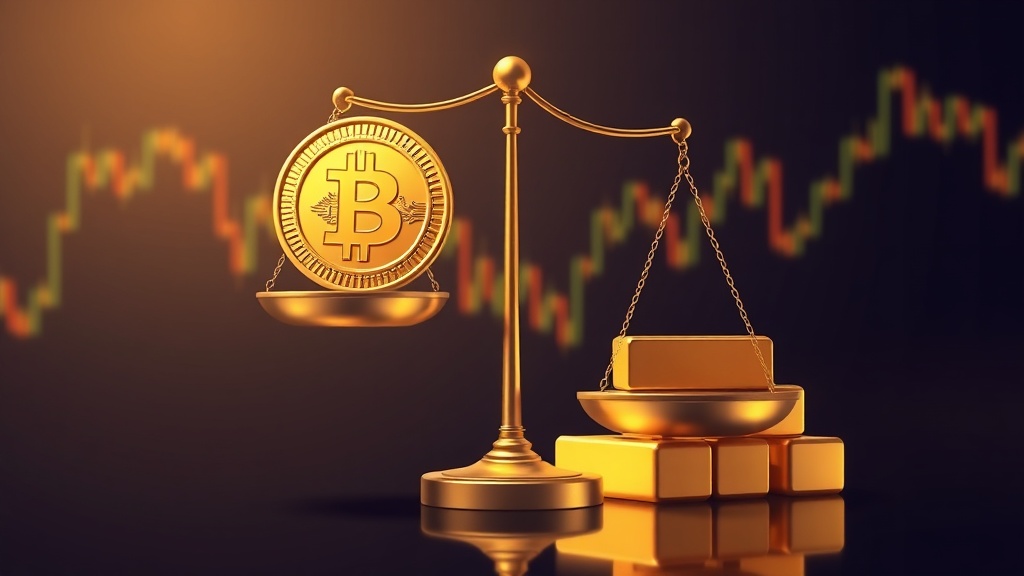
As Bitcoin has been hailed as “digital gold” and gained widespread adoption among institutional investors, competition between it and traditional safe-haven asset gold has intensified. This article will explore the advantages of Bitcoin in terms of scarcity, inflation hedging, and cross-border liquidity, as well as gold’s unique status and stability as a millennia-old safe-haven asset.We will analyze the similarities and differences between the two in terms of market capitalization, price volatility, macroeconomic drivers, and integration with traditional finance, and summarize the diverse market perspectives on the future trajectories of these two assets.
-
Bitcoin Analysis of Trading Platforms and Core Applications: Trading and Value of Digital Gold
Bitcoin As the world’s first decentralized digital currency, its trading and use cases have become increasingly diverse since its inception in 2009.This article will delve into how to choose the right platform for trading Bitcoin globally and will elaborate in detail on the various core uses of Bitcoin as a means of payment, a store of value, and in decentralized finance (DeFi) innovations. Understanding the trading ecosystem and practical value of Bitcoin will help readers better grasp this digital asset.
-
Is PAXG a Major Cryptocurrency? An In-Depth Look at Pax Gold and Its Founder
PAXG (Pax Gold) is an ERC-20 token issued by Paxos Trust Company, with each token representing one troy ounce of physical gold, designed to bridge the gap between cryptocurrency and commodities.As a gold-backed stablecoin, it holds a significant market share and enjoys widespread recognition in the crypto market, often being viewed as “digital gold” and a hedging tool; however, its asset-backed nature distinguishes it from decentralized mainstream cryptocurrencies such as Bitcoin and Ethereum.Paxos Trust Company was co-founded by Charles Cascarilla and Rich Teo in 2012, and PAXG was launched in September 2019.
-
What Is Bitcoin (BTC): Core Mechanisms, Market Position, and Trading Guide
Bitcoin (BTC), the first decentralized digital currency, was launched by Satoshi Nakamoto in 2009. It operates on blockchain technology, has a total supply capped at 21 million coins, and is widely regarded as “digital gold.”As of July 2026, the Bitcoin market has been consolidating following its 2025 peak, with prices currently fluctuating between $60,000 and $70,000. Its institutional adoption continues to deepen; the U.S. spot Bitcoin ETF has been approved, and global corporate and institutional holdings have grown significantly.Investors can trade Bitcoin on major cryptocurrency exchanges but should be mindful of its high volatility and regulatory developments.
-
Bitcoin: A Million-Dollar Forecast—Scarcity, Institutional Adoption, and Market Outlook
Bitcoin Whether Bitcoin will reach the projected price of $1 million remains a hotly debated topic in the cryptocurrency space. This bold prediction is primarily based on its scarce supply cap of 21 million coins, its quadrennial halving mechanism, and the accelerated inflow of institutional capital following the approval of the U.S. spot ETF Bitcoin.Prominent analysts and institutions such as Cathie Wood and Bernstein have proposed similar long-term price targets. However, Bitcoin’s high volatility, potential technical risks, and regulatory uncertainty also introduce variables into this optimistic outlook. This article will provide an in-depth analysis of the factors supporting and challenging this prediction.
-
What Is Bitcoin (BTC) Like? An Analysis of Its Future Prospects
Bitcoin (BTC), as the world’s first decentralized cryptocurrency, has established its status as “digital gold” thanks to its scarce supply of 21 million coins and blockchain technology. As of July 21, 2026, the price of Bitcoin fluctuated between $64,000 and $65,000, with a market capitalization exceeding $1.2 trillion.The market has recently been influenced by whale accumulation, ETF capital flows, and macroeconomic factors. BlackRock and other institutions are optimistic about future growth, while regulatory developments—such as the progress of the U.S. CLARITY Act—also signal its increasingly solidified position within the mainstream financial system. Its future outlook will continue to be shaped by a combination of technological advancements, institutional adoption, and the global regulatory landscape.
-
Bitcoin Why Did Early Investors “Jump Ship” Too Soon? A Reexamination of Limited Vision and Long-Term Value
Bitcoin Since its inception in 2009, its price has risen significantly, and it has gradually evolved from a geek experiment into widely recognized “digital gold.” However, many early investors—due to a lack of in-depth technical understanding, influence from short-term market sentiment, or real-world liquidity needs—failed to hold onto their investments for the long term and sold prematurely.With the approval of the Bitcoin spot ETF and the influx of institutional capital, its vision as a global digital capital asset and financial infrastructure has become increasingly clear, underscoring the importance of a long-term perspective.
-
Investing in Bitcoin: An In-Depth Analysis of Opportunities, Risks, and Market Overview
Bitcoin As a decentralized digital asset, it has attracted numerous investors due to its scarcity, its status as “digital gold,” and its historical potential for high returns. However, challenges such as its extremely high price volatility, ever-changing global regulatory policies, potential security risks, and declining capital efficiency also pose significant investment risks.This article will provide a comprehensive analysis of the advantages and risks of investing in Bitcoin and offer a market overview as of July 15, 2026.
-
What Is BCCN? An Analysis of the Current State of BCCN Trading Platforms
BCCN primarily refers to BancCoin, a utility token backed by digital gold that aims to provide value stability and lower traditional trading barriers by linking to actual gold production and reserves. However, based on current public data, BCCN has not yet been listed for trading on any mainstream or widely recognized cryptocurrency exchanges. Before considering any cryptocurrency, investors should verify the latest project information and market trends on platforms such as Svmuu and fully understand the associated risks.
-
The Evolution and Outlook of Bitcoin’s “Digital Gold” Attributes in a Bull Market
Bitcoin The narrative of Bitcoin as “digital gold” has a long history; its scarcity, decentralization, and anti-inflationary potential often lead to comparisons with traditional gold.During bull markets, these characteristics of Bitcoin are particularly noteworthy. This article will delve into the evolution of Bitcoin’s “digital gold” attributes, analyze its performance during bull markets, and explore whether it can secure a more solid foothold in the financial system in the future.
-
Bitcoin: A Discussion on Its Dual Role as a Safe-Haven Asset and Reserve Asset
Bitcoin As an emerging digital asset, its role in financial markets has long been a subject of debate.Is it, in fact, a safe-haven asset like gold, or a reserve asset being considered by central banks and institutions around the world? This article will delve into the characteristics, advantages, and challenges of Bitcoin in both of these roles, and analyze its performance under different macroeconomic conditions to help readers gain a more comprehensive understanding of the multifaceted value of Bitcoin.
-
Bitcoin A Comparative Analysis with Gold: Long-Term Investment Value
Bitcoin Often referred to as “digital gold,” it is frequently compared to traditional safe-haven assets like gold in terms of long-term investment value. While both possess scarcity, their characteristics—including supply mechanisms, historical context, volatility, accessibility, and storage methods—are fundamentally different.This article will delve into the distinct characteristics of Bitcoin and gold to help readers understand their differing attributes and potential considerations as long-term investment options.
-
Bitcoin How to Become a Store of Value: Core Characteristics and Evolution
Bitcoin Thanks to its unique design and economic model, it has gradually established itself as a store of value—often referred to as “digital gold”—within the global financial landscape. This article will delve into the core characteristics of Bitcoin—including its scarcity, decentralization, and security—as well as factors such as the macroeconomic environment and adoption by institutional investors, which have collectively shaped its journey as a reliable store of value in the digital age.
-
What is Xaurum (XAUR)? A Detailed Overview of This Gold-Backed Cryptocurrency
Xaurum (XAUR) is a cryptocurrency project designed to combine the stability of physical gold with the transparency and transferability of blockchain technology. By issuing XAUR, a digital token backed by real gold reserves, it aims to provide a decentralized "digital gold" standard. This article will delve into its core mechanisms, dual-token system, and primary use cases.













-
Digital gold market size triples to $55 billion in one year, WGC expects it to reach $170 billion by 2031.
The digital gold market has expanded to approximately $55 billion, a 2.5 to 3-fold increase since early 2025, representing about 8% of global gold ETF holdings, the World Gold Council (WGC) stated on
-
Ark Invest's Lorenzo Valente Reaffirms Bitcoin's 5-Year Outlook
Ark Invest's Lorenzo Valente, Director of Research for Digital Assets, stated that the firm maintains its 5-year Bitcoin thesis despite a flat year. Valente discussed the firm's Big Ideas report, Bitc
-
Analysis: S&P 500 Shiller CAPE ratio near dot-com bubble highs, posing both risks and opportunities for Bitcoin
The cyclically adjusted price-to-earnings (CAPE) ratio for the S&P 500 is currently between 40 and 42, nearing its all-time high of approximately 44 seen during the late 1990s dot-com bubble. Historic
-
Bitcoin: Features and Investment Risks Explained
Bitcoin, the world's first cryptocurrency, was launched by Satoshi Nakamoto in 2009 and is known for its decentralization, a total supply limit of 21 million coins, and security guaranteed by blockchain technology. However, its drastic price volatility, regulatory uncertainties, and lack of central backing also make it a high-risk investment asset. As of October 31, 2026, Bitcoin's price fluctuates around $77,000, with a market capitalization exceeding $1.5 trillion.
-
How to Spot Trade PAXG on Binance? A 2026 Operations Guide
PAX Gold (PAXG) is an ERC-20 token issued by Paxos Trust Company, pegged 1:1 to physical gold. It is strictly regulated by institutions such as the New York State Department of Financial Services and undergoes monthly gold reserve audits. PAXG lowers the barrier to gold investment, supporting fractional purchases and integration into the DeFi ecosystem. This article will detail PAXG's features, its latest developments in 2026 (such as the launch of PAXGy, Arbitrum expansion, and the impact of EU MiCA regulations), and provide step-by-step instructions for spot trading PAXG on the Binance platform, including registration, fund deposits, order type selection, and trade management.
-
Analysis of Gold and Bitcoin Price Divergence
Bitcoin is often referred to as "digital gold," yet its price performance doesn't always align with gold, particularly during periods of geopolitical tension, when the two frequently diverge. Gold, with its physical scarcity and historical standing, is considered a traditional safe-haven asset during economic uncertainty. Bitcoin, despite its algorithmic scarcity, sees its price movements highly correlated with risk assets like tech stocks, behaving more like a speculative asset. This article will analyze the underlying logic behind the price divergence of these two assets from the perspectives of asset attributes, market drivers, and investor behavior.
-
Can Ethereum Overtake Bitcoin? Exploring the Possibility and Challenges of the "Flippening"
Bitcoin and Ethereum, as the two giants of the cryptocurrency market, each possess unique positioning and technological advantages. Bitcoin is regarded as "digital gold" and a store of value, while Ethereum is the "world computer," powering a vast ecosystem of DApps and DeFi. This article will delve into their differences in scarcity, consensus mechanisms, recent upgrades, and institutional adoption, and analyze various market perspectives on whether Ethereum's market capitalization can surpass Bitcoin's (i.e., the "Flippening"), revealing the complexity of this ongoing debate.
-
U.S. April PCE Hits Near Three-Year High, Bitcoin's Inflation Hedge Narrative Faces Reassessment?
The US Personal Consumption Expenditures (PCE) Price Index rose by 3.8% year-over-year in April 2026, reaching a new three-year high, while core PCE also increased by 3.3%, indicating persistent inflationary pressures. Against the backdrop of the Federal Reserve closely monitoring PCE data to formulate monetary policy, the market has initiated a new round of discussions on Bitcoin's effectiveness as an inflation hedge. Although Bitcoin proponents emphasize its fixed supply and decentralized nature, its high volatility and correlation with risk assets cast doubt on its short-term inflation-hedging capabilities.
-
BancCoin (BCCN) Analysis: Project Mechanism and Market Status
BancCoin (BCCN) is a utility token, purportedly backed by real-world gold reserves and built on the Polygon network, aiming to bridge the crypto economy with traditional finance. Its value is linked to gold production through a "Dynamic Intrinsic Value System" (DIVS). However, according to mainstream data platforms, the token currently lacks an active public trading market, is not listed on major exchanges, and its trading status is "untraded." This article outlines its project mechanism and explains its current market status.
-
Bitcoin's Market Cap Fluctuations and Global Asset Rankings: The "Digital Gold" Narrative Faces Multiple Tests
Bitcoin's market capitalization has recently fluctuated in global asset rankings, hovering between the top 5 and top 15, a stark contrast to gold, which consistently holds the top spot. The narrative surrounding Bitcoin as "digital gold" is facing scrutiny from multiple sides, with proponents emphasizing its scarcity and increasingly mature market performance, while skeptics point to its high volatility and differences from traditional safe-haven assets. This article will delve into Bitcoin's current market cap position, its comparison with gold, and the opportunities and challenges facing its "digital gold" positioning.
-
Bitcoin (BTC): Latest Updates and Market Analysis of Digital Gold
Bitcoin (BTC), the first decentralized cryptocurrency, was founded by Satoshi Nakamoto in 2009. With a total supply cap of 21 million coins and a halving mechanism occurring approximately every four years, it is hailed as "digital gold." As of October 5, 2026, Bitcoin's price fluctuated between $84,765 and $86,380, with a market capitalization of approximately $1.7 trillion. Its recent market performance has been strong, rising 40% in the third quarter and approaching an eight-month high, with continued adoption by mainstream institutions and governments further solidifying its market position.
-
Bitcoin Value Deep Dive: Is It Worth Long-Term Investment?
Bitcoin, as the largest cryptocurrency by market capitalization, is considered a potential store of value due to its fixed supply of 21 million coins and its "digital gold" narrative. Despite its significant price volatility, institutional funds have continued to flow into spot ETFs after its fourth halving in 2024, indicating market attention to its long-term potential. This article will explore Bitcoin's core value proposition, recent market performance, and influencing factors, and analyze its considerations as a long-term investment.
-
Can Bitcoin bring economic freedom amid persistent currency devaluation?
As fiat currencies globally continue to grapple with inflation and declining purchasing power, Bitcoin, a decentralized digital asset with a limited supply, is seen by many as a potential tool to combat devaluation and achieve economic freedom. This article will delve into Bitcoin's scarcity, decentralized nature, and its practical applications in combating inflation in certain countries. It will also examine its high volatility, regulatory uncertainty, and limitations in daily payments, while incorporating recent market dynamics and institutional adoption to comprehensively analyze the opportunities and challenges Bitcoin faces on the path to economic freedom.
-
Bitcoin and Ethereum: Why Are the Two Cornerstones of the Crypto World So Important?
Bitcoin, as digital gold, has established the foundation for cryptocurrency value storage with its scarcity and decentralized characteristics. Ethereum, with its smart contracts and robust ecosystem, has become the core platform for decentralized applications, DeFi, and NFT innovation. Although their objectives differ, they jointly form the two major pillars of the crypto market, continuously attracting institutional capital and developers, and driving the evolution and widespread adoption of blockchain technology. This article will delve into their unique value propositions and their critical roles in the crypto economy.
-
Bitcoin vs. Ethereum: Outlook and Key Differences
Bitcoin, as "digital gold" and a store of value, continues to attract institutional capital, benefiting from the 2024 halving and the approval of spot ETFs in the United States. Ethereum, as a smart contract platform, continuously enhances its scalability and efficiency through the PoS transition, the Dencun upgrade, and the upcoming Pectra upgrade, solidifying its core position in the DeFi and Web3 ecosystems. Both play different but complementary roles in the crypto market, jointly benefiting from the clarification of the macroeconomic and regulatory environment.
-
Bitcoin's market capitalization hovers around $1.6 trillion, ranking 13th globally among assets, as the "digital gold" narrative faces multiple scrutinies.
As of September 25, 2026, Bitcoin's market capitalization has fluctuated between $1.6 trillion and $1.7 trillion, ranking 13th among major global assets. This performance contrasts with its historical highs and higher rankings achieved in 2025, prompting a re-evaluation of the "digital gold" narrative. This article will explore Bitcoin's current market cap standing, its comparison with traditional gold, and the complex factors influencing its store-of-value attribute, including macroeconomic conditions, institutional demand, and market structure.
-
What is Bitcoin's Value? Unpacking the Core Reasons for Its Widespread Popularity
As the first decentralized digital currency, Bitcoin, since its inception in 2009, has been hailed as "digital gold" due to its fixed supply of 21 million coins, decentralized nature, and robust cryptographic security. Its value is not only reflected in its role as a borderless payment system and an inflation-hedging tool but also in its widespread global appeal, driven by the entry of institutional investors, the approval of spot ETFs, and the continuous strengthening of its network effect. This article will delve into Bitcoin's core value pillars and its inherent attractiveness.
-
PAX Gold (PAXG) Trading Guide: How to Buy, Sell, and Supported Exchanges Explained
PAX Gold (PAXG) is an ERC-20 token, with each token 1:1 backed by one troy ounce of LBMA-certified physical gold, stored in secure vaults by Paxos Trust Company. Holding PAXG grants ownership rights to the corresponding physical gold, and the gold serial number can be verified at any time via the official website. This article will delve into PAXG's unique advantages, market performance, and provide an overview of its main trading platforms and buying/selling processes, helping global investors understand this digital gold asset.
-
PAXG Coin Buying Guide: Which Mainstream Platforms Support PAX Gold Trading?
PAX Gold (PAXG) is an ERC-20 token backed by physical gold, designed to combine the value of physical gold with the liquidity of digital assets. Each PAXG token represents one troy ounce of a London Good Delivery gold bar and is directly redeemable. Its value is pegged to the real-time market price of gold, offering a convenient way to invest in gold. Investors can buy and trade PAXG on multiple major cryptocurrency exchanges.
-
Bitcoin Price Today: Real-time Quotes and Market Trend Analysis (September 7, 2026)
As of September 7, 2026, Bitcoin (BTC) price is fluctuating around $80,000, with minor gains or losses over the past 24 hours. Over the last 30 days, Bitcoin's price has cumulatively risen by over 20%, demonstrating strong short-term momentum. As the world's largest cryptocurrency by market capitalization, Bitcoin is widely regarded as "digital gold," with its scarcity and increasing institutional adoption (such as the approval of spot ETFs in the US in 2024) continuously supporting its long-term value narrative. However, its price volatility and regulatory scrutiny remain key areas of market focus.
-
What is Bitcoin? A Deep Dive into Its Pros, Cons, and Market Dynamics
Bitcoin (BTC), the first decentralized digital asset, was launched by Satoshi Nakamoto in 2009. It operates on blockchain technology with a total supply capped at 21 million coins. Its advantages include decentralization, high global transaction efficiency, inflation-hedging potential due to scarcity, and transparent security. However, Bitcoin also faces challenges such as extreme price volatility, regulatory uncertainty, high energy consumption for mining, operational complexity, and potential security risks. As of September 1, 2026, Bitcoin's price is approximately $78,708.7, with a market capitalization of $1.58 trillion.
-
Can Bitcoin Replicate Gold's 1970s Performance: A Battle Between Digital Scarcity and Macro Hedging
In the 1970s, gold surged 24-fold amidst the collapse of the Bretton Woods system and high inflation. Today, Bitcoin, as "digital gold," recently broke above $80,000, driven by an influx of institutional capital and rising global government debt. This article will delve into a comparison of the similarities and differences in their driving factors, explore whether Bitcoin has the potential to replicate gold's historic gains, and analyze its unique position and challenges as a macro hedge.
-
Bitcoin: Investment Value and Potential Risks of Digital Gold
Bitcoin, as the first decentralized cryptocurrency, is often hailed as "digital gold" due to its fixed supply of 21 million coins and decentralized nature, attracting attention from institutions and governments worldwide. Its widespread acceptance, high liquidity, and the approval of spot ETFs in the United States have further elevated its status in mainstream financial markets. However, Bitcoin's price is highly volatile, and the regulatory environment remains uncertain. Investors, while considering its long-term appreciation potential, must also fully recognize and manage the associated risks.
-
Why is Bitcoin thriving but struggling to replace the US dollar?
Bitcoin has achieved significant growth and widespread acceptance globally, thanks to its decentralization, scarcity, censorship resistance, and its narrative as "digital gold" for value storage. However, its inherent drastic price volatility, transaction speed limitations, lack of universal fiat currency status, and governments' control over monetary policy make it difficult to become a stable everyday transaction medium and global reserve currency like the US dollar. Bitcoin and the US dollar each play different roles, and it is difficult for them to replace each other in the short term.
-
With US PCE inflation remaining high, can Bitcoin continue to serve as an inflation hedge amid risk re-evaluation?
The U.S. Personal Consumption Expenditures (PCE) price index continues to exceed the Federal Reserve's target, with a year-over-year increase of 3.8% in April 2026 and 3.7% in June. Against this backdrop, the narrative of Bitcoin as "digital gold" and an inflation hedge is being re-evaluated by the market. Since 2026, Bitcoin has exhibited characteristics of a risk asset highly correlated with tech stocks, rather than a traditional safe-haven asset, with its price falling from approximately $93,000 at the beginning of the year to about $64,900. Although some institutions still favor its long-term value, factors such as tightening liquidity, geopolitical events, and ETF redemptions are severely testing Bitcoin's inflation-hedging capabilities in the short term.
-
TMTG Coin Analysis: Distinguishing Between Similarly Named Projects, Focusing on the Strategic Shift of Donald Trump's Media Technology Group
The term "TMTG coin" refers to two different projects: one is The Midas Touch Gold, an Ethereum-based gold exchange token that is no longer actively traded; the other is a token that Donald Trump's media technology group (Trump Media Technology Group, TMTG) had planned to issue. The latter had actively laid out plans for cryptocurrency in 2025 but announced in August 2026 its withdrawal from cryptocurrency trading and investment, shifting its focus to media operations and nuclear fusion energy projects. Its cryptocurrency asset investments also suffered significant losses.
-
Why is Bitcoin Called "Digital Gold"? Exploring Its Value Narrative and Market Controversies
Bitcoin is often hailed as "digital gold," primarily due to its similarities with traditional gold in terms of scarcity, decentralization, and inflation-hedging potential. The total supply of Bitcoin is capped at 21 million coins, and its scarcity is ensured through the halving mechanism, making it a unique store of value. However, its dramatic price volatility, relatively short history, and evolving regulatory landscape have also sparked ongoing debate about its status as a safe-haven asset. This article will delve into the key arguments supporting and challenging the "digital gold" narrative, analyzing them in conjunction with the latest market dynamics.



















Digital Gold

24H Trending
-
1
Bitcoin Price Breaks $77,000: Multiple Factors Drive Current Rally
-
2
Al Jazeera: Israeli attacks on Gaza kill at least 4 Palestinians, UN Human Rights Office warns of ethnic cleansing risk
-
3
US banks are owed $349B by private credit funds, as PIK interest payments rise to 10% of loans
-
4
Musk retweeted that as of October 31, the number of Starlink satellites has reached 11,184, accounting for 66% of the total active satellites globally.
-
5
Bitcoin staking protocol b14g says $97 million CORE drained, pauses contracts
-
6
Nikkei Asia: Overseas entities' JPY bond issuance reaches a record $16 billion as the AI funding race spreads to Japan
-
7
Al Jazeera: Palestinian Man Succumbs to Injuries After Israeli Drone Strike in Gaza
-
8
SpaceXAI, the AI division of SpaceX, failed to dismiss an air pollution lawsuit filed by the NAACP, with the judge ruling that the case will proceed.
-
9
Chainalysis: Ethereum Reorg Causes THORChain Emergency Pause, Accidentally Delays Binance Hacked Funds Laundering
-
10
Binance confirmed that it has transferred 7,499 Bitcoins to the SAFU fund, stating that it has recovered 90% of the stolen assets and pledged to rebuild the emergency fund to approximately $1 billion.
Markets Today





Recommended Reading

Hot Topics

Svmuu focuses on blockchain industry trends and cutting-edge cryptocurrency news, while also covering real-time market data and in-depth analysis of the Hong Kong, U.S., and foreign exchange markets. Here, you can not only access professional 24/7 news updates and accurate market data, but also utilize practical investment tools to help you capitalize on opportunities in both digital assets and traditional financial markets. Whether you are a blockchain enthusiast or an investor in Hong Kong, U.S., or foreign exchange markets, we provide efficient and timely information services to empower your investment decisions.
- User Agreement
- Privacy Policy
- Contact Us
- Business Partnerships
- Disclaimer
- Content Statement
- About Us
- Sitemap
 Coming Soon!
