

Faster global financial news!
DeFi
-
Is MKR a Good Long-Term Hold? Analysis of MKR’s Prospects and Value
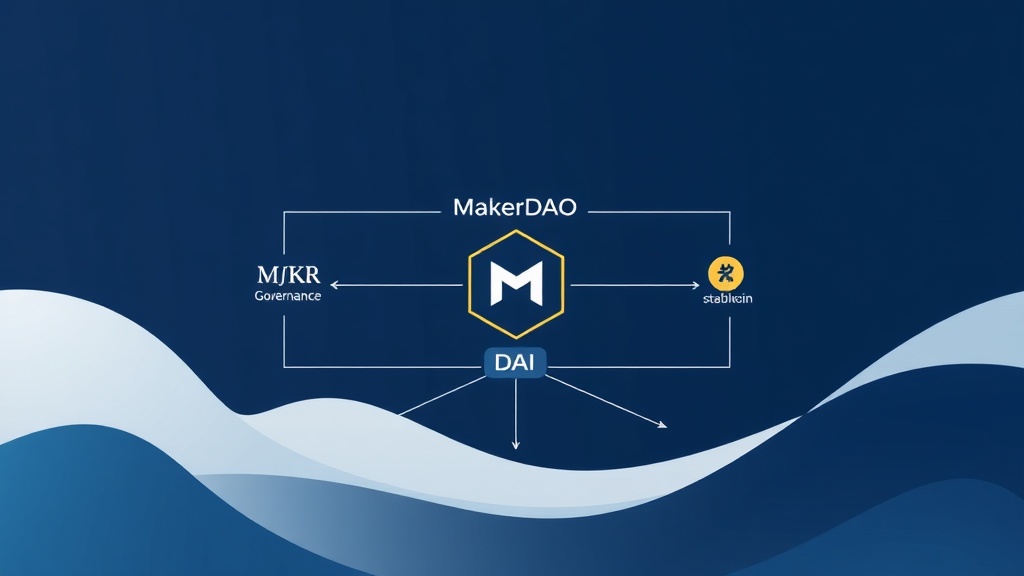
MKR is the governance token of the MakerDAO ecosystem and plays a central role in the decentralized finance (DeFi) sector. It is primarily used to maintain the stability of the DAI stablecoin, govern the protocol, and serve as the system’s final collateral. The value of MKR is closely tied to the success of the MakerDAO protocol and the adoption rate of its DAI stablecoin. In the long term, MKR’s investment outlook is influenced by its unique token economic model, governance mechanisms, and the overall development of the DeFi market. However, MKR also faces risks such as market volatility, regulatory uncertainty, and intensifying competition.
-
Where Can I Buy SXP? A Complete Guide to Trading SXP on Exchanges
SXP, originally known as Swipe, later became the native token of the Solar Network, which aims to bridge the cryptocurrency and traditional payment sectors. This article will provide a detailed guide on how to purchase SXP, including mainstream cryptocurrency exchanges that support SXP trading, and offer a comprehensive tutorial on buying and selling the token. As the native token of the Layer 1 blockchain Solar, SXP is used for purposes such as paying transaction fees, participating in governance, and earning staking rewards.
-
Ethereum 7 Reasons It's No Longer an Altcoin
Since its launch in 2015, Ethereum (ETH) has evolved from a project initially viewed as an “altcoin” into the world’s second-largest cryptocurrency, playing a pivotal role as the “World Computer” in the blockchain space.This article will delve into the seven core reasons why Ethereum can no longer be simply categorized as an altcoin, covering its technological innovations, ecosystem, market position, use cases, consensus mechanism, institutional recognition, and future growth potential, with the aim of comprehensively explaining the unique value and industry influence of Ethereum.
-
YEFI Coin Buying Guide: Listed Exchanges and Project Overview
YEFI is the native token of the YeFi.one project, a platform dedicated to building a fully-featured DeFi platform that encompasses staking, community governance, a decentralized exchange, lending, and NFT creation and trading. Investors looking to purchase YEFI can currently trade it on several centralized and decentralized exchanges. This article will provide a detailed overview of where to purchase YEFI tokens and the core features of the YeFi.one project.
-
WINGS Coin: An Analysis of Its Multiple Roles and Future Prospects
WINGS is a token name with multiple meanings; in the cryptocurrency space, it primarily refers to two distinct projects: Wingbits (WINGS) and Wing Finance (WING). Wingbits is a decentralized flight-tracking network that builds a global flight map by incentivizing users to contribute aviation data. Wing Finance, on the other hand, is a credit-based DeFi lending platform designed to address the issue of over-collateralization in the DeFi space. This article will explore the current status, token economic models, and future development prospects of both projects separately, helping readers understand the diverse ecosystem of the WINGS token.
-
Should I keep holding YFII? What will YFII be worth in the future?
YFII (DFI.Money) is a decentralized finance (DeFi) aggregation platform launched in July 2020 as a fork of Yearn.finance (YFI). It aims to optimize returns for DeFi investors through automated strategies and adheres to the modifications outlined in the YIP-8 proposal. The total supply of YFII tokens is fixed at 40,000, all of which have already been issued; they are primarily obtained by providing liquidity. Their value and future potential are influenced by multiple factors, including market volatility, project development, and the overall health of the DeFi ecosystem.
-
Lazy Summer Protocol, a project under Summer.fi, suffered a loss of approximately $6.1 million in a single transaction due to an attack
Svmuu News: According to Onchain Lens, Summer.fi’s Lazy Summer Protocol was attacked in a single transaction, resulting in a loss of approximately $6.1 million. This attack was not a typical ERC-4626
-
What is FX? Is FX a good investment?
FX can refer to the foreign exchange (Forex) market or the token of the cryptocurrency Function X. In the foreign exchange market, FX is the abbreviation for the global currency trading market, where investors profit from exchange rate fluctuations by buying and selling currency pairs. In the cryptocurrency space, FX is the native token of the Function X ecosystem, a blockchain project aimed at building a decentralized internet ecosystem. This article will provide a detailed explanation of the meanings of these two “FX” terms and explore whether the FX token, as a cryptocurrency, is worth investing in.
-
DeFi Tokens: Core Assets of Decentralized Finance—An Analysis of Investment Value and Risks
DeFi (Decentralized Finance) tokens are at the core of a new generation of financial systems operating on blockchain via smart contracts. They span multiple subsectors—including trading, lending, derivatives, and insurance—providing users with peer-to-peer financial services designed to address the pain points of traditional finance. The value of DeFi tokens is closely tied to factors such as the innovation of the underlying project, market demand, technical security, and community governance. Although the DeFi market is growing rapidly and Total Value Locked (TVL) continues to rise, investing in DeFi tokens also carries inherent risks, including high volatility, smart contract vulnerabilities, and regulatory uncertainty. When considering an allocation to DeFi tokens, investors must fully understand their operational mechanisms, potential returns, and risks, and conduct thorough due diligence.
-
What is SUPS? What are the future prospects for SUPS?
SUPS, the Superp platform token, is a cryptocurrency project focused on on-chain derivatives trading. Superp aims to provide high-leverage perpetual contract trading while combining DeFi mechanisms with gamified interactions to attract Web3 users. The project has received support from Binance Labs and the CoinMarketCap Accelerator. Although SUPS may face market volatility and competition in the short term, its innovative product design and community incentive mechanisms hold promise for its future growth. Investors should be aware that the cryptocurrency market involves risks.
-
Data: Robinhood Earn's TVL has now reached $16 million, with an APY of 7.1%
Svmuu News: Tom Wan, Head of Data at Entropy Advisors and former analyst at 21.co, posted on X that the Robinhood Earn treasury managed by Steakhouse Financial on Morpho has now reached a TVL of $16 m
-
What is TAP? Does Tapioca DAO have investment potential in the future?
TAP is the core token of the Tapioca DAO ecosystem. Tapioca DAO is a cross-chain money market built on LayerZero technology, designed to address the issue of fragmented liquidity in the DeFi space. It offers lending, leverage, and stablecoin (USDO) services across multiple blockchains. The TAP token employs a unique tokenomics model that emphasizes long-term sustainability, limited supply, and the absence of liquidity mining. However, the project suffered a social engineering attack in October 2024, resulting in significant losses. When evaluating its future value, investors should comprehensively consider its innovative technology, tokenomics model, and potential security risks.
-
What Is BlockBank (BBRT)? An Analysis of Its Official Website, Team, and White Paper
BlockBank is a financial platform designed to integrate traditional banking services with cryptocurrency, offering one-stop CeFi (Centralized Finance) and DeFi (Decentralized Finance) solutions through artificial intelligence technology. Its native token is BBANK, not BBRT. The platform is committed to simplifying the user experience by offering services such as custodial wallets, non-custodial wallets, bank accounts, and Visa debit cards. This article will take an in-depth look at BlockBank’s background, team, whitepaper, and key features.
-
New Opportunities and Challenges for IMX in the DeFi Sector
Immutable X (IMX), a Layer 2 scaling solution on the Ethereum, primarily focuses on the NFT and Web3 gaming sectors and aims to address the high gas fees and slow transaction speeds on Ethereum. Although its core strengths lie in NFTs and gaming, IMX also faces both opportunities and challenges as it expands into the DeFi space.This article will delve into IMX’s potential development paths within the DeFi ecosystem, its existing strengths, and the obstacles it may encounter.
-
Analysis of Kava (KAVA) Future Price Forecasts, Investment Value, and How to Buy It
Kava (KAVA) is a decentralized finance (DeFi) platform that allows users to issue loans and mint USDX, a stablecoin pegged to the U.S. dollar, by staking cryptocurrency. This article will take an in-depth look at the potential price trends of Kava (KAVA) from 2023 to 2025, analyze its investment value, and provide a detailed guide on how to buy KAVA to help readers understand this cryptocurrency.
-
Hexens: Aptos Has Fixed a Critical Move VM Vulnerability; Theoretical Exposure Could Reach Up to Approximately $70 Billion
Svmuu News: Blockchain security firm Hexens disclosed that it discovered a critical vulnerability in the Aptos blockchain’s Move Virtual Machine (Move VM) in February of this year. The vulnerability w
-
SHIBAZILLA: A Blend of Meme Coin and Utility—An Analysis of Its Future Prospects
SHIBAZILLA (SHB) is a meme coin built on the BNB Smart Chain (BEP-20) that aims to combine the power of a community-driven brand with practical applications. The project plans to offer automated liquidity and community rewards, and will integrate staking, NFTs, and P2E (play-to-earn) mechanisms in the future. SHIBAZILLA employs a fixed total supply and a deflationary model, with the aim of increasing scarcity and demand over time. Although its market capitalization is currently low and its price is highly volatile, the project team is committed to enhancing its standing in the meme coin space by expanding utility features and implementing cross-chain bridges.
-
BZ Coin Historical Price Performance: Analysis of Highs and Lows
The term “BZ coin” typically refers to BZRX, the governance token of the bZx Protocol. The token’s all-time high price reached $10.40, while its all-time low was as low as $0.000675. This article will provide a detailed overview of the BZRX token’s background, historical price fluctuations, and its role in the decentralized finance (DeFi) ecosystem.
-
Analysis: The high compliance thresholds of the UK FCA’s crypto regulatory framework may pose a key challenge to implementation
Svmuu News: The UK’s Financial Conduct Authority (FCA) officially announced its regulatory framework for crypto assets this week. The framework is widely viewed by the industry as an international app
-
What is SEUR? What are its future prospects?
SEUR (sEUR) is a synthetic stablecoin pegged to the euro, designed to track the value of the euro and operate on the blockchain. Issued through the Synthetix network, it uses an oracle to track the euro’s price, providing a relatively stable store of value and medium of exchange. The advantages of sEUR lie in its stability, global accessibility, liquidity, and diverse use cases within the DeFi ecosystem, such as arbitrage, staking, and lending. In the future, as Europe’s digital economy grows and DeFi becomes more widespread, sEUR holds broad application prospects; however, risk factors such as market acceptance, competition, and macroeconomic conditions still require close attention.
-
The U.S. MCSA no longer opposes the CLARITY Act and has shifted its stance to neutral
Svmuu News: The Major County Sheriffs Association (MCSA) stated in a letter to U.S. Senate Banking Committee Chairman Tim Scott and Senator Elizabeth Warren that it has changed its position on the CLA
-
Guide to Buying and Selling DUCATO Coins and List of Exchanges Where It Is Traded
DUCATO is the native cryptocurrency of the DUCATO protocol, primarily used to ensure the protocol’s stable operation and to cover various transaction fees. The protocol aims to enable the lending, borrowing, and earning of rewards for digital assets through decentralized finance (DeFi) mechanisms. Currently, users can buy and trade DUCATO tokens through centralized exchanges and decentralized finance platforms. This article will provide a detailed overview of how to buy and trade DUCATO tokens and list the exchanges where they are currently available.
-
CatFee Enters the Top 10 on TRONSCAN’s DeFi TVL Rankings
Svmuu News: According to the TRONSCAN DeFi TVL data page, CatFee Staking Vault has been included in the TRON ecosystem’s DeFi TVL rankings and has entered the Top 10, with the project categorized as S
-
Sui: LoquaApp Launches Privacy-First Messaging App; Sui Tunnels Experiment to Open TPS Stress Testing
Svmuu News: Sui posted on X, stating that this week’s priorities include safeguarding data privacy, expanding decentralized capital markets, and welcoming new teams into the network’s development pipe








-
Coinbase CEO Brian Armstrong responded to accusations from The Wall Street Journal, stating that he had opposed early drafts of the CLARITY Act to facilitate improvements.
Coinbase CEO Brian Armstrong tweeted on Saturday, responding to a Wall Street Journal report in the works that accuses him and Coinbase of causing the failure of the CLARITY Act. Armstrong stated that
-
XRPL developers are using mathematical proofs to verify its new lending market against insolvency, with Common Prefix formally testing the protocol since Sept. 17
XRP Ledger (XRPL) developers are using mathematical proofs to verify its new lending market against insolvency, with Common Prefix formally testing the protocol since Sept. 17. The protocol research f
-
Layer-2 and DeFi tokens lead broad crypto advance as post-Fed hike nerves fade, 10-year Treasury yield slips below 5%
Starknet and Arbitrum tokens gained over 17%, while the DeFi Select Index (DFX) surged 16% over the past 24 hours. Bitcoin rose above $78,000, up 1.9% in 24 hours. The market gains follow a more condu
-
Fed rate hike to 3.75%-4.00% pushes 1-year Treasury yield to 4.45%, making crypto lending less attractive
The Federal Reserve's 25 basis point rate hike on September 16, which set the target range at 3.75%-4.00%, has driven the one-year Treasury yield to 4.45%. This move establishes a new benchmark for ri
-
Aave V4 Arc market has attracted $76 million in USDC deposits since its launch, but borrowing stands at less than $100,000, with a utilization rate of only 0.1%.
Aave V4 Arc market went live on September 16, attracting approximately $76 million in USDC deposits by September 17, but with less than $100,000 in borrowing, resulting in a capital utilization rate o
-
The U.S. SEC has introduced a temporary regulatory framework allowing tokenized U.S. stocks to be traded via DeFi infrastructure, a move Saylor called a "significant breakthrough."
The U.S. Securities and Exchange Commission (SEC) has unveiled an interim regulatory framework that permits certain tokenized U.S. equities to trade using decentralized finance (DeFi) infrastructure,
-
Aave Founder Stani Kulechov Pitches 'Uber Path' for DeFi After Clarity Act Fails Senate Vote
Kulechov told The Starting Block that DeFi could follow this path if U.S. crypto legislation stalls.
-
Two Prime launches a Bitcoin yield vault backed by $10 million of its own capital, aiming to provide institutional investors with an annualized yield of 1.5% to 2%.
Digital asset financial services firm Two Prime has launched the Axiom WBTC Yield Vault on Pareto, targeting an annualized yield of 1.5% to 2% by lending to institutional borrowers. The vault accepts
-
Michael Saylor retweeted Phong Le's post, stating that $STRC is becoming the digital platform for traditional finance (TradFi) and decentralized finance (DeFi) to build digital currency and yield products.
Michael Saylor retweeted Phong Le's post, stating that $STRC is becoming the digital platform for traditional finance (TradFi) and decentralized finance (DeFi) to build digital currency and yield prod
-
Symbiosis DeFi Bridge Hacked, 46 Billion Fake BTC Tokens Minted, Initial Loss of 9.97 Bitcoins
DeFi bridge Symbiosis was hacked, with the attackers exploiting two software vulnerabilities to mint 46 billion unsupported fake syBTC tokens using just 25 cents worth of Bitcoin, a quantity more than
-
Balancer eyes wind-down after restructuring fails to revive revenue
The DeFi protocol is considering winding down after its restructuring efforts, which included cutting costs and shipping new products, failed to revive revenue. According to Marcus Hardt, Balancer's v
-
DeFi Development Corp expands Solana treasury to 2.39 million SOL, sets up $300 million CHAD at-the-market (ATM) offering
DeFi Development Corp has expanded its Solana treasury to 2.39 million SOL and established a $300 million at-the-market (ATM) offering for its CHAD perpetual preferred stock.
-
A CoinDesk opinion piece states that staking Ethereum should be considered a benchmark for the decentralized economy.
A CoinDesk opinion piece suggests that Staked Ether should be considered the benchmark for the decentralized economy. The article posits that Staked Ether, as a yield-generating asset, holds a special
-
Trading stocks against BONER is the latest trend for DeFi degens
Trading stocks against BONER is the latest trend for DeFi degens
-
EU Securities Regulator ESMA Warns: Growing Crypto Connections Could Amplify Risks to Traditional Finance
ESMA points out that the growing links between cryptocurrencies and traditional finance in areas such as tokenized stocks, DeFi exploits, and prediction markets could pose risks to the broader financi
-
S&P Global Licenses S&P 500 Index for 24/7 Perpetual Contract Trading on Hyperliquid, Highlighting DeFi's Growing Role in Traditional Finance Price Discovery
CoinDesk reported that DeFi platform Hyperliquid is playing an increasingly important role in traditional finance price discovery, especially when traditional markets are closed. For example, during g
-
DeFi platform Hyperliquid's trading volume reached $1.28 trillion in the first half of 2026, placing it among the top five crypto derivatives platforms.
CoinDesk reported that Hyperliquid, a decentralized finance (DeFi) platform known for its perpetual futures trading and on-chain order book, boasts a performance of 200,000 orders per second. The plat
-
Bybit Alpha now supports STONK trading
Bybit Alpha has added STONK for on-chain trading, allowing users to engage in DeFi activities directly through their Bybit Unified Trading Account (UTA) without needing external wallets or gas tokens.
-
Coinbase CEO Brian Armstrong: Neutral infrastructure for financial services, including trading, payments, lending, and capital formation, all work together.
Coinbase CEO Brian Armstrong: Neutral infrastructure for financial services, including trading, payments, lending, and capital formation, all work together.
-
Michael Saylor retweeted apyx_fi's post, stating that on-chain digital credit yields continue to outperform, with one Ethereum address achieving a 30-day annualized yield (APY) of 13.39%, which he believes surpasses DeFi yields.
Michael Saylor retweeted apyx_fi's post, stating that on-chain digital credit yields continue to outperform, with one Ethereum address achieving a 30-day annualized yield (APY) of 13.39%, which he bel
-
Aave V4 Deposits Cross $900M, Nearing $1B Milestone Less Than Six Months After Mainnet Debut
Aave's V4 deposits have seen roughly 131% growth over the past 30 days alone, with active loans recently topping $250M for the first time. This early traction for new infrastructure remains a small fr
-
Curve Finance data shows 704 soft liquidations lasted a median 14.5 days, allowing DeFi loans to survive weeks in 'danger zone'
Data from Curve Finance's lending platform indicates that its soft liquidation model, LLAMMA, allowed 704 instances of DeFi loans to remain in a 'danger zone' for a median of 14.5 days, with a quarter
-
Coinbase CEO Brian Armstrong retweeted that Base DeFi's TVL hit a new all-time high of $5.7 billion.
Coinbase CEO Brian Armstrong retweeted that Base DeFi's TVL hit a new all-time high of $5.7 billion.
-
U.S. National Sheriffs' Association Shifts Stance on Digital Asset Market Clarity Act From Opposition to Neutral
The National Sheriffs' Association (NSA) reversed its opposition to the Digital Asset Market Clarity Act on Thursday, informing Senate leadership it was changing its position to neutral due to the leg
-
bb-t-USDC Token Analysis: What is the USDC Token in Balancer Tetu Boosted Pool?
bb-t-USDC is not an independent cryptocurrency but a token within the Balancer Tetu Boosted Pool, with its value closely tied to the US dollar stablecoin USDC. It combines Balancer's automated market maker mechanism with Tetu's yield optimization strategies. USDC is issued by Circle and Coinbase through the Centre Consortium, with each token backed by US dollar reserves and circulating on multiple blockchains. bb-t-USDC is primarily traded on decentralized exchanges (DEXs), where users can connect their Web3 wallets to exchange it.
-
AfroX (AfroDex) Token Analysis: Africa's DeFi Vision and Current Market Status
AfroX (AfroDex) is the incentive and governance token within the AFRO ecosystem, designed to promote blockchain and decentralized finance development in Africa and address local economic challenges. The token operates on the Ethereum platform and was once planned for use in scenarios such as inflation hedging, remittances, and cross-border payments. However, its official website has been offline since October 2025, current market trading activity is dormant, and its circulating market capitalization is shown as zero. It is widely regarded as a high-risk asset lacking an active trading market.
-
KAVA Token Outlook Analysis and Trading Channels
KAVA is the governance and utility token of the Kava network, a Layer-1 blockchain that combines Ethereum EVM compatibility with Cosmos SDK scalability. KAVA tokens are used for staking and governance within the network. Its historical price has been highly volatile, reaching an all-time high of $9.12 in August 2021, with its current price around $0.0668. The Kava ecosystem is actively developing AI-driven DeFi, Real World Asset (RWA) tokenization, and plans to enhance USDT liquidity. KAVA tokens have no maximum supply and are inflationary. KAVA is traded on multiple major cryptocurrency exchanges globally.
-
What is CAF? An Analysis of Childrens Aid Foundation, CAIRO, and CarsAutoFinance
The CAF token name may refer to multiple different crypto projects. This article will delve into Childrens Aid Foundation (CAF), a charity-focused meme coin aimed at supporting child welfare; CAIRO (CAF), a deflationary DeFi platform token; and CarsAutoFinance (CAF). At the same time, the article will also clarify the distinction from the Crypto-Asset Reporting Framework (CARF), helping readers fully understand these digital assets with similar names or codes.
-
JEM Coin Value Analysis: Multiple Projects with the Same Name, Varying Investment Potential and High Risks
"JEM Coin" does not refer to a single crypto asset but rather to multiple projects with distinct characteristics, including a memecoin on the Solana chain, a DeFi gaming project on Ethereum, and a non-cryptocurrency Exchange Traded Note (ETN). These projects exhibit significant differences in market activity, technical background, and investment risk. The cryptocurrency projects generally feature high volatility or insufficient market activity, and their long-term investment prospects are broadly uncertain. Investors should carefully discern and assess the risks.
-
GHST Token Analysis: Aavegotchi Project Status and Market Dynamics
GHST is the governance and utility token of the Aavegotchi decentralized gaming ecosystem, a project that blends DeFi, NFTs, and blockchain gaming. Recently, the project's initial development team, Pixelcraft Studios, has progressively transferred control to the Aavegotchi DAO from June to September 2026, and plans to launch a mobile-first game on the Base network. The GHST token price has significantly corrected from its all-time high, and some exchanges have issued potential delisting warnings, leading to complex market views on its future development, where opportunities and challenges coexist.
-
Ethereum Decentralized Exchange (DEX) Landscape: Key Players and Innovation Trends
Ethereum, as the core infrastructure of decentralized finance (DeFi), has fostered numerous innovative decentralized exchange platforms (DEXs). These platforms allow users to trade cryptocurrencies directly on the blockchain without traditional intermediaries. Among them, Uniswap leads the way with its pioneering Automated Market Maker (AMM) model, Curve specializes in stablecoin trading, and Balancer offers highly customizable liquidity pools. Additionally, SushiSwap, 1inch (an aggregator), and dYdX (a derivatives DEX) also hold significant positions. The DEX ecosystem continues to evolve, constantly improving efficiency and user experience through Layer-2 scaling and cross-chain functionalities, maintaining daily trading volumes in the billions of dollars.
-
FINIX (Definix) Current Status Analysis: Valuation and Long-Term Investment Potential Assessment
FINIX (Definix) is a decentralized finance (DeFi) investment platform token launched in 2021, operating on the BNB Smart Chain. However, as of September 2026, the project lacks significant positive development reports, its token price is extremely low, 24-hour trading volume is close to zero, and its market capitalization is almost negligible. FINIX once reached an all-time high of $30.50 but has since fallen drastically. Given its extremely low liquidity and market activity, FINIX currently presents very high risk and is not suitable as a long-term investment.
-
TOMB Coin Analysis: Status and Risks of Fantom Ecosystem Algorithmic Stablecoin
TOMB is an algorithmic stablecoin operating on the Fantom Opera network, designed to maintain a 1:1 price peg with Fantom (FTM) through a seigniorage mechanism, and to serve as the primary medium of exchange within the Fantom ecosystem. However, the token's current price has fallen significantly from its all-time high, and market data indicates considerable uncertainty regarding its circulating supply and market capitalization. Some platforms have classified it as a high-risk asset. Investors are urged to exercise extreme caution.
-
Polkadot Ecosystem DEX StellaSwap: Liquidity Mining and DeFi Innovation Analysis
StellaSwap, as the leading decentralized exchange on the Moonbeam network within the Polkadot ecosystem, has significantly enhanced capital efficiency and potential returns for liquidity providers through its hybrid AMM model and Pulsar, a concentrated liquidity engine in collaboration with Algebra. The platform also supports DOT liquid staking (stDOT), allowing users to earn staking rewards while maintaining asset liquidity. With support from Polkadot Treasury grants, StellaSwap is committed to deepening ecosystem liquidity and attracting new assets, having accumulated over $2.2 billion in trading volume, making it a crucial gateway for Polkadot DeFi development.
-
SHIBIC Coin Value Analysis: Zero Market Activity and Investment Risk Warning
The SHIBIC token is currently facing severe market challenges, with its value, 24-hour trading volume, and market capitalization all at $0 as of September 13, 2026. Although the project once envisioned building a "super DApp" integrating DeFi solutions, there is currently a lack of actual market performance and progress to support this. Given its near-stagnant trading status, SHIBIC currently holds no long-term investment value, and investors should be wary of associated risks.
-
BTC2X Coin: Distinguishing Between Bitcoin Hard Fork Legacy and Leveraged Index Tokens
The name BTC2X coin refers to two distinct concepts in the cryptocurrency space: first, the canceled Bitcoin scaling hard fork SegWit2x (B2X) from 2017 and its subsequent failed independent project, which currently has no active market; second, BTC2X-FLI, a Bitcoin 2x Flexible Leverage Index token launched in 2021. As an ERC-20 token, it aims to provide 2x leveraged exposure to Bitcoin's price, but its current trading activity is low. This article will introduce both entities separately.
-
KEX Coin Multiple Meanings Explained: The Status and Prospects of KIRA Network (KEX) and Other Entities with the Same Name
The term "KEX coin" in the cryptocurrency space has multiple referents, potentially including the KEX trading platform, the inactive KexCoin, the KIRA Network (KEX) token focused on liquid staking, and the Thai Baht-denominated publicly traded stock KEX Express. This article will differentiate these various entities, with a focus on analyzing KIRA Network (KEX)'s project positioning, market performance, and its potential development in the DeFi sector.
-
The Force Protocol Analysis: Project Positioning, Governance, and Market Status
The Force Protocol is an open-source blockchain platform managed by a Singaporean foundation, aiming to provide crypto-financial solutions. The project is operated by THE FORCE PROTOCOL FOUNDATION LTD., regulated by Singaporean law, and features multiple committees to foster ecosystem development. However, public information indicates a recent lack of significant progress, and the associated FourCoin token exhibits extremely low trading activity with incomplete market data, suggesting the project may have stalled.
-
XOLO Coin Analysis: Multiple Projects Share the Same Name, What is Its Investment Value?
"XOLO Coin" is not a single crypto asset but encompasses multiple projects with the same or similar names, including the canine community token Xoloitzcuintli on Ethereum, the lending protocol XOLO Protocol on Binance Smart Chain, and projects related to AI, metaverse, and NFTs. These projects vary significantly in their technical foundations, application scenarios, and market activity. This article will differentiate these entities one by one and evaluate their potential investment considerations. Most projects face challenges of insufficient liquidity and low information transparency, requiring investors to exercise extreme caution.
-
FTP Coin: A Multi-faceted Analysis of "Feed The People," "Fisttrumppump," and Other Projects Sharing the Same Name – Current Status and Prospects
There are multiple token projects in the cryptocurrency market with "FTP" as their ticker, including the humanitarian-focused Feed The People, the political memecoin Fisttrumppump, the DeFi lending protocol Fountain Protocol, and the commercial dispute resolution platform Fair Trader. These projects vary in their backgrounds, technical architectures, and market performance. This article will analyze each of their current statuses, key data, and future development directions to help readers distinguish and understand the unique aspects of each "FTP" token.
-
BECOIN (bePAY Finance) Project Analysis and Market Status
BECOIN (bePAY Finance) is a blockchain-based decentralized finance (DeFi) protocol designed to provide "Buy Now, Pay Later" (BNPL) services for e-commerce and NFT markets. The project plans to support multiple chains, and its native token, BECOIN, has utility and governance functions. However, as of September 17, 2026, the BECOIN token exhibits extremely low market activity, with public data showing its market capitalization and 24-hour trading volume both near zero, indicating that its trading market has largely dried up.
-
Radiant (RXD) Token Trading Status and Market Outlook
This article examines the current trading channels for the Radiant (RXD) token, noting its limited active trading markets. Concurrently, the article analyzes RXD's recent market performance, including price, trading volume, and market capitalization data. For future price predictions, the article cautiously cites short-term analysis and emphasizes key factors influencing RXD's value, such as DeFi ecosystem development, technological innovation, and market sentiment, reminding investors of the high volatility risk.
-
Decoding IN Coin's Multiple Identities: Differentiating Between Cryptocurrency and Collectible Coin
The term "IN Coin" in the cryptocurrency space refers to multiple entities, including InterValue Network Token, INFINIT, and Incoin, which has extremely low trading volume. Additionally, it may also refer to the physical collectible coin "INB Coin." This article will clarify the background, uses, and market status of each of these different entities, and specifically highlight the trading activity risk of some cryptocurrencies, to help readers accurately identify and understand the true nature of "IN Coin."
-
ECN Coin Analysis: Current Status and Market Liquidity of Ecosystem Coin Network
ECN typically refers to Ecosystem Coin Network, an ERC-20 token based on Ethereum, designed to build decentralized prediction markets. However, as of September 17, 2026, the token's market performance is extremely sluggish, with public data showing its circulating supply and 24-hour trading volume are both close to zero, resulting in an actual market capitalization of zero. Although it has had higher prices historically, the current market lacks active trading, and investors should be wary of its extremely low liquidity risk.
-
HAPI Token Issuance Price and Time Review: The Birth of On-chain Security Protocol HAPI
HAPI Protocol, a cybersecurity solution for on-chain networks, entered the market in early 2021 through multiple issuance rounds. Its issuance price was 35 HAI in the Hacken community round, with public issuance prices reported at both $7.5 and $10. The Token Generation Event was completed on March 10, 2021. HAPI's initial listing price on trading platforms reached as high as $180.82. However, as of September 2026, its price has significantly dropped to the $0.23-$0.26 range, with a market capitalization of approximately $155,000 to $196,000. This article will review HAPI's issuance details and market performance.
-
CRV Coin In-depth Analysis: Value and Ecosystem Outlook of Curve Finance's Core Token
CRV is the native governance token of Curve Finance, a decentralized exchange focused on efficient trading of stablecoins and pegged assets. Holding CRV allows participation in protocol governance, sharing of platform trading fees, and earning liquidity mining rewards. Since its launch in 2020, the project has expanded to multiple blockchains and continuously introduced new products. This article will explore the core functions of the CRV token, its market performance, and its significant position in the DeFi ecosystem.
-
UNI Price Dynamics: Breaking Key Resistance, Can $8 Be the Next Target?
The Uniswap (UNI) token has shown strong performance recently, surging approximately 78.4% over the past 30 days, with its current trading price between $6.28 and $6.59. Technical analysis indicates that UNI has broken above a multi-year downtrend line and successfully retested it. On the protocol front, Uniswap v4 introduces "Hooks" functionality, and the platform has launched an aggregator, Earn yield products, and cross-chain expansion with UniswapX. Regarding tokenomics, the UNI burn mechanism under the UNIfication governance framework continues, with the founder emphasizing its importance for value accumulation. Market sentiment is generally bullish, but regulatory uncertainty and macroeconomic factors remain potential risks.
-
Decentralized Finance (DeFi) Explained: The Financial Services Revolution Without Banks
Decentralized Finance (DeFi) is a blockchain-based financial ecosystem designed to provide financial services without traditional intermediaries through smart contracts. It grants users full control over their assets and offers 24/7, highly transparent services across various domains, including lending, trading, and staking. While DeFi demonstrates immense potential in financial inclusion and efficiency, it also faces challenges such as smart contract vulnerabilities, market volatility, regulatory uncertainty, and operational complexity. As of September 2026, DeFi's Total Value Locked (TVL) has reached tens of billions of dollars, with ongoing progress in real-world asset (RWA) tokenization and institutional adoption.
























DeFi

24H Trending
-
1
Goldman Sachs' latest research report: Maintains its year-end 2027 gold price target of $5,400, but lowers its year-end 2026 forecast to $4,650, stating that Federal Reserve rate hikes will only slow short-term gains, and central bank gold purchases are the core driver.
-
2
Hong Kong Financial Secretary Christopher Hui: The government is studying expanding the scope of RMB usage, including promoting RMB payment for stamp duty on stock transactions and an RMB counter for Stock Connect Southbound Trading.
-
3
U.S. Energy Secretary Chris Wright says another round of crude loans from the Strategic Petroleum Reserve is a “very real possibility” amid higher oil prices and steep futures backwardation.
-
4
Fed rate hike to 3.75%-4.00% pushes 1-year Treasury yield to 4.45%, making crypto lending less attractive
-
5
HKMA: The total number of stored value facility accounts reached 90.38 million in Q2 2026, a quarter-on-quarter increase of 1.8%.
-
6
NVIDIA's optimistic outlook boosts tech stocks, Nasdaq futures rise 0.7%, South Korea's KOSPI leads Asian markets with a 2.7% gain.
-
7
Brent crude oil fell 2.0% intraday, nearing $97/barrel, Bitcoin rose 1.2% to $77,426, and gold increased by 0.5%.
-
8
South Korea's FSS calls for stronger consumer protection at brokerages amid rising debt-fueled investing
-
9
JPMorgan Chase and Santander Lead Over £1 Billion Loan for Drax's Acquisition of Bluefield Solar
-
10
Prudential Exits AlexForbes as Motsepe’s ARC Boosts Stake
Markets Today





Recommended Reading

Hot Topics

Svmuu focuses on blockchain industry trends and cutting-edge cryptocurrency news, while also covering real-time market data and in-depth analysis of the Hong Kong, U.S., and foreign exchange markets. Here, you can not only access professional 24/7 news updates and accurate market data, but also utilize practical investment tools to help you capitalize on opportunities in both digital assets and traditional financial markets. Whether you are a blockchain enthusiast or an investor in Hong Kong, U.S., or foreign exchange markets, we provide efficient and timely information services to empower your investment decisions.
- User Agreement
- Privacy Policy
- Contact Us
- Business Partnerships
- Disclaimer
- Content Statement
- About Us
- Sitemap
 Coming Soon!
