

Faster global financial news!

BTC Bitcoin1
BTCMarket
-
Trend
-
K-Line
BTCNews
-
Bank of England to unwind £368B in gilts by 2034, posing long-term rates test for Bitcoin
The Bank of England has committed to removing £368 billion of gilts held for monetary-policy purposes by September 2034, with an average reduction of £46 billion annually through maturities and £20 bi
-
Kevin O'Leary Predicts Bitcoin Could Reach $1 Million, Citing Quantum Computing Challenge
O'Leary stated that Bitcoin's potential to hit $1 million hinges on the crypto industry overcoming its quantum computing problem. He also explained his decision to move away from Ethereum.
-
VerifiedX Joins Bitcoin For Corporations, Becomes Exclusive Custody Partner for Bitcoin Magazine TV
VerifiedX has joined Bitcoin For Corporations as an Executive member and vendor, aiming to advance Bitcoin as programmable financial infrastructure. Additionally, the company has become the exclusive
-
XRP surges 6.9% as Bitcoin rebounds above $800,000, reopening door to Golden Cross
XRP surges 6.9% as Bitcoin rebounds above $800,000, reopening door to Golden Cross
-
Saylor tweeted: "Bitcoin takes you higher."
Saylor tweeted: "Bitcoin takes you higher."
-
Bitcoin Surges Above $80,000 on September 18, Driven by Tech Rebound and ETF Inflows
Bitcoin's price surged above $80,000 on September 18, reaching $80,856 and gaining 5.60% over 24 hours. This rally was attributed to a broader technology-led relief rally, yen weakness, and a return t
-
VanEck Executive Sigel: Bitcoin Community Aware of Quantum Computing Risk, Actively Seeking Solutions
Matthew Sigel, head of digital asset research at asset manager VanEck, stated on Friday that despite the risks quantum computing poses to cryptocurrency networks, the Bitcoin community has recognized
-
Bitcoin hits $81K as US bond yields rebound on global oil woes
Bitcoin price action made swift gains at the start of Friday’s Wall Street trading session as US 30-year bond yields began rising again.
-
Saylor retweeted "the last bear in town," possibly hinting that the Bitcoin bear market is nearing its end.
Bitcoin advocate Michael Saylor retweeted a post from @apyx_fi titled "The Last ₿ear In Town," possibly suggesting that bearish sentiment in the Bitcoin market is waning and the bear market is nearing
-
Bitcoin surges 5.88% past $80,000 in a single session, nearing 2026 highs, with a fresh short squeeze underway
Bitcoin's recent surge has been attributed to a fresh short squeeze, pushing the cryptocurrency towards its 2026 peak. While charts confirm the move, they also suggest it may have advanced too quickly
-
CoinDesk Analysis: Bitcoin Price Chart Flashes Red Signals, Guppy Multiple Moving Average Predicts Bearish Momentum
Bitcoin's price chart is flashing red signals, with the Guppy Multiple Moving Average (GMMA) indicating bearish momentum, according to CoinDesk analysis. Despite seasonal factors and historical data p
-
Bitcoin drops below $77,000 as chip rout deepens and Nasdaq 100 slides into correction
Bitcoin drops below $77,000 as chip rout deepens and Nasdaq 100 slides into correction. ZEC tumbled nearly 10% and BNB fell under $700, dragging Asian stocks lower ahead of the U.S. midterm vote.
-
Wu Blockchain: OKX's 49th reserve report shows an increase in user holdings of BTC and ETH, while USDT balances have decreased.
According to Wu Blockchain, citing OKX's 49th Proof of Reserves report, a snapshot on November 1 showed that user Bitcoin holdings increased by 9.66% from October 3 to 156,609 BTC, an increase of 13,8
-
Binance stated that even if client assets are backed by reserves, its Futures Auto-Deleveraging (ADL) rules could still cut into profitable Bitcoin hedge positions.
Binance stated that even if customer assets are backed by reserves, its Futures Auto-Deleveraging (ADL) rules may still cut profitable Bitcoin hedge positions. Binance's Proof of Reserves (PoR) is for
-
Coinbase states that some users' BTC sends may be delayed, but receiving and buying/selling are unaffected.
Coinbase's official status page announced that some users may experience delays in sending BTC; BTC receiving, buying, selling, as well as fiat withdrawals and deposits are unaffected. The platform st
-
Wu Blockchain quoted Tether CEO: The company holds approximately 150,000 Bitcoins, with excess reserves of about $7.95 billion in the third quarter.
According to Wu Blockchain, Tether CEO Paolo Ardoino stated at the Plan ₿ Forum in Lugano that the company holds approximately 150,000 Bitcoins, serves over 730 million global users, and adds about 30
-
Liquid Restores Full Bitcoin Backing After Elements Exploit, meeting a condition for restarting direct federation withdrawals previously under enhanced operational controls.
Liquid Restores Full Bitcoin Backing After Elements Exploit, meeting a condition for restarting direct federation withdrawals previously under enhanced operational controls.
-
CryptoSlate: Strategy's deployable USD cash has fallen to $133 million, with an additional $4.79 billion in designated reserves.
According to CryptoSlate, Strategy's flexible USD Cash decreased by approximately 45% from about $242 million to about $133 million in the week ending November 1. The company also holds approximately
-
Swan Bitcoin founder warns AI poses greater threat to Bitcoin than quantum computing, citing hackers exploiting security flaws with large language models
Swan Bitcoin founder warns AI poses greater threat to Bitcoin than quantum computing, citing hackers exploiting security flaws with large language models
-
Saylor retweeted CJ_Bitcoin's podcast, discussing issues of concern to MicroStrategy shareholders such as returns, credit strategy, and Bitcoin's amplification effect.
Saylor retweeted CJ_Bitcoin's podcast, discussing issues of concern to MicroStrategy shareholders such as returns, credit strategy, and Bitcoin's amplification effect.
-
Bitcoin Leveraged Trading Analysis: Definition, Operations, and Risk Management
Bitcoin leveraged trading is a high-risk, high-reward form of derivatives trading that allows traders to amplify their positions by borrowing funds. This article explains the core concepts of leveraged trading in detail, including its differences from spot and futures trading, and provides a complete operational process from platform selection and opening positions to risk management. The article emphasizes that while leveraged trading amplifies gains, it also proportionally amplifies losses. Novice traders should use high leverage cautiously and fully understand core risks such as liquidation.
-
Antminer S9 Retirement: Bitcoin Hashrate Doesn't Plummet, Continues to Grow
Although the classic Antminer S9 miners have gradually exited the mainstream mining market due to their inefficiency, the total hashrate of the Bitcoin network has not plummeted. On the contrary, Bitcoin's hashrate showed strong growth between 2023 and 2026, repeatedly reaching new highs. This is mainly attributed to the continuous iteration of mining machine technology, the incentive of Bitcoin prices, and the effective operation of the network difficulty adjustment mechanism, which ensures the security and stability of the Bitcoin network.
-
Current State of Bitcoin Regulation in Mainland China: No Legitimate Trading Platforms or Apps Exist
There are no so-called legitimate Bitcoin trading platforms or apps in mainland China. Since 2021, virtual currency trading, exchange, intermediary, and other related services have been deemed illegal financial activities, and overseas platforms providing services to mainland Chinese residents are also prohibited. Personal holdings and trading services need to be distinguished; related assets are not protected by currency circulation, and participation channels carry legal and financial risks.
-
Mainstream Cryptocurrency Exchange Registration Guide: How to Start Trading Bitcoin
Most mainstream centralized cryptocurrency exchanges (CEXs) allow users to directly register accounts to trade Bitcoin and other virtual currencies. The registration process typically involves email or phone verification, identity authentication (KYC), and is supplemented by security measures such as two-factor authentication. When choosing a platform, investors should consider factors such as security, liquidity, trading fees, supported cryptocurrencies, and customer service, and fully recognize the high risks associated with cryptocurrency trading.
-
How Bitcoin Enters DeFi: Wrapped, Layer 2, and Native Protocol Paths
The Bitcoin mainchain does not directly support complex smart contracts. BTCFi integrates BTC into lending, staking, and trading scenarios through mechanisms such as wrapped Bitcoin, sidechains, Layer 2 solutions, cross-chain bridges, and protocols like Taproot, Ordinals, and Babylon. Different approaches involve trade-offs between capital efficiency, trust reliance, and security, and are accompanied by custody, contract, and cross-chain risks.
-
Current Status of Bitcoin Trading Platforms in Mainland China: Policy Interpretation and Risk Warning
Since 2021, mainland China has completely banned virtual currency trading and related financial activities, explicitly classifying them as illegal financial activities. This means that there are no "legitimate" Bitcoin or other virtual currency trading platforms within mainland China. This article will delve into the relevant regulatory policies and warn individuals about the potential legal and financial risks associated with participating in virtual currency trading, reminding investors to strictly comply with local regulations.
-
Bitcoin Market Status: Hovering at $77,000 After a Drop of Over 50%, Bottom Support and Future Outlook
In early November 2026, Bitcoin's price fluctuated between $77,000 and $78,000, following an approximately 50% drop from its 2025 peak. Market sentiment was cautious, with outflows observed from spot ETFs. This article will review historical Bitcoin bear market declines, discuss key support levels such as $55,000, and analyze its future trajectory by combining institutional perspectives, halving cycles, and supply analysis, providing readers with comprehensive market insights.
-
Why Bitcoin Faces a Massive Shortage: Scarcity, Lost Coins, and Institutional Hoarding
Bitcoin's total supply is hard-capped at 21 million coins, and the halving mechanism, which reduces new coin issuance every four years, is central to its scarcity. Meanwhile, an estimated millions of Bitcoins have been permanently lost due to reasons such as lost private keys and damaged hard drives, further shrinking the actual circulating supply. In recent years, the surging demand from institutional investors and public companies for spot Bitcoin ETFs, coupled with long-term holders moving large amounts of Bitcoin from exchanges to cold storage, has led to an increasingly tight supply of Bitcoin available for trading in the market, collectively creating a situation of large-scale scarcity.
-
Bitcoin, Gold, and Stocks: A Comparison of Risks, Returns, and Use Cases
Bitcoin, gold, and stocks correspond to scarcity narratives, safe-haven functions, and cash flow assets, respectively. As of November 2026, Bitcoin's price is approximately $77,400 with a market capitalization of about $1.56 trillion, showing significant volatility and drawdowns; gold is around $3,895/ounce, and stocks have a long-term annualized return of approximately 10%. There is no absolute superiority or inferiority among the three; the key depends on risk tolerance, time horizon, and the intended use of funds.
-
BTC Price Range and Bitcoin Trend Analysis: Market Cap, Halving, and All-Time High Review
Public market snapshots show Bitcoin prices fluctuating around $77,500 to $78,000, with a slight 24-hour increase, while weekly and monthly charts indicate a pullback. This article reviews BTC's current price, market capitalization, trading volume, halving mechanism, and historical highs to help readers understand cyclical differences and data methodologies in price charts.


About BTC
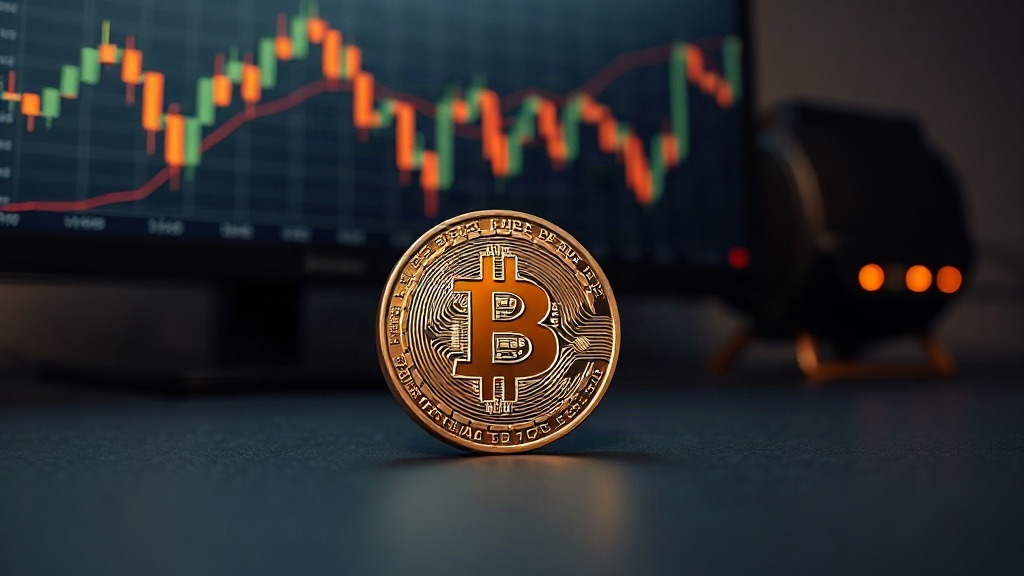
Bitcoin operates on a peer-to-peer (P2P) network, with tens of thousands of nodes worldwide collectively maintaining a public, transparent, and tamper-proof distributed ledger. It employs a Proof-of-Work (PoW) consensus mechanism, in which miners compete using the computational power of the SHA-256 algorithm to earn the right to record transactions. On average, a new block is generated approximately every 10 minutes, and the miner receives a reward. This process both ensures network security and facilitates the issuance of new coins. The total supply of Bitcoin is hard-coded at 21 million coins and will never exceed this limit. The rate of new coin issuance is continuously reduced through a “halving” mechanism that occurs approximately every four years; the fourth halving was completed in 2024. It is precisely this verifiable scarcity and anti-inflationary nature that has earned Bitcoin the title of “digital gold.”
Decentralization, censorship resistance, and global liquidity are Bitcoin’s core value propositions: anyone can hold and transfer Bitcoin without permission; transactions occur 24/7, uninterrupted by geographical boundaries or bank operating hours; and the ledger—based on cryptography and network-wide consensus—is extremely difficult to tamper with or freeze. Alongside the mainnet, Layer 2 solutions such as the Lightning Network continue to enhance the speed and cost-efficiency of micropayments.
As the cryptocurrency with the largest market capitalization and strongest consensus, Bitcoin serves not only as a key asset for storing value and hedging against risk but also as the cornerstone and pricing anchor of the entire crypto industry; its price movements serve as a barometer for the entire digital asset market. With the approval and listing of U.S. Bitcoin spot ETFs in early 2024, institutional investors, publicly traded companies, and even some sovereign wealth funds are accelerating their inclusion of Bitcoin in their asset allocations. At the same time, Bitcoin’s price remains highly volatile, and investors should continue to approach market risks with a rational mindset.
Since its inception, Bitcoin has undergone multiple bull and bear cycles, growing from being virtually worthless to a global asset with a market capitalization in the trillions, all while experiencing significant volatility. It has spawned vast industries—including mining, exchanges, wallets, and derivatives—and driven the development of the entire blockchain sector; Today, Bitcoin is not only a consensus asset among crypto enthusiasts but is also gradually being viewed by traditional financial institutions as a new type of alternative investment.
This page aggregates comprehensive Bitcoin (BTC) market data: real-time prices, 24-hour and multi-period price changes, multi-period candlestick charts and moving averages (MA), MACD, RSI, Bollinger Bands, and other technical indicators; BTC’s real-time market capitalization ranking; trading volume and historical price data. It also aggregates the latest Bitcoin news and policy updates, supports real-time conversion between BTC and fiat currencies such as the Chinese yuan, U.S. dollar, and euro, helping you quickly assess value and stay on top of market trends.
BTC Data

24H Trending
-
1
Current Status of Bitcoin Trading Platforms in Mainland China: Policy Interpretation and Risk Warning
-
2
Chilean Fixed Income Investors Flock to Inflation-Linked Notes as Nine-Month Iran War Pushes Oil to April Highs, Stoking Inflation Expectations
-
3
SOMM Token: Analysis of Sommelier Protocol's Value, Mechanisms, and Market Performance
-
4
How Bitcoin Enters DeFi: Wrapped, Layer 2, and Native Protocol Paths
-
5
The Origin of USTC and the Development History of the Terra Ecosystem

-
6
Dogecoin vs. Ethereum: A Comparative Analysis of Positioning, Technology, and Ecosystem Differences

-
7
EQ9 Token: Project Positioning, Technical Status, and Market Activity Analysis

-
8
KART Token Analysis: Current Status and Trading Channels for Dragon Kart Game Token

-
9
XRP Ledger's 'Cleanup Upgrade' Set for Mainnet Activation This Week
-
10
CNBC: Midterm Election Results May Impact Terms of Crypto Legislation Negotiations

Recommended Reading

Hot Topics

Svmuu focuses on blockchain industry trends and cutting-edge cryptocurrency news, while also covering real-time market data and in-depth analysis of the Hong Kong, U.S., and foreign exchange markets. Here, you can not only access professional 24/7 news updates and accurate market data, but also utilize practical investment tools to help you capitalize on opportunities in both digital assets and traditional financial markets. Whether you are a blockchain enthusiast or an investor in Hong Kong, U.S., or foreign exchange markets, we provide efficient and timely information services to empower your investment decisions.
- User Agreement
- Privacy Policy
- Contact Us
- Business Partnerships
- Disclaimer
- Content Statement
- About Us
- Sitemap
 Coming Soon!
