

Faster global financial news!
DeFi
-
What is AMR? Multiple projects share the same code, and some of them carry high risks.
In the cryptocurrency space, “AMR” does not refer to a single cryptocurrency, but rather a code shared by multiple projects, including Advanced Mortgage & Reserve, Amero, Ammbr, AutoMinter, and others. These projects vary in terms of background, technology, and market performance, and some carry high-risk warnings, such as being “honeypot” scams or having extremely low liquidity. This article will analyze these projects one by one and emphasize that investors must conduct thorough due diligence when considering “AMR coins” to clearly identify the specific project and assess potential risks.
-
Dango announced it is ceasing operations; trading will be suspended on July 29, and the L1 network will shut down on August 13.
Svmuu News: DeFi platform Dango has announced it will cease operations. The team stated that, due to a variety of factors, it was unable to identify a viable path to long-term commercial success. Dang
-
ROOK Token: An Analysis and Overview of the Development of Rook (formerly KeeperDAO), the DeFi Keeper Coordination Protocol
The ROOK token is the governance token of the decentralized protocol Rook (formerly KeeperDAO), which aims to optimize Miners’ Extractable Value (MEV) and Keeper operations within the DeFi ecosystem through coordinated game theory. Its holders can participate in protocol governance and incentivize Keepers. In 2023, the project underwent a “Rage Quit” event to adjust the value of its treasury. As of July 2026, ROOK’s market performance has been influenced by overall crypto market sentiment but remains subject to high volatility.
-
KAVA Token Price Outlook: Can the Zero-Inflation Model and Ecosystem Development Sustain Its Value?
Kava is a Layer-1 blockchain that combines the Cosmos SDK with the Ethereum Virtual Machine (EVM). It has implemented a zero-inflation model effective January 1, 2024, with the aim of increasing scarcity through a fixed supply.The project strategically focuses on the tokenization of real-world assets (RWAs), decentralized finance (DeFi), and artificial intelligence (AI). This article will analyze KAVA’s unique architecture, recent roadmap, market performance, and potential influencing factors to explore its future value trends, while also highlighting the risks associated with market volatility.
-
Uniswap Founder: Please Use the 5% Yield Users Can Earn as a New Reason to Oppose Clear Regulation
Svmuu News: Uniswap founder Hayden posted on X, stating, “But if cryptocurrency is allowed to exist, there is a risk that users might choose to use it and earn a 5% yield instead of 0.000005%.” He the
-
Analysis of the Long-Term Holding Value of the ABYSS Token: Ecosystem, Market Performance, and Future Outlook
ABYSS is the utility token of the Abyss.Finance platform, which integrates DeFi and CeFi and focuses on MMO/MMORPG game distribution, NFT marketplaces, staking, and masternode services. As an ERC-20 token, ABYSS serves as a means of payment, a governance token, and an incentive within the ecosystem. Although the project successfully raised funds in 2018 through the DAICO model and boasts an experienced team, its current market price has fallen significantly from its all-time high. This article will explore ABYSS’s ecosystem, technical features, market performance, and the various factors influencing its long-term value, for the reader’s reference.
-
xDAI: The Stablecoin on the Gnosis Chain and Its Future Prospects
xDAI is a stablecoin pegged 1:1 to the U.S. dollar. As the native token of the Gnosis Chain (formerly xDai Chain), it is primarily used to pay transaction fees.It is known for its extremely low transaction costs and fast transaction confirmation speeds, and is compatible with the Ethereum Virtual Machine (EVM), facilitating the development of applications such as DeFi, NFTs, and DAOs.As Gnosis Chain works to enhance decentralization and scalability and integrates real-world applications such as Gnosis Pay, xDAI’s utility and strategic position within the Web3 ecosystem are expected to continue growing.
-
LEND Token (Now AAVE) Issuance Price and Historical Overview
The LEND token is the native token of the decentralized lending protocol ETHLend, a project founded by Stani Kulechov in 2017. The LEND token was launched in November 2017 through an initial coin offering (ICO) at an issue price of $0.02. The ETHLend project was later rebranded as Aave, and in October 2020, the LEND tokens were migrated to the new AAVE tokens at a ratio of 100:1, marking its transition from a peer-to-peer model to a liquidity pool model.
-
COMP Token Price Overview: Current Value and Market Performance of the Compound Protocol’s Governance Token
COMP is the governance token of the Compound decentralized lending protocol, allowing holders to participate in protocol decision-making. As of July 24, 2026, at the time of publication, the price of COMP was approximately $17.26, with a market capitalization of approximately $172 million. Launched in 2020, the token plays a significant role in the DeFi space and has reached an all-time high of $854.45. This article will provide a detailed overview of COMP’s current market data, project background, and its role within the crypto ecosystem.
-
An In-Depth Analysis of BTB: The Current Status and Future Prospects of BitBall (ETH) and the BNB Chain Version of BTB
There are two main versions of the BTB token: BitBall (BTB) on the Ethereum and BTB on the BNB Chain. The Ethereum-based BitBall is designed to build DeFi and gaming ecosystems; it has been the target of a hack and underwent a token swap, and its market value is currently at an extremely low level.Relatively little information is available about the BNB Chain version of BTB, but it has a higher market capitalization and user base. This article will examine the use cases, technical features, market performance, and potential risks of both versions of BTB separately, while also reminding investors of the high volatility of the cryptocurrency market.
-
Shyft Network (SHFT) Token Analysis: Value, Use Cases, and Investment Considerations
Shyft Network is a public blockchain protocol designed to bridge the gap between centralized and decentralized finance by aggregating trust and verification. Its SHFT token supports core use cases such as FATF Travel Rule compliance, KYC processes, and data-verified payments. As of July 24, 2026, SHFT has a market capitalization of approximately $570,000, with low trading volume. Its all-time high was $6.34 (March 2021), and its current price is approximately $0.0002456. Although some believe its technological innovations hold growth potential, market volatility, regulatory challenges, and intense competition make it a high-risk investment.
-
What Is FVT? An Analysis of the Finance Vote Token (FVT) Project and Trading Channels
FVT, short for Finance Vote Token, is a governance token in the decentralized finance (DeFi) space designed to build a consensus layer for DeFi by introducing secondary voting technology and price discovery mechanisms. The project drives the development of prediction markets and decentralized autonomous organizations (DAOs), allowing users to earn FVT tokens through accurate price predictions and participation in governance. As of this writing, FVT’s all-time high was $0.09371 on March 20, 2021, and its all-time low was $0.0001472 on July 2, 2026. Currently, FVT is primarily traded on decentralized exchanges (DEXs).
-
LOVE Token: The Love.io Protocol’s Value Proposition, Use Cases, and Market Overview
The LOVE token is the core asset of the Love.io decentralized protocol, designed to bridge Web3 with traditional social media and e-commerce platforms. The protocol supports cross-chain micro-tipping, loyalty rewards, and DeFi integration, and connects influencers with brands through the Lovefy.com marketplace. Built on an EVM-compatible blockchain, the LOVE token has already launched staking, lending, and bridging DApps. This article will delve into its features, technical characteristics, and current market performance to help you gain a comprehensive understanding of the LOVE token.
-
APIX: Analysis of the AvaxPixel Token’s Value and Assessment of Its Long-Term Investment Potential
The APIX token primarily refers to the utility token of the AvaxPixel project, a decentralized pixel art canvas on the Avalanche chain. This article will take an in-depth look at the APIX token’s current market performance, its tokenomics, and its potential as an engine for Web3 art and culture. We will analyze the short-term liquidity challenges it faces and assess its potential for long-term value growth, while reminding investors of the high volatility and risks inherent in cryptocurrencies.
-
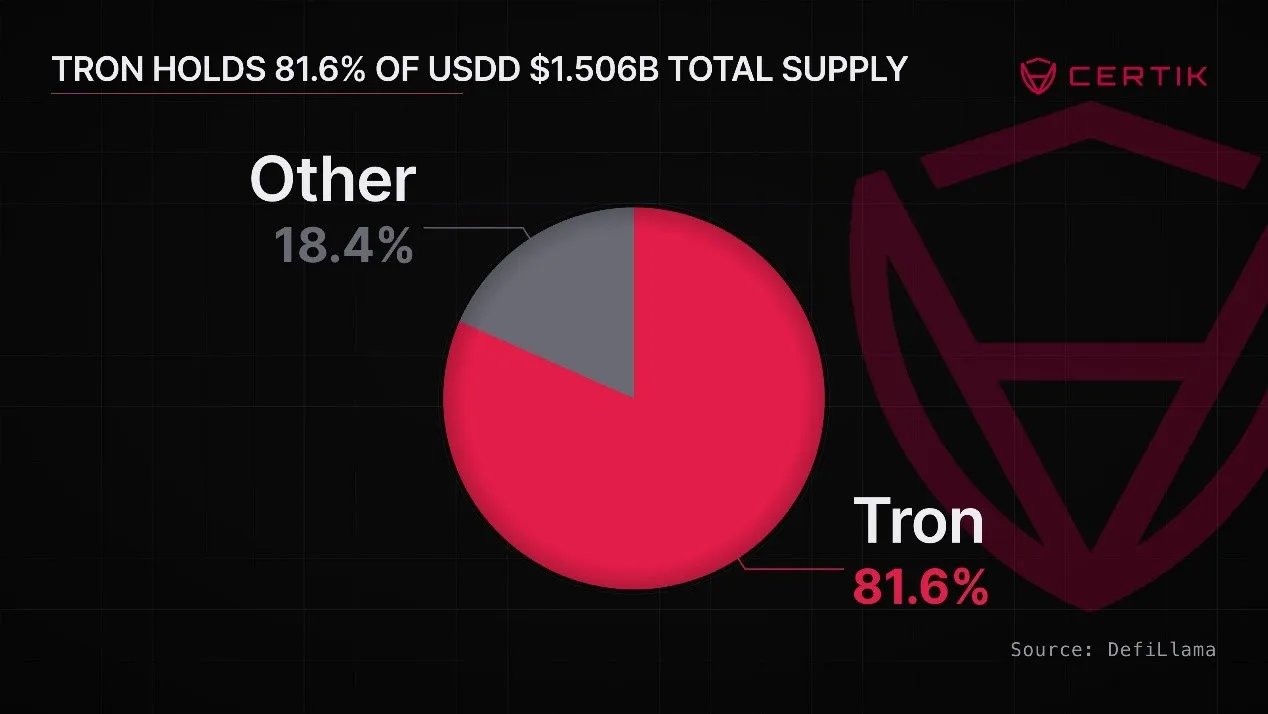
TRON The supply of USDD on TRON increased by $145 million in a single week, with the total supply surpassing $1.23 billion.
Svmuu News: According to data from CertiK Skynet, over the past week, the supply of USDD on the TRONTRON network has surged by approximately $145 million, bringing the total supply to over $1.23 billi
-
Lien Finance Suffers Approximately $542,000 in Losses from an Attack; Attackers Exploited a Vulnerability to Steal USDC
Svmuu News: According to monitoring by SlowMist, the decentralized finance protocol Lien Finance was attacked. The attacker exploited a smart contract vulnerability to mint uncollateralized BondTokens
-
Aster has launched the Vault Beta feature, allowing users to participate in profit- and risk-sharing through custodial policies.
Svmuu News: The decentralized trading platform Aster has announced the launch of Aster Vault Beta, which allows users to participate in trading strategies driven by actively managed strategies without
-
Single-Token Staking vs. Dual-Token Liquidity Mining: Key Differences and Risk Analysis
In the field of decentralized finance (DeFi), single-token staking and dual-token liquidity mining are two common yield strategies, but they differ significantly in terms of their operational mechanisms, risks, and potential returns. Single-token staking typically involves locking up a single cryptocurrency to support the blockchain network’s consensus and earn network rewards; while the risks are relatively low, the returns may also be more conservative. Two-token liquidity mining, on the other hand, requires providing two tokens of equal value to a decentralized exchange (DEX) liquidity pool to earn trading fees and additional token rewards. It offers higher potential returns but comes with the unique risk of “impermanent loss.”
-
Hyperliquid's weekly RWA trading volume surpasses that of crypto trading, with HIP-3 RWA trading volume reaching $26 billion
Svmuu News: Lorenzo Valente, Head of Research at ARK Invest, posted on X that DeFi is entering a new era, with Hyperliquid seeing RWA trading volume surpass crypto trading for the first time in a sing
-
PHNX Coin Analysis: Multiple Projects with the Same Name—What Are Their Respective Prospects?
“PHNX” is not a single cryptocurrency, but rather a term that encompasses at least five distinct projects, ranging from meme coins and DeFi protocols to AI and DePIN infrastructure, as well as deflationary tokens. This article will delve into the unique aspects, technical features, current progress, and future growth potential of each PHNX project, helping readers distinguish between these tokens with the same name and understand their respective roles and objectives within the crypto ecosystem.
-
What Is GMX? An In-Depth Analysis of the Investment Value and Risks of the GMX Token
GMX is a decentralized exchange (DEX) cryptocurrency focused on perpetual contracts and spot trading, designed to provide a trading experience with low fees, low slippage, and self-custody. It operates on EVM-compatible networks such as Arbitrum and Avalanche and employs a unique GLP liquidity pool model. GMX token holders can earn real returns from the protocol and participate in governance. This article will delve into GMX’s core features, recent developments, token economics, and its potential investment value and risks.
-
What Is the REN Token? An Analysis of the Ren Protocol’s Cross-Chain Capabilities and Transaction Channels
REN is the native token of the Ren Protocol, an open protocol designed to enable interoperability and liquidity across different blockchains. It allows users to transfer assets such as Bitcoin across chains to smart contract platforms like Ethereum, generating tokens such as renBTC, thereby participating in the DeFi ecosystem.The REN token is primarily used to cover the operating costs of DarkNodes and as collateral. This article will delve into how the Ren Protocol works, key milestones in the development of the REN token, current market data, and the major platforms where it can be traded.
-
What Is MEC? An Analysis of Mellion Coin and Megacoin
The token name "MEC" may refer to two different cryptocurrencies: Mellion Coin (MEC) and Megacoin (MEC). Mellion Coin is the core token of the BitNest ecosystem. Launched in 2025, it aims to bridge decentralized finance (DeFi) with real-world applications. It runs on the BNB Smart Chain and supports staking, lending, cross-chain functionality, and governance. Its token economic model employs a deflationary mechanism. Megacoin, on the other hand, is a Proof-of-Work (PoW)-based cryptocurrency. Its official website has been offline since 2018, and the project may no longer be active.
-
Uniswap Launches a Permissioned Pools Framework for Tokenized Regulated Assets
Svmuu News: The decentralized trading protocol Uniswap has launched the Permissioned Pools framework, designed for tokenized funds, stocks, and other regulated assets. This feature allows issuers of t

















-
Coinbase CEO Brian Armstrong responded to accusations from The Wall Street Journal, stating that he had opposed early drafts of the CLARITY Act to facilitate improvements.
Coinbase CEO Brian Armstrong tweeted on Saturday, responding to a Wall Street Journal report in the works that accuses him and Coinbase of causing the failure of the CLARITY Act. Armstrong stated that
-
XRPL developers are using mathematical proofs to verify its new lending market against insolvency, with Common Prefix formally testing the protocol since Sept. 17
XRP Ledger (XRPL) developers are using mathematical proofs to verify its new lending market against insolvency, with Common Prefix formally testing the protocol since Sept. 17. The protocol research f
-
Layer-2 and DeFi tokens lead broad crypto advance as post-Fed hike nerves fade, 10-year Treasury yield slips below 5%
Starknet and Arbitrum tokens gained over 17%, while the DeFi Select Index (DFX) surged 16% over the past 24 hours. Bitcoin rose above $78,000, up 1.9% in 24 hours. The market gains follow a more condu
-
Fed rate hike to 3.75%-4.00% pushes 1-year Treasury yield to 4.45%, making crypto lending less attractive
The Federal Reserve's 25 basis point rate hike on September 16, which set the target range at 3.75%-4.00%, has driven the one-year Treasury yield to 4.45%. This move establishes a new benchmark for ri
-
Aave V4 Arc market has attracted $76 million in USDC deposits since its launch, but borrowing stands at less than $100,000, with a utilization rate of only 0.1%.
Aave V4 Arc market went live on September 16, attracting approximately $76 million in USDC deposits by September 17, but with less than $100,000 in borrowing, resulting in a capital utilization rate o
-
The U.S. SEC has introduced a temporary regulatory framework allowing tokenized U.S. stocks to be traded via DeFi infrastructure, a move Saylor called a "significant breakthrough."
The U.S. Securities and Exchange Commission (SEC) has unveiled an interim regulatory framework that permits certain tokenized U.S. equities to trade using decentralized finance (DeFi) infrastructure,
-
Aave Founder Stani Kulechov Pitches 'Uber Path' for DeFi After Clarity Act Fails Senate Vote
Kulechov told The Starting Block that DeFi could follow this path if U.S. crypto legislation stalls.
-
Two Prime launches a Bitcoin yield vault backed by $10 million of its own capital, aiming to provide institutional investors with an annualized yield of 1.5% to 2%.
Digital asset financial services firm Two Prime has launched the Axiom WBTC Yield Vault on Pareto, targeting an annualized yield of 1.5% to 2% by lending to institutional borrowers. The vault accepts
-
Michael Saylor retweeted Phong Le's post, stating that $STRC is becoming the digital platform for traditional finance (TradFi) and decentralized finance (DeFi) to build digital currency and yield products.
Michael Saylor retweeted Phong Le's post, stating that $STRC is becoming the digital platform for traditional finance (TradFi) and decentralized finance (DeFi) to build digital currency and yield prod
-
Symbiosis DeFi Bridge Hacked, 46 Billion Fake BTC Tokens Minted, Initial Loss of 9.97 Bitcoins
DeFi bridge Symbiosis was hacked, with the attackers exploiting two software vulnerabilities to mint 46 billion unsupported fake syBTC tokens using just 25 cents worth of Bitcoin, a quantity more than
-
Balancer eyes wind-down after restructuring fails to revive revenue
The DeFi protocol is considering winding down after its restructuring efforts, which included cutting costs and shipping new products, failed to revive revenue. According to Marcus Hardt, Balancer's v
-
DeFi Development Corp expands Solana treasury to 2.39 million SOL, sets up $300 million CHAD at-the-market (ATM) offering
DeFi Development Corp has expanded its Solana treasury to 2.39 million SOL and established a $300 million at-the-market (ATM) offering for its CHAD perpetual preferred stock.
-
A CoinDesk opinion piece states that staking Ethereum should be considered a benchmark for the decentralized economy.
A CoinDesk opinion piece suggests that Staked Ether should be considered the benchmark for the decentralized economy. The article posits that Staked Ether, as a yield-generating asset, holds a special
-
Trading stocks against BONER is the latest trend for DeFi degens
Trading stocks against BONER is the latest trend for DeFi degens
-
EU Securities Regulator ESMA Warns: Growing Crypto Connections Could Amplify Risks to Traditional Finance
ESMA points out that the growing links between cryptocurrencies and traditional finance in areas such as tokenized stocks, DeFi exploits, and prediction markets could pose risks to the broader financi
-
S&P Global Licenses S&P 500 Index for 24/7 Perpetual Contract Trading on Hyperliquid, Highlighting DeFi's Growing Role in Traditional Finance Price Discovery
CoinDesk reported that DeFi platform Hyperliquid is playing an increasingly important role in traditional finance price discovery, especially when traditional markets are closed. For example, during g
-
DeFi platform Hyperliquid's trading volume reached $1.28 trillion in the first half of 2026, placing it among the top five crypto derivatives platforms.
CoinDesk reported that Hyperliquid, a decentralized finance (DeFi) platform known for its perpetual futures trading and on-chain order book, boasts a performance of 200,000 orders per second. The plat
-
Bybit Alpha now supports STONK trading
Bybit Alpha has added STONK for on-chain trading, allowing users to engage in DeFi activities directly through their Bybit Unified Trading Account (UTA) without needing external wallets or gas tokens.
-
Coinbase CEO Brian Armstrong: Neutral infrastructure for financial services, including trading, payments, lending, and capital formation, all work together.
Coinbase CEO Brian Armstrong: Neutral infrastructure for financial services, including trading, payments, lending, and capital formation, all work together.
-
Michael Saylor retweeted apyx_fi's post, stating that on-chain digital credit yields continue to outperform, with one Ethereum address achieving a 30-day annualized yield (APY) of 13.39%, which he believes surpasses DeFi yields.
Michael Saylor retweeted apyx_fi's post, stating that on-chain digital credit yields continue to outperform, with one Ethereum address achieving a 30-day annualized yield (APY) of 13.39%, which he bel
-
Aave V4 Deposits Cross $900M, Nearing $1B Milestone Less Than Six Months After Mainnet Debut
Aave's V4 deposits have seen roughly 131% growth over the past 30 days alone, with active loans recently topping $250M for the first time. This early traction for new infrastructure remains a small fr
-
Curve Finance data shows 704 soft liquidations lasted a median 14.5 days, allowing DeFi loans to survive weeks in 'danger zone'
Data from Curve Finance's lending platform indicates that its soft liquidation model, LLAMMA, allowed 704 instances of DeFi loans to remain in a 'danger zone' for a median of 14.5 days, with a quarter
-
Coinbase CEO Brian Armstrong retweeted that Base DeFi's TVL hit a new all-time high of $5.7 billion.
Coinbase CEO Brian Armstrong retweeted that Base DeFi's TVL hit a new all-time high of $5.7 billion.
-
U.S. National Sheriffs' Association Shifts Stance on Digital Asset Market Clarity Act From Opposition to Neutral
The National Sheriffs' Association (NSA) reversed its opposition to the Digital Asset Market Clarity Act on Thursday, informing Senate leadership it was changing its position to neutral due to the leg
-
bb-t-USDC Token Analysis: What is the USDC Token in Balancer Tetu Boosted Pool?
bb-t-USDC is not an independent cryptocurrency but a token within the Balancer Tetu Boosted Pool, with its value closely tied to the US dollar stablecoin USDC. It combines Balancer's automated market maker mechanism with Tetu's yield optimization strategies. USDC is issued by Circle and Coinbase through the Centre Consortium, with each token backed by US dollar reserves and circulating on multiple blockchains. bb-t-USDC is primarily traded on decentralized exchanges (DEXs), where users can connect their Web3 wallets to exchange it.
-
AfroX (AfroDex) Token Analysis: Africa's DeFi Vision and Current Market Status
AfroX (AfroDex) is the incentive and governance token within the AFRO ecosystem, designed to promote blockchain and decentralized finance development in Africa and address local economic challenges. The token operates on the Ethereum platform and was once planned for use in scenarios such as inflation hedging, remittances, and cross-border payments. However, its official website has been offline since October 2025, current market trading activity is dormant, and its circulating market capitalization is shown as zero. It is widely regarded as a high-risk asset lacking an active trading market.
-
KAVA Token Outlook Analysis and Trading Channels
KAVA is the governance and utility token of the Kava network, a Layer-1 blockchain that combines Ethereum EVM compatibility with Cosmos SDK scalability. KAVA tokens are used for staking and governance within the network. Its historical price has been highly volatile, reaching an all-time high of $9.12 in August 2021, with its current price around $0.0668. The Kava ecosystem is actively developing AI-driven DeFi, Real World Asset (RWA) tokenization, and plans to enhance USDT liquidity. KAVA tokens have no maximum supply and are inflationary. KAVA is traded on multiple major cryptocurrency exchanges globally.
-
What is CAF? An Analysis of Childrens Aid Foundation, CAIRO, and CarsAutoFinance
The CAF token name may refer to multiple different crypto projects. This article will delve into Childrens Aid Foundation (CAF), a charity-focused meme coin aimed at supporting child welfare; CAIRO (CAF), a deflationary DeFi platform token; and CarsAutoFinance (CAF). At the same time, the article will also clarify the distinction from the Crypto-Asset Reporting Framework (CARF), helping readers fully understand these digital assets with similar names or codes.
-
JEM Coin Value Analysis: Multiple Projects with the Same Name, Varying Investment Potential and High Risks
"JEM Coin" does not refer to a single crypto asset but rather to multiple projects with distinct characteristics, including a memecoin on the Solana chain, a DeFi gaming project on Ethereum, and a non-cryptocurrency Exchange Traded Note (ETN). These projects exhibit significant differences in market activity, technical background, and investment risk. The cryptocurrency projects generally feature high volatility or insufficient market activity, and their long-term investment prospects are broadly uncertain. Investors should carefully discern and assess the risks.
-
GHST Token Analysis: Aavegotchi Project Status and Market Dynamics
GHST is the governance and utility token of the Aavegotchi decentralized gaming ecosystem, a project that blends DeFi, NFTs, and blockchain gaming. Recently, the project's initial development team, Pixelcraft Studios, has progressively transferred control to the Aavegotchi DAO from June to September 2026, and plans to launch a mobile-first game on the Base network. The GHST token price has significantly corrected from its all-time high, and some exchanges have issued potential delisting warnings, leading to complex market views on its future development, where opportunities and challenges coexist.
-
Ethereum Decentralized Exchange (DEX) Landscape: Key Players and Innovation Trends
Ethereum, as the core infrastructure of decentralized finance (DeFi), has fostered numerous innovative decentralized exchange platforms (DEXs). These platforms allow users to trade cryptocurrencies directly on the blockchain without traditional intermediaries. Among them, Uniswap leads the way with its pioneering Automated Market Maker (AMM) model, Curve specializes in stablecoin trading, and Balancer offers highly customizable liquidity pools. Additionally, SushiSwap, 1inch (an aggregator), and dYdX (a derivatives DEX) also hold significant positions. The DEX ecosystem continues to evolve, constantly improving efficiency and user experience through Layer-2 scaling and cross-chain functionalities, maintaining daily trading volumes in the billions of dollars.
-
FINIX (Definix) Current Status Analysis: Valuation and Long-Term Investment Potential Assessment
FINIX (Definix) is a decentralized finance (DeFi) investment platform token launched in 2021, operating on the BNB Smart Chain. However, as of September 2026, the project lacks significant positive development reports, its token price is extremely low, 24-hour trading volume is close to zero, and its market capitalization is almost negligible. FINIX once reached an all-time high of $30.50 but has since fallen drastically. Given its extremely low liquidity and market activity, FINIX currently presents very high risk and is not suitable as a long-term investment.
-
TOMB Coin Analysis: Status and Risks of Fantom Ecosystem Algorithmic Stablecoin
TOMB is an algorithmic stablecoin operating on the Fantom Opera network, designed to maintain a 1:1 price peg with Fantom (FTM) through a seigniorage mechanism, and to serve as the primary medium of exchange within the Fantom ecosystem. However, the token's current price has fallen significantly from its all-time high, and market data indicates considerable uncertainty regarding its circulating supply and market capitalization. Some platforms have classified it as a high-risk asset. Investors are urged to exercise extreme caution.
-
Polkadot Ecosystem DEX StellaSwap: Liquidity Mining and DeFi Innovation Analysis
StellaSwap, as the leading decentralized exchange on the Moonbeam network within the Polkadot ecosystem, has significantly enhanced capital efficiency and potential returns for liquidity providers through its hybrid AMM model and Pulsar, a concentrated liquidity engine in collaboration with Algebra. The platform also supports DOT liquid staking (stDOT), allowing users to earn staking rewards while maintaining asset liquidity. With support from Polkadot Treasury grants, StellaSwap is committed to deepening ecosystem liquidity and attracting new assets, having accumulated over $2.2 billion in trading volume, making it a crucial gateway for Polkadot DeFi development.
-
SHIBIC Coin Value Analysis: Zero Market Activity and Investment Risk Warning
The SHIBIC token is currently facing severe market challenges, with its value, 24-hour trading volume, and market capitalization all at $0 as of September 13, 2026. Although the project once envisioned building a "super DApp" integrating DeFi solutions, there is currently a lack of actual market performance and progress to support this. Given its near-stagnant trading status, SHIBIC currently holds no long-term investment value, and investors should be wary of associated risks.
-
BTC2X Coin: Distinguishing Between Bitcoin Hard Fork Legacy and Leveraged Index Tokens
The name BTC2X coin refers to two distinct concepts in the cryptocurrency space: first, the canceled Bitcoin scaling hard fork SegWit2x (B2X) from 2017 and its subsequent failed independent project, which currently has no active market; second, BTC2X-FLI, a Bitcoin 2x Flexible Leverage Index token launched in 2021. As an ERC-20 token, it aims to provide 2x leveraged exposure to Bitcoin's price, but its current trading activity is low. This article will introduce both entities separately.
-
KEX Coin Multiple Meanings Explained: The Status and Prospects of KIRA Network (KEX) and Other Entities with the Same Name
The term "KEX coin" in the cryptocurrency space has multiple referents, potentially including the KEX trading platform, the inactive KexCoin, the KIRA Network (KEX) token focused on liquid staking, and the Thai Baht-denominated publicly traded stock KEX Express. This article will differentiate these various entities, with a focus on analyzing KIRA Network (KEX)'s project positioning, market performance, and its potential development in the DeFi sector.
-
The Force Protocol Analysis: Project Positioning, Governance, and Market Status
The Force Protocol is an open-source blockchain platform managed by a Singaporean foundation, aiming to provide crypto-financial solutions. The project is operated by THE FORCE PROTOCOL FOUNDATION LTD., regulated by Singaporean law, and features multiple committees to foster ecosystem development. However, public information indicates a recent lack of significant progress, and the associated FourCoin token exhibits extremely low trading activity with incomplete market data, suggesting the project may have stalled.
-
XOLO Coin Analysis: Multiple Projects Share the Same Name, What is Its Investment Value?
"XOLO Coin" is not a single crypto asset but encompasses multiple projects with the same or similar names, including the canine community token Xoloitzcuintli on Ethereum, the lending protocol XOLO Protocol on Binance Smart Chain, and projects related to AI, metaverse, and NFTs. These projects vary significantly in their technical foundations, application scenarios, and market activity. This article will differentiate these entities one by one and evaluate their potential investment considerations. Most projects face challenges of insufficient liquidity and low information transparency, requiring investors to exercise extreme caution.
-
FTP Coin: A Multi-faceted Analysis of "Feed The People," "Fisttrumppump," and Other Projects Sharing the Same Name – Current Status and Prospects
There are multiple token projects in the cryptocurrency market with "FTP" as their ticker, including the humanitarian-focused Feed The People, the political memecoin Fisttrumppump, the DeFi lending protocol Fountain Protocol, and the commercial dispute resolution platform Fair Trader. These projects vary in their backgrounds, technical architectures, and market performance. This article will analyze each of their current statuses, key data, and future development directions to help readers distinguish and understand the unique aspects of each "FTP" token.
-
BECOIN (bePAY Finance) Project Analysis and Market Status
BECOIN (bePAY Finance) is a blockchain-based decentralized finance (DeFi) protocol designed to provide "Buy Now, Pay Later" (BNPL) services for e-commerce and NFT markets. The project plans to support multiple chains, and its native token, BECOIN, has utility and governance functions. However, as of September 17, 2026, the BECOIN token exhibits extremely low market activity, with public data showing its market capitalization and 24-hour trading volume both near zero, indicating that its trading market has largely dried up.
-
Radiant (RXD) Token Trading Status and Market Outlook
This article examines the current trading channels for the Radiant (RXD) token, noting its limited active trading markets. Concurrently, the article analyzes RXD's recent market performance, including price, trading volume, and market capitalization data. For future price predictions, the article cautiously cites short-term analysis and emphasizes key factors influencing RXD's value, such as DeFi ecosystem development, technological innovation, and market sentiment, reminding investors of the high volatility risk.
-
Decoding IN Coin's Multiple Identities: Differentiating Between Cryptocurrency and Collectible Coin
The term "IN Coin" in the cryptocurrency space refers to multiple entities, including InterValue Network Token, INFINIT, and Incoin, which has extremely low trading volume. Additionally, it may also refer to the physical collectible coin "INB Coin." This article will clarify the background, uses, and market status of each of these different entities, and specifically highlight the trading activity risk of some cryptocurrencies, to help readers accurately identify and understand the true nature of "IN Coin."
-
ECN Coin Analysis: Current Status and Market Liquidity of Ecosystem Coin Network
ECN typically refers to Ecosystem Coin Network, an ERC-20 token based on Ethereum, designed to build decentralized prediction markets. However, as of September 17, 2026, the token's market performance is extremely sluggish, with public data showing its circulating supply and 24-hour trading volume are both close to zero, resulting in an actual market capitalization of zero. Although it has had higher prices historically, the current market lacks active trading, and investors should be wary of its extremely low liquidity risk.
-
HAPI Token Issuance Price and Time Review: The Birth of On-chain Security Protocol HAPI
HAPI Protocol, a cybersecurity solution for on-chain networks, entered the market in early 2021 through multiple issuance rounds. Its issuance price was 35 HAI in the Hacken community round, with public issuance prices reported at both $7.5 and $10. The Token Generation Event was completed on March 10, 2021. HAPI's initial listing price on trading platforms reached as high as $180.82. However, as of September 2026, its price has significantly dropped to the $0.23-$0.26 range, with a market capitalization of approximately $155,000 to $196,000. This article will review HAPI's issuance details and market performance.
-
CRV Coin In-depth Analysis: Value and Ecosystem Outlook of Curve Finance's Core Token
CRV is the native governance token of Curve Finance, a decentralized exchange focused on efficient trading of stablecoins and pegged assets. Holding CRV allows participation in protocol governance, sharing of platform trading fees, and earning liquidity mining rewards. Since its launch in 2020, the project has expanded to multiple blockchains and continuously introduced new products. This article will explore the core functions of the CRV token, its market performance, and its significant position in the DeFi ecosystem.
-
UNI Price Dynamics: Breaking Key Resistance, Can $8 Be the Next Target?
The Uniswap (UNI) token has shown strong performance recently, surging approximately 78.4% over the past 30 days, with its current trading price between $6.28 and $6.59. Technical analysis indicates that UNI has broken above a multi-year downtrend line and successfully retested it. On the protocol front, Uniswap v4 introduces "Hooks" functionality, and the platform has launched an aggregator, Earn yield products, and cross-chain expansion with UniswapX. Regarding tokenomics, the UNI burn mechanism under the UNIfication governance framework continues, with the founder emphasizing its importance for value accumulation. Market sentiment is generally bullish, but regulatory uncertainty and macroeconomic factors remain potential risks.
-
Decentralized Finance (DeFi) Explained: The Financial Services Revolution Without Banks
Decentralized Finance (DeFi) is a blockchain-based financial ecosystem designed to provide financial services without traditional intermediaries through smart contracts. It grants users full control over their assets and offers 24/7, highly transparent services across various domains, including lending, trading, and staking. While DeFi demonstrates immense potential in financial inclusion and efficiency, it also faces challenges such as smart contract vulnerabilities, market volatility, regulatory uncertainty, and operational complexity. As of September 2026, DeFi's Total Value Locked (TVL) has reached tens of billions of dollars, with ongoing progress in real-world asset (RWA) tokenization and institutional adoption.
























DeFi

24H Trending
-
1
Goldman Sachs' latest research report: Maintains its year-end 2027 gold price target of $5,400, but lowers its year-end 2026 forecast to $4,650, stating that Federal Reserve rate hikes will only slow short-term gains, and central bank gold purchases are the core driver.
-
2
U.S. Energy Secretary Chris Wright says another round of crude loans from the Strategic Petroleum Reserve is a “very real possibility” amid higher oil prices and steep futures backwardation.
-
3
Hong Kong Financial Secretary Christopher Hui: The government is studying expanding the scope of RMB usage, including promoting RMB payment for stamp duty on stock transactions and an RMB counter for Stock Connect Southbound Trading.
-
4
Fed rate hike to 3.75%-4.00% pushes 1-year Treasury yield to 4.45%, making crypto lending less attractive
-
5
HKMA: The total number of stored value facility accounts reached 90.38 million in Q2 2026, a quarter-on-quarter increase of 1.8%.
-
6
NVIDIA's optimistic outlook boosts tech stocks, Nasdaq futures rise 0.7%, South Korea's KOSPI leads Asian markets with a 2.7% gain.
-
7
Brent crude oil fell 2.0% intraday, nearing $97/barrel, Bitcoin rose 1.2% to $77,426, and gold increased by 0.5%.
-
8
JPMorgan Chase and Santander Lead Over £1 Billion Loan for Drax's Acquisition of Bluefield Solar
-
9
Prudential Exits AlexForbes as Motsepe’s ARC Boosts Stake
-
10
Bitcoin Spot and Futures Trading Platform Guide: Choosing Secure and Compliant Global Channels

Markets Today





Recommended Reading

Hot Topics

Svmuu focuses on blockchain industry trends and cutting-edge cryptocurrency news, while also covering real-time market data and in-depth analysis of the Hong Kong, U.S., and foreign exchange markets. Here, you can not only access professional 24/7 news updates and accurate market data, but also utilize practical investment tools to help you capitalize on opportunities in both digital assets and traditional financial markets. Whether you are a blockchain enthusiast or an investor in Hong Kong, U.S., or foreign exchange markets, we provide efficient and timely information services to empower your investment decisions.
- User Agreement
- Privacy Policy
- Contact Us
- Business Partnerships
- Disclaimer
- Content Statement
- About Us
- Sitemap
 Coming Soon!
